

On a Saturday morning, you can witness the same little ritual taking place at any respectable fish counter. Someone asks the man behind the glass when the salmon entered after leaning in, sniffing once, and frowning. “Thursday, maybe Wednesday,” he says with a shrug. The client is hesitant. purchases it nonetheless. In a strange way, this conveys the whole story of seafood safety in a single, brief scene: a mixture of quiet uncertainty, intuition, and trust that most of us are never able to fully resolve.
The healthiest option is supposedly seafood. Omega-3 fatty acids and lean protein are the kinds of foods that doctors constantly encourage us to eat. It is, however, the most delicate item in the supermarket. Fish spoils more quickly than almost anything in the refrigerator, including chicken and beef. We seem to treat it as casually as we treat cereal, and that’s where things start to go wrong.
| Information | Detail |
|---|---|
| Topic | Seafood Safety |
| Primary Concern | Foodborne illness from improper handling, storage, or preparation |
| Most Common Risks | Bacteria, parasites, naturally occurring toxins |
| Highest-Risk Products | Raw or partially cooked shellfish, undercooked fish |
| Vulnerable Groups | Pregnant women, young children, immune-compromised individuals, elderly |
| Safe Storage Window | 1–2 days refrigerated; freeze for longer storage |
| Danger Zone | Above 40°F (4°C) — never leave seafood out more than 2 hours |
| Key Visual Cues | Clear eyes, firm flesh, red gills, mild ocean smell |
| Regulatory Framework | FDA HACCP standards, EPA advisories, state shellfish controls |
| Final Line of Defense | The consumer’s own handling at home |
The official advice is fairly obvious. Purchase chilled fish or fish that has been buried in fresh ice. Look for firm flesh, red gills, clear eyes, and a clean, mildly briny scent. Move on if the fillet appears to be dry around the edges. Walk away from the shrimp if they have a slight ammonia odor. When you tap live clams and mussels, they should snap shut. This tiny, almost theatrical gesture indicates that the animal is still alive and therefore safe.
To be honest, though, the majority of consumers don’t do any of this. They look, they seize, and they leave. It’s difficult to ignore how infrequently the tap test on an oyster is actually carried out. Perhaps we’ve started delegating all of our food judgment to the store manager, or perhaps the rituals feel awkward in fluorescent lighting.
A whole system is in place behind the counter to identify issues before they affect you. From boat to box, seafood processing, transportation, and inspection are governed by the FDA’s Hazard Analysis and Critical Control Points (HACCP) framework. It’s a highly regarded program worldwide. Most of the time, it works. However, the system can only do so much once a fillet leaves the warehouse, the industry is vast, and imports come in from dozens of nations.
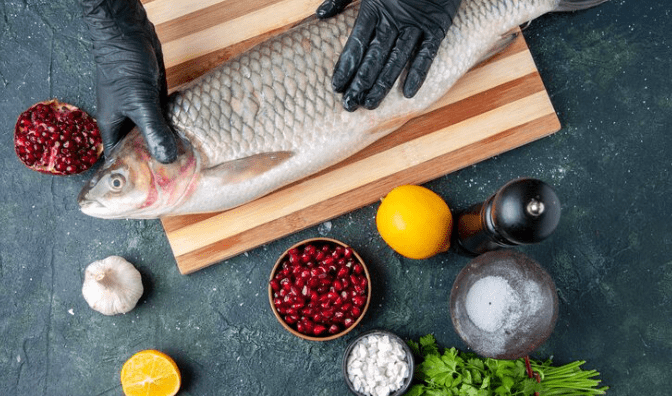
The regulations are unable to cover that area. The accountability changes as soon as a piece of fish ends up in your kitchen. The upper limit is two hours on the counter at room temperature, and only one if it’s a hot day with temperatures above 90°F. A surprising percentage of cases of foodborne illness are caused by cross-contamination, that silent, invisible kind where a knife touches raw shrimp and then cucumbers. Investigators witness it on a regular basis. Customers hardly ever do.
The issue of who is eating is another. It is frequently advised to stay away from raw or undercooked shellfish if you are pregnant, have young children, or have a compromised immune system. Although the advice isn’t dramatic, it is persistent and has a purpose. Every summer, vibrio and norovirus outbreaks linked to raw oysters continue to occur, frequently in unexpected locations.
We may have become a bit too comfortable with all of this. Raw bars, ceviche, and sushi culture are all amazing, and the food itself is usually good. However, seafood requires a level of care that other proteins will overlook. Whether you’re distracted or exhausted doesn’t matter to the fish. It spoils on its own time. You begin to believe that the most cautious cooks aren’t the safest ones when you see this happening in kitchens week after week. They are simply the ones who continue to pay attention.
