Close Menu
FishonlineFishonline
  • Homepage
  • Privacy Policy
  • Disclaimer
  • About
  • Terms and Conditions
  • Seafood
  • News
  • Trending
  • Travel
What's Hot

The Budget Airline Seat Upgrade That Makes Long-Haul Seafood Travel Pilgrimages Finally Worth the Journey

May 21, 2026

Massachusetts Just Announced New Marine Debris Cleanup Regulations That Have Lobstermen and Scientists on Opposite Sides

May 21, 2026

This Japanese Miso Glazed Black Cod Recipe Changed the Way America Thinks About Affordable Weeknight Fish

May 21, 2026
FishonlineFishonline
Subscribe
  • Homepage
  • Privacy Policy
  • Disclaimer
  • About
  • Terms and Conditions
  • Seafood
  • News
  • Trending
  • Travel
FishonlineFishonline
Home » The Oyster Farmer Who Left Wall Street for the Chesapeake Bay — and Built One of America’s Most Celebrated Shellfish Brands
Seafood

The Oyster Farmer Who Left Wall Street for the Chesapeake Bay — and Built One of America’s Most Celebrated Shellfish Brands

Mildred BellBy Mildred BellMay 2, 2026Updated:May 2, 2026No Comments4 Mins Read
Facebook Twitter LinkedIn Telegram Pinterest Tumblr Reddit WhatsApp Email
The Oyster Farmer Who Left Wall Street for the Chesapeake Bay — and Built One of America's Most Celebrated Shellfish Brands
Share
Facebook Twitter LinkedIn Pinterest Email

Only before sunrise on the Chesapeake can you find a certain kind of silence. The water breathes, but it doesn’t really move. On most mornings, you’ll come across a man who used to write code that helped Wall Street package mortgages into something it could no longer comprehend. He departed from that existence. He arrived here. In some way, it has improved the oysters.

Parts of his story have already been told. The programmer whose software assisted banks in securitizing the loans that ultimately failed was portrayed in a brief Marketplace segment years ago as a warning about the 2008 financial crisis. However, what he left behind isn’t the more fascinating part of the tale. It’s about what he discovered in the Bay’s brackish water. Speaking with people in the oyster trade gives the impression that he finally settled into the version of himself that was always there rather than completely reinventing himself.

KeysValues
NameMichael Osinski
Former ProfessionWall Street software engineer (mortgage securitization)
Current VentureWidow’s Hole Oysters / Chesapeake-style farming pioneer
RegionChesapeake Bay & Long Island estuaries
Years Active in AquacultureSince the early 2000s
Industry ReferencePeak American oyster harvest hit ~27 million bushels per year in the 1880s
Cultural LineageFollows tradition of Thomas Downing, NYC’s 19th-century “Oyster King”
Estimated Industry Value TodayMulti-billion-dollar U.S. shellfish economy
Public ProfileFeatured in Marketplace’s “Oyster Farmer of Wall Street”
Notable TraitKnown for hand-tonging at dawn, refusing automation in sorting

It’s difficult to start over in the Chesapeake. Throughout the 20th century, the Bay’s oyster population collapsed due to runoff, overharvesting, and disease, all of which piled up like bad debt. By the time he got there, the younger generation had mostly moved toward easier money, and the working watermen were getting older. To be honest, the equipment he purchased appeared to be prehistoric. wooden tongs. Cull boards. In the wrong wind, a flat-bottomed skiff creaked. On the water, patience usually outlasts leverage, despite investors’ apparent belief that efficiency always wins.

He gradually created one of those tiny American brands that appears larger than it actually is. His oysters can be found at raw bars in Manhattan, Charleston, and occasionally Los Angeles, where sommeliers discuss soil and chefs discuss merroir. The finish, the cup, and the salinity. Perhaps the story itself is part of his success. Finance professionals adore a redemption story. Chefs, however, stop placing orders for the story. The oyster is good, so they place an order.

It’s difficult to ignore this historical resonance. Born on Virginia’s Eastern Shore and the son of former slaves, Thomas Downing transformed a Broad Street basement into New York City’s most prestigious oyster house two centuries ago. Downing purposefully raised prices for the watermen by rowing out before dawn to outbid the wholesalers. He realized that the oyster is never truly the product, something that the contemporary industry occasionally overlooks. It’s a relationship.
The Oyster Farmer Who Left Wall Street for the Chesapeake Bay — and Built One of America's Most Celebrated Shellfish Brands
The Oyster Farmer Who Left Wall Street for the Chesapeake Bay — and Built One of America’s Most Celebrated Shellfish Brands

This Wall Street refugee’s work also reflects that instinct, whether it was borrowed or unintentionally rediscovered. He gives his shuckers good compensation. He won’t go above what the Bay can replenish. There is conflict because the brand is well-known, demand is constantly rising, and he could probably triple production if he so desired. He doesn’t. As you watch this play out, you begin to wonder if the discipline he acquired in finance is the reason he is now allergic to repeating it.

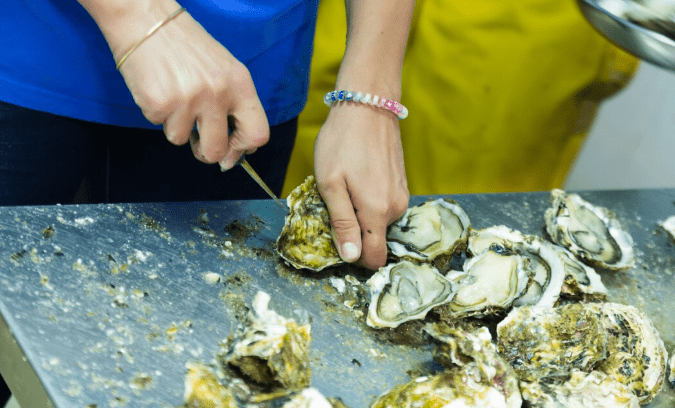
The Chesapeake itself is evolving. Changing salinity, warmer water, and a continuous dispute over funding for restoration. The Bay’s ability to maintain the current modest renaissance and whether climate change will eventually outpace the effort are still unknown. For now, though, a man who once wrote algorithms for bond traders is manually removing cages from the water before the sun rises. The oysters emerge dripping. He carefully sorts them on the deck in the same manner that you would sort anything that truly matters to you.

Oyster Farmer Who Left Wall Street for the Chesapeake Bay
Share. Facebook Twitter Pinterest LinkedIn Tumblr Telegram Email
Previous ArticleHow a Single EU Regulation Change Is About to Make Norwegian Salmon More Expensive for American Consumers
Next Article How One Proposed NOAA Rule Change Could Wipe Out an Entire Generation of Small-Scale New England Fishing Operations
Mildred Bell

Mildred Bell is a full-time digital professional, seasoned traveler, and ardent outdoor enthusiast who infuses her writing with a sincere love of the natural world. In her role as Senior Editor at fishonline.co.uk, the online home of Seafood Audit International, Mildred is in charge of editorial content covering news about the seafood industry, updates on food safety, politics, finance, and commentary from prominent figures in the fishing and seafood industries. Beyond the desk, Mildred has a deeper connection to the material she edits. She is a passionate angler who has spent years fishing open waters, rivers, and coastlines throughout the UK and beyond. Her genuine knowledge of the fishing industry informs all of her editorial choices. Mildred's passion for travel stems from the same restless curiosity. She has traveled to many different continents with a rod, a notebook, and an eye for the stories that others overlook.

Related Posts

15 High-Protein Seafood Dinners That Are Ready in Under 30 Minutes and Actually Taste Incredible

May 18, 2026

The Heavy Metal Limits the EU Just Imposed on Imported Seafood — and Why American Exporters Need to Know About Them

May 18, 2026

Why the USDA’s Expanding Role in Seafood Could Be the Biggest Shift in American Fisheries Policy in a Generation

May 18, 2026
Add A Comment

Comments are closed.

The Budget Airline Seat Upgrade That Makes Long-Haul Seafood Travel Pilgrimages Finally Worth the Journey

Food May 21, 2026

Some people are so insane that they will fly fourteen hours to get a bowl…

Massachusetts Just Announced New Marine Debris Cleanup Regulations That Have Lobstermen and Scientists on Opposite Sides

May 21, 2026

This Japanese Miso Glazed Black Cod Recipe Changed the Way America Thinks About Affordable Weeknight Fish

May 21, 2026

15 High-Protein Seafood Dinners That Are Ready in Under 30 Minutes and Actually Taste Incredible

May 18, 2026

How Geopolitical Tensions Are Quietly Changing the Way American Travellers Plan Coastal International Food Trips

May 18, 2026

The Heavy Metal Limits the EU Just Imposed on Imported Seafood — and Why American Exporters Need to Know About Them

May 18, 2026

Why the USDA’s Expanding Role in Seafood Could Be the Biggest Shift in American Fisheries Policy in a Generation

May 18, 2026

Fishonline.co.uk is the official online home of Seafood Audit International, a UK-based food safety and quality management consultancy with more than 25 years of hands-on experience in the global seafood and fishing industries. Based in Wellington, Somerset, we work with fish processors, food businesses, government inspection services, and international organisations to deliver practical, measurable, and cost-effective food safety solutions.We are not a generic food safety company. Seafood and fish products are our entire focus — and that specialisation is what makes us different.Who We AreSeafood Audit International was founded on a straightforward belief: that food safety training and quality management should be practical, accessible, and genuinely useful — not a box-ticking exercise.For over two decades we have worked with clients ranging from high street fish retailers and small-scale processors to large-scale international fishing operations, government bodies, and seafood exporters in the developing world. Our experience stretches from dhows on Lake Victoria to the trawlers of the UK coastline — giving us a depth of real-world knowledge that classroom-only consultancies simply cannot match.Our lead consultant is a fully qualified auditor with extensive experience across British Retail Consortium (BRC) and ISO 9000 quality management standards, HACCP implementation, food hygiene, and the development of national food safety legislation for governments internationally.What We DoSeafood Audit International provides a comprehensive range of training, auditing, and consultancy services tailored specifically to the seafood and fishing industries:Training Courses

Top Insights

The Budget Airline Seat Upgrade That Makes Long-Haul Seafood Travel Pilgrimages Finally Worth the Journey

May 21, 2026

Massachusetts Just Announced New Marine Debris Cleanup Regulations That Have Lobstermen and Scientists on Opposite Sides

May 21, 2026

This Japanese Miso Glazed Black Cod Recipe Changed the Way America Thinks About Affordable Weeknight Fish

May 21, 2026

15 High-Protein Seafood Dinners That Are Ready in Under 30 Minutes and Actually Taste Incredible

May 18, 2026

How Geopolitical Tensions Are Quietly Changing the Way American Travellers Plan Coastal International Food Trips

May 18, 2026
Disclaimer

Important Editorial Notice: All content on fishonline.co.uk, including that pertaining to business finance, political developments, financial markets, and regulatory changes, is provided solely for informational and discussion purposes. It is merely the opinion of a third party and does not represent the expert advice of fishonline.co.uk or Seafood Audit International.
We strongly advise against taking any action based on any political, legal, or financial information found on this website without first consulting an impartial expert. Seafood Audit International is not governed by the Financial Conduct Authority (FCA) and is not permitted to offer financial advice. Always seek advice from an independent financial advisor authorized by the FCA before making any financial decisions. Seek legal advice from an experienced attorney.

© 2026 ThemeSphere. Designed by ThemeSphere.
  • Homepage
  • Privacy Policy
  • Disclaimer
  • About
  • Terms and Conditions
  • Seafood
  • News
  • Trending
  • Travel

Type above and press Enter to search. Press Esc to cancel.