

Your first reaction is to roll your eyes when someone tells you that a single dish at a small Logan Square restaurant has a two-month waiting list. Chicago has heard this tale before, usually in relation to a Copenhagen-trained chef or a tasting menu. The peculiar thing about Casa Tigre is how uncomplicated it is. There were twenty-six seats, mismatched chairs, and a hastily redrawn chalkboard above the pass. However, as of the last time I looked, the booking system was offering early July.
After nearly ten years of cooking in other people’s kitchens throughout the city, Camila Rivero-Salazar opened the space in 2022. Growing up in Lima’s coastal neighborhood of Miraflores, where ceviche is frequently served for breakfast as well as dinner, she has always quietly insisted that Peruvian ceviche is a temperament rather than a recipe. Nearly every table orders her version of halibut. Some people place two orders.
| Keys | Values |
|---|---|
| Chef | Camila Rivero-Salazar |
| Born | Miraflores, Lima, Peru, 1984 |
| Restaurant | Casa Tigre, Logan Square, Chicago |
| Signature Dish | Halibut ceviche with leche de tigre, aji amarillo, sweet potato |
| Training | Le Cordon Bleu Peru; stages at Central, Lima and Maido |
| Years in Chicago | Eleven |
| Seats | 26 |
| Current waiting list | Roughly 8 to 9 weeks |
| Price of the ceviche | $32 |
| Press | Featured in the Michelin Guide Chicago shortlist, 2025 |
| Hours | Wednesday through Sunday, dinner only |
The mechanics are straightforward, almost unyielding. Twice a week, she purchases whole halibut from a Boston supplier, butchers it herself, and dices it into neat quarter-inch cubes. Fresh lime juice, a knob of ginger, garlic, a slice of celery, a small piece of fish for the body, and aji amarillo paste that she shipped from a woman in Lima who, according to her, “doesn’t answer email but always answers WhatsApp” are the main ingredients of the leche de tigre. Not at all baroque.
Restraint, in my opinion, is what makes her version unique. Instead of the half-hour bath you occasionally see in Mexican kitchens, the fish spends three to five minutes with the leche de tigre before it is served. You get rawness in the middle and translucence at the edges. There is a small pile of cancha, or toasted Peruvian corn, which I believe most diners mistake for a garnish until they discover it is actually load-bearing, and a sweet potato that has been roasted until it is almost like candies. The entire architecture is the crunch.
She doesn’t have the temperament of a press-loving chef. She briefly thought about adding a second seat when the waiting list first exceeded one month, in late 2024, but ultimately decided against it. She once told me, “If I make more, it stops tasting like the thing I made,” without really looking up from a cutting board. That choice has a certain conviction that seems more and more uncommon in a restaurant industry that depends on expansion.
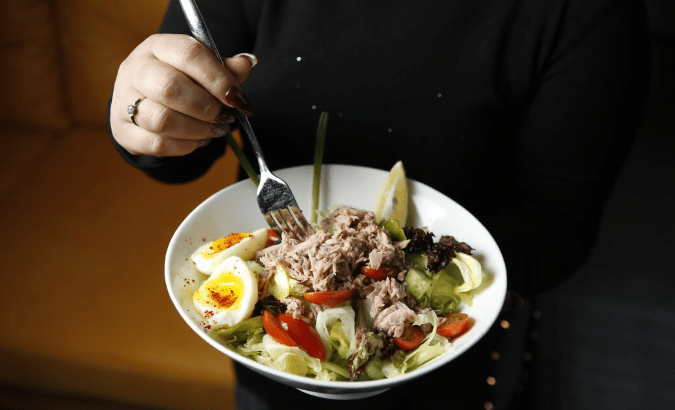
The wait might be a passing trend. Some of those have occurred in Chicago. However, those in line on a Wednesday at 5:45 don’t appear to be following trends. They appear to be a couple who have been planning this for the past two months and are a little anxious. There’s a sense that the dish is doing more than just satiating curiosity when you watch them sit down, watch the little white bowl arrive, and watch them become silent for a while. It’s resolving a dispute about what a ceviche should be that those diners were unaware they were having.
The recipe itself won’t change, regardless of whether the waiting list gets shorter or longer this summer. Rivero-Salazar has repeatedly stated that she will release it on the day the restaurant closes. Waiting is the only way in until then.
