

Over the past few years, there has been a subtle shift in American cooking that most people were unaware of until they were spooning warm butter over a piece of cod on a Tuesday night. Celebrity chefs and viral TikTok moments have both contributed, but they weren’t the catalyst. Millions of home cooks were persuaded that finishing fish was not something that only restaurants could do successfully by this sauce, which only required three ingredients, ten minutes, and an almost embarrassingly simple recipe.
It’s hardly a recipe at all. Garlic powder, butter, and lemon juice. In a small saucepan over medium-low heat, melt the butter. Add the garlic and lemon and stir. That’s all. The end product is a golden, glossy drizzle that falls somewhere between French beurre noisette and something your grandmother might have made on the spot without ever referring to it as a “sauce.” It might have gained popularity so quickly because of its simplicity. With a whisk and a prayer, there’s nothing to go wrong or emulsify.
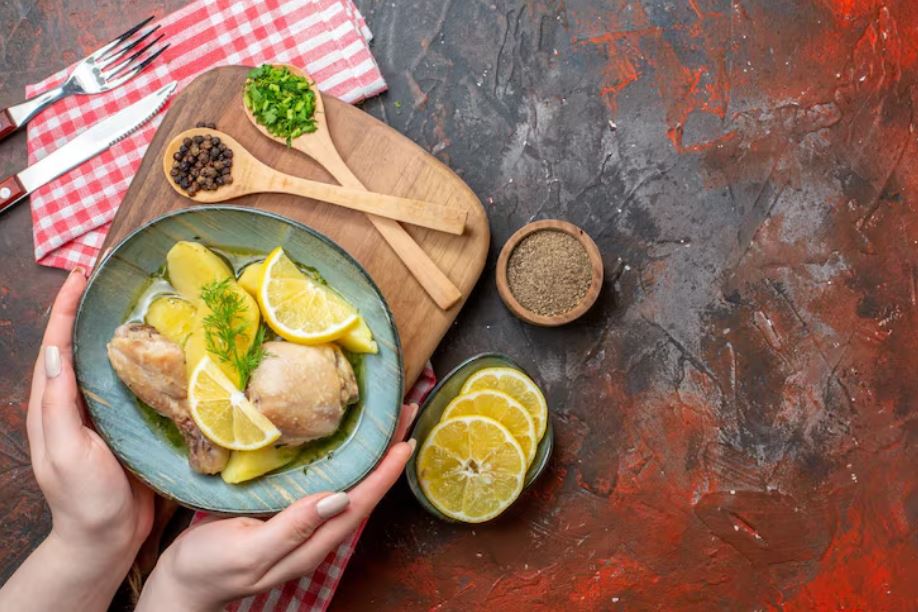
This specific combination works so well on fish because of the contrast it produces. Snapper, sole, orange roughy, and even frozen cod from Costco are examples of white fish fillets that are mild, lean, and, to be honest, a little monotonous by themselves. Richness is added by the butter. The lemon slices through it. The garlic provides structure to the entire dish. You can practically see the point at which the dish ceases to be a “healthy dinner” and becomes something a person would genuinely choose to eat again when you watch someone spoon it over a piece of pan-seared fish.
Although recipe bloggers have been promoting variations of this sauce for years, the current trend feels distinct. Entire weeknight dinner ecosystems have been built around websites like Wholesome Yum and Damn Delicious, and the comment sections provide a narrative that statistics cannot. According to reports, one husband who “does not like fish very well” lost his mind over it. It was served with jasmine rice and a dash of sauvignon blanc in the sauce by another commenter, demonstrating improvisation, which is precisely what a solid base recipe should promote. In a nation where seafood intimidation is still a real barrier, there’s a sense that the sauce has allowed people to cook fish without fear.
Here, the larger movement is also important. Inflation, smaller households, and a general disenchantment with recipes requiring seventeen specialty items have all contributed to the steady rise of minimalist cooking, which calls for fewer ingredients, less technique, and more flavor. A sauce with just three ingredients is ideal for that mood. You are not required to locate shallots or deglaze with vermouth. It requests that you open your refrigerator.
In a 2017 article in The New York Times, Melissa Clark discussed a variation of this strategy, claiming that melted butter combined with garlic, herbs, and lemon could enhance almost anything. She was correct, but it took another ten years and a boom in cooking during the pandemic for the concept to gain traction. For some home cooks, such as those who want dinner in twenty minutes but don’t want to feel like they’re settling, the technique has now become almost automatic.
Whether this results in Americans consuming more fish is still up for debate. Kitchen trends are often years ahead of consumption data. However, it is difficult to disregard the anecdotal evidence. When novice fish cooks ask whether cod or whiting will work in recipe comment sections, the response is nearly always in the affirmative. Almost any mild fillet can be carried by the sauce, which is also forgiving enough to withstand the inevitable moment when you forget to pat the fish dry or allow the butter to turn too dark.
A recipe that refuses to be complicated has a subtle satisfying quality. Every dish doesn’t have to prove anything. Garlic, butter, and lemon are sometimes sufficient—not just sufficient, but perfectly so. It feels less like a trend and more like a collective realization that good cooking was never as difficult as we made it when so many people are discovering this at the same time and spooning the same golden sauce over different fish in different kitchens across the nation.
