

Some foods make an announcement as soon as you begin preparing them, such as the sound of something sizzling in a skillet or the aroma of browning butter. That’s not exactly what butter-poached lobster is. It’s not as loud. One tablespoon of butter at a time is added to a small saucepan over medium-low heat with just a hint of steam, and you stir to prevent the butter from separating.
When you slide the lobster meat into the golden bath and watch it go from translucent to completely opaque in less than eight minutes, the entire process appears subtle to the point of being timid. The end product tastes like it came from a kitchen that charges sixty-five dollars for a main course. Using frozen cold-water tails, the total cost remains well under thirty dollars.
Beurre monté, the traditional method of creating an emulsified butter sauce, is French in origin. It involves whisking cold butter into a little quantity of water, one piece at a time, while maintaining a low enough heat so that the emulsion holds rather than splits. Temperature is the crucial factor. The temperature of the butter bath must remain between 160 and 175 degrees Fahrenheit, which is both warm enough to cook the lobster gradually and cool enough to prevent the butter from completely melting into its constituent fats and water.
Boiling causes the emulsion to shatter, the sauce to split and become oily, and the lobster’s texture to solidify rather than remain smooth. The technique is perhaps intimidating to those who haven’t tried it because, although the rule is simple, it needs real focus rather than sporadic glances. It shouldn’t. The majority of the ambiguity is eliminated using a kitchen thermometer.
The home cook’s practical solution in this situation is frozen cold-water lobster tails, which are more appropriate for this method than their name implies. The firm, sweet meat of cold-water tails, which are frequently from Canadian or Maine waters, reacts well to mild heat, and the butter bath makes up for any textural softening caused by freezing.
The process is simple: cut the soft bottom of the shell with kitchen scissors, remove the raw flesh by peeling it back, thoroughly dry it, and lightly season with salt and pepper. With the exception of a squeeze of lemon thrown in at the very end, the aromatics in the butter—two lightly crushed garlic cloves and a sprig of fresh tarragon or thyme—infuse the cooking fat with enough richness that the sauce doesn’t require anything extra when it’s done.
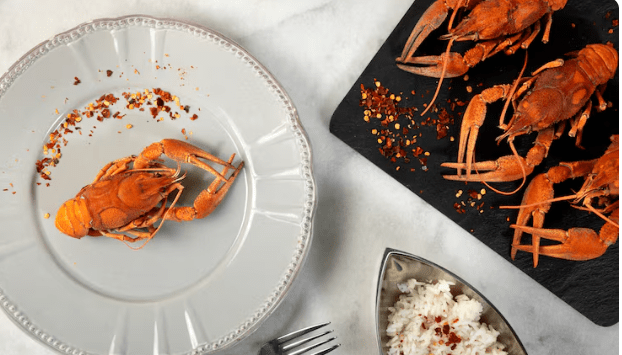
When you watch the lobster baste in the slow golden butter, spread it over the tails while they cook, and smell the garlic in the kitchen, you get the impression that this is one of those recipes that makes cooking at home feel more than just passable.
It’s unusual how much it costs and how much it produces. A dinner dish fit for a restaurant photo after eight minutes of careful heat control. When the lobster becomes completely opaque—ideally verified with a probe at 130 to 135 degrees—it is done. Serve it with a simple accompaniment, such as nice bread or nothing at all, after plating it and drizzling the lemon-finished butter over the top.
