

A certain type of person finds something that works and just won’t let it go. Not because I’m stubborn. More akin to loyalty. That type of person is Marco Reyes. For the past eleven years, a 38-year-old surfer who lives a few blocks from Mission Beach has prepared fish tacos every Friday using the same basic recipe, battered white fish, warm corn tortilla, and shredded cabbage piled on top like a little mountain. He no longer measures much. He is not required to.
He claims that it began almost by accident, just like most rituals. A friend gave him a homemade fish taco that someone had made on a camp stove close to the shore break after he had just returned from a morning session with salt still on his skin. It was easy. Squeeze in some lime; crispy on the outside, moist inside. There was a click. He went home that Friday and attempted to replicate it. He eventually settled on tempura flour, soda water, and Old Bay seasoning—a combination he had read about and instantly trusted—after making roughly four attempts over the course of the following month to get the batter just right.
| Information | Details |
|---|---|
| Subject | San Diego-Style Battered Fish Tacos |
| Origin | Baja California / San Diego, California |
| Primary Fish Used | White fish — tilapia, sculpin, or cod |
| Key Technique | Tempura or beer batter, deep-fried in vegetable oil at 360°F |
| Classic Toppings | Shredded cabbage, white sauce (sour cream + green salsa), hot sauce, lime |
| Tortilla Type | Warm corn tortillas |
| Cultural Credit | Popularized in the U.S. by Ralph Rubio of Rubio’s Coastal Grill |
| Prep + Cook Time | Approximately 25–30 minutes |
| Serving Size | 6 tacos per batch |
| Reference Recipe Source | Sam The Cooking Guy |
He will tell you, without being asked, that the batter is where most people make mistakes. It becomes doughy if it is too thick. If it’s too thin, it will crumble in the oil. If you’ve dried the fillets correctly and aren’t packing the pan too full, the tempura method gives you that papery, nearly shattering crunch on the outside while keeping the fish tender inside. He fries in a pot with deep sides and two inches of vegetable oil that is kept at a constant 360 degrees. A few minutes on each side. No more.
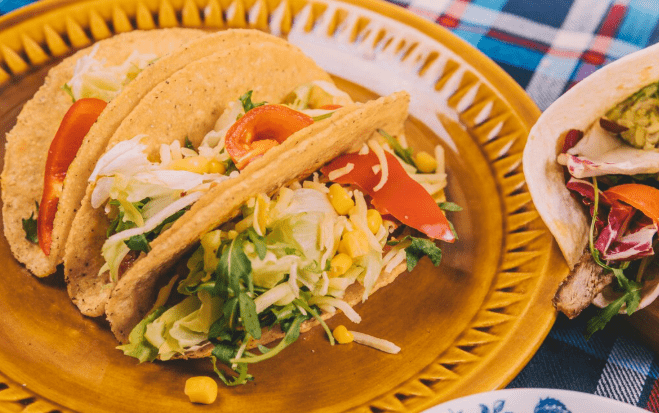
The white sauce is surprisingly straightforward: sour cream and green salsa are combined, stirred cold, and then spread onto the tortilla before adding anything else. It makes a difference, but it’s the kind of detail you wouldn’t notice unless someone pointed it out. The sauce prevents the fish and cabbage from slipping off with the first bite by acting as a sort of glue. To be honest, it’s still unclear if that was a happy accident or a deliberate recipe design. When you ask, Reyes simply shrugs.
It’s interesting to note that the idea of fish tacos has a contentious past. Through his Rubio’s Coastal Grill chain, Ralph Rubio is frequently credited with bringing them north of the border, but the true origin is probably Baja fishermen cooking smaller portions of their catch on the beach and stuffing them into warm tortillas with whatever was available. Whatever form it takes, the San Diego version seems to be more about a certain emotion than authenticity. close to the ocean. Simple. eaten, ideally, upright.
Reyes eats whatever fresh white fish is available that week, usually tilapia but sometimes sculpin if he can get it from someone at the docks. The cabbage is consistently green, thinly shredded, and added last. At the table, hot sauce is served. Lime cannot be compromised.
He’s never counted and seems almost offended by the idea that he should, but eleven years of Fridays equals about 572 batches. The ratio of salsa to sour cream may have been slightly altered a few years ago, but other than that, the recipe hasn’t changed all that much. That kind of consistency makes it difficult to ignore something subtly admirable. Not all customs require a special occasion. Friday is sometimes sufficient justification.
