Close Menu
FishonlineFishonline
  • Homepage
  • Privacy Policy
  • Disclaimer
  • About
  • Terms and Conditions
  • Seafood
  • News
  • Trending
  • Travel
What's Hot

The New Digital EU Border System Is Causing Real Delays for American Seafood Travellers. Here Is How to Prepare.

May 18, 2026

How Maryland’s Century-Old Partnership With the National Shellfish Sanitation Program Is Still Protecting Your Oysters Today

May 18, 2026

10 Seafood Recipes Perfect for a Kentucky Derby Watch Party That Are as Elegant as the Event Itself

May 18, 2026
FishonlineFishonline
Subscribe
  • Homepage
  • Privacy Policy
  • Disclaimer
  • About
  • Terms and Conditions
  • Seafood
  • News
  • Trending
  • Travel
FishonlineFishonline
Home » How Maryland’s Century-Old Partnership With the National Shellfish Sanitation Program Is Still Protecting Your Oysters Today
Travel

How Maryland’s Century-Old Partnership With the National Shellfish Sanitation Program Is Still Protecting Your Oysters Today

Mildred BellBy Mildred BellMay 18, 2026No Comments4 Mins Read
Facebook Twitter LinkedIn Telegram Pinterest Tumblr Reddit WhatsApp Email
Maryland's Century-Old Partnership
Share
Facebook Twitter LinkedIn Pinterest Email

The Choptank River appears brown-green, choppy, and slightly metallic in the light on a rainy morning, just like it always does in late spring. While two underwater drones hum across the riverbed, a graduate student named Keshav Rajasekaran is bent over a laptop, his T-shirt tied around his head like a hood, trying to keep the screen readable. He’s trying to find oysters. He continues to find sand. As you watch him work, it’s difficult not to consider how much unseen infrastructure lies beneath that one annoying sentence: “sand, sand, sand,” and how a century-old food safety system contributes to the final catch’s suitability for consumption.

The National Shellfish Sanitation Program was established in the 1920s after a series of typhoid outbreaks linked to raw oysters scared people away from the half-shell for years. Maryland was there from the start, with its rivers, bays, and watermen. The state was aware that it stood to lose a great deal. In its most basic form, the agreement has hardly changed: states monitor their own waters, the FDA conducts state audits, and oysters that end up at a restaurant in Baltimore or a fish counter in Denver are meant to be able to be traced back to a particular patch of bottom on a particular tide.

It’s not a glamorous job. It includes lab reports, water samples, and classification maps that indicate which areas are restricted, prohibited, conditionally approved, and approved. Even now, there’s a stubbornly analogous quality to it. Docks are still walked by inspectors. Bushels are still pulled open by them. They continue to record things in writing. However, the oyster industry in the Chesapeake most likely would not have survived the twentieth century, much less the current year, without that tedious, repetitive, and largely unappreciative oversight.

Because it’s having an incredible year by all standards. The 2025 spat count, which measures the number of baby oysters settling on reefs, was approximately six times higher than the long-term average, according to Governor Wes Moore. This is the second-highest reading in the 41-year history of the modern fall survey.
Maryland's Century-Old Partnership
Maryland’s Century-Old Partnership

The level of biomass has reached a 33-year high. Dermo and MSX disease pressure, which devastated the fishery in previous decades, is remarkably low. The mortality rate is among the lowest ever. Although scientists tend to be more cautious, pointing out that oyster populations have always been cyclical and that a single banner year does not reverse decades of loss, there is a temptation to call this a turnaround.

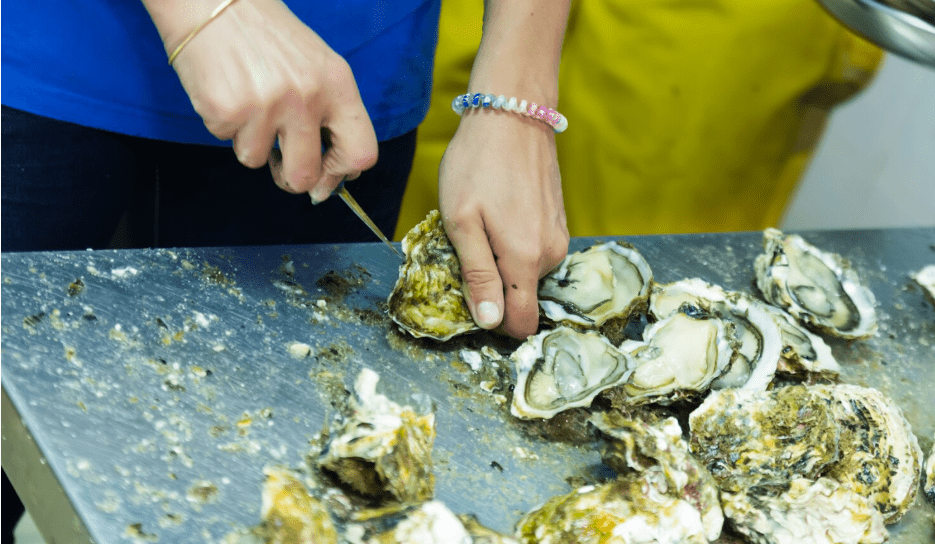
Nevertheless, both the numbers and the chain of custody around them are important. As filter feeders, oysters retain the contents of the water. The sanitation program exists because of this biology, which also explains why Maryland’s involvement in it isn’t ceremonial. Someone needs to determine whether the water surrounding those bars is safe enough to harvest from when a sanctuary in the St. Marys River posts more than 2,100 spat per bushel. Someone must attest that the dealer who shucks the oysters did so under terms approved by a federal auditor when watermen extract $18 million annually from the bay. The connective tissue is the program.

Speaking with those who work in this field gives me the impression that the partnership has outlasted most institutions that are a century old. Yes, it is bureaucratic. It may be sluggish. However, when refrigeration evolved, Vibrio became a summertime concern, and aquaculture developed from a curiosity into a significant portion of the industry, it bent with the science. Drones, machine learning, and the kind of precision-farming equipment Miao Yu’s team is experimenting with on the Choptank have caused it to bend once more. The robots will improve. The water will continue to change. Somehow, the 1925 handshake is still effective.

Maryland Partnership
Share. Facebook Twitter Pinterest LinkedIn Tumblr Telegram Email
Previous Article10 Seafood Recipes Perfect for a Kentucky Derby Watch Party That Are as Elegant as the Event Itself
Next Article The New Digital EU Border System Is Causing Real Delays for American Seafood Travellers. Here Is How to Prepare.
Mildred Bell

    Mildred Bell is a full-time digital professional, seasoned traveler, and ardent outdoor enthusiast who infuses her writing with a sincere love of the natural world. In her role as Senior Editor at fishonline.co.uk, the online home of Seafood Audit International, Mildred is in charge of editorial content covering news about the seafood industry, updates on food safety, politics, finance, and commentary from prominent figures in the fishing and seafood industries. Beyond the desk, Mildred has a deeper connection to the material she edits. She is a passionate angler who has spent years fishing open waters, rivers, and coastlines throughout the UK and beyond. Her genuine knowledge of the fishing industry informs all of her editorial choices. Mildred's passion for travel stems from the same restless curiosity. She has traveled to many different continents with a rod, a notebook, and an eye for the stories that others overlook.

    Related Posts

    The Growing Number of American Travellers Choosing Fishing Experiences Over Luxury Resorts — and Never Looking Back

    May 14, 2026

    How Travelling the Gulf Coast From Tampa to New Orleans on a $2,000 Budget Turned Into the Trip of a Lifetime

    May 11, 2026

    I Travelled to Every Major Clam Chowder City in America in One Month – Here Is the Definitive Ranking.

    May 11, 2026
    Add A Comment
    Leave A Reply Cancel Reply

    You must be logged in to post a comment.

    The New Digital EU Border System Is Causing Real Delays for American Seafood Travellers. Here Is How to Prepare.

    Seafood May 18, 2026

    A subtle form of annoyance has been growing somewhere between the cold line at the…

    How Maryland’s Century-Old Partnership With the National Shellfish Sanitation Program Is Still Protecting Your Oysters Today

    May 18, 2026

    10 Seafood Recipes Perfect for a Kentucky Derby Watch Party That Are as Elegant as the Event Itself

    May 18, 2026

    The Copenhagen Fish Market That Changed the Way Ferran Adrià Thinks About Ingredients — and How to Visit It

    May 14, 2026

    Tamashiro Market’s Family-Run Legacy Just Got the Most Heartwarming Community Response in Its History

    May 14, 2026

    How Imported Shrimp From Southeast Asia Is Still Undercutting American Gulf Coast Fishermen — Despite Years of Legislation

    May 14, 2026

    The Fish Tacos Recipe That a San Diego Surfer Says He Has Made Every Friday for the Past Eleven Years

    May 14, 2026

    Fishonline.co.uk is the official online home of Seafood Audit International, a UK-based food safety and quality management consultancy with more than 25 years of hands-on experience in the global seafood and fishing industries. Based in Wellington, Somerset, we work with fish processors, food businesses, government inspection services, and international organisations to deliver practical, measurable, and cost-effective food safety solutions.We are not a generic food safety company. Seafood and fish products are our entire focus — and that specialisation is what makes us different.Who We AreSeafood Audit International was founded on a straightforward belief: that food safety training and quality management should be practical, accessible, and genuinely useful — not a box-ticking exercise.For over two decades we have worked with clients ranging from high street fish retailers and small-scale processors to large-scale international fishing operations, government bodies, and seafood exporters in the developing world. Our experience stretches from dhows on Lake Victoria to the trawlers of the UK coastline — giving us a depth of real-world knowledge that classroom-only consultancies simply cannot match.Our lead consultant is a fully qualified auditor with extensive experience across British Retail Consortium (BRC) and ISO 9000 quality management standards, HACCP implementation, food hygiene, and the development of national food safety legislation for governments internationally.What We DoSeafood Audit International provides a comprehensive range of training, auditing, and consultancy services tailored specifically to the seafood and fishing industries:Training Courses

    Top Insights

    The New Digital EU Border System Is Causing Real Delays for American Seafood Travellers. Here Is How to Prepare.

    May 18, 2026

    How Maryland’s Century-Old Partnership With the National Shellfish Sanitation Program Is Still Protecting Your Oysters Today

    May 18, 2026

    10 Seafood Recipes Perfect for a Kentucky Derby Watch Party That Are as Elegant as the Event Itself

    May 18, 2026

    The Copenhagen Fish Market That Changed the Way Ferran Adrià Thinks About Ingredients — and How to Visit It

    May 14, 2026

    Tamashiro Market’s Family-Run Legacy Just Got the Most Heartwarming Community Response in Its History

    May 14, 2026
    Disclaimer

    Important Editorial Notice: All content on fishonline.co.uk, including that pertaining to business finance, political developments, financial markets, and regulatory changes, is provided solely for informational and discussion purposes. It is merely the opinion of a third party and does not represent the expert advice of fishonline.co.uk or Seafood Audit International.
    We strongly advise against taking any action based on any political, legal, or financial information found on this website without first consulting an impartial expert. Seafood Audit International is not governed by the Financial Conduct Authority (FCA) and is not permitted to offer financial advice. Always seek advice from an independent financial advisor authorized by the FCA before making any financial decisions. Seek legal advice from an experienced attorney.

    © 2026 ThemeSphere. Designed by ThemeSphere.
    • Homepage
    • Privacy Policy
    • Disclaimer
    • About
    • Terms and Conditions
    • Seafood
    • News
    • Trending
    • Travel

    Type above and press Enter to search. Press Esc to cancel.