

On a Tuesday night in Charleston, South Carolina, there is still a line outside Hank’s Seafood that extends past the sidewalk crack where someone planted a flower in a tin can. This is not a weekend or a festival. That particular detail was not planned. It simply exists. In a city where residents have been concerned about their plates for longer than the majority of American cities have been around, that kind of thing takes place.
The topic of America’s top seafood cities is frequently discussed in the same way. Boston receives the first nomination, typically due to its clam chowder and Union Oyster House’s unwavering romance. Next is Seattle, which rides the chilly Pacific current that produces amazing king salmon and Dungeness crab, as well as the theatrical fish-throwing reputation of Pike Place Market. Since it’s difficult to argue with blackened redfish and oysters Rockefeller in the French Quarter on a warm night, New Orleans consistently wins. These are authentic locations with authentic cuisine and authentic histories. There is no denying that.
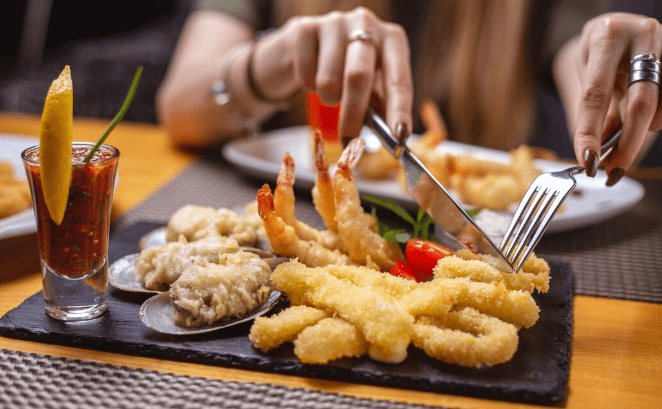
However, Charleston continues to be overlooked in the midst of that well-worn argument. And rather than being a question of taste, that is beginning to feel like a real oversight.
For almost 350 years, Charleston’s economy has been heavily reliant on the fishing sector. That is the real skeleton of the city, not a statistic taken from a travel guide. Charleston developed a culinary language around its seafood, in contrast to Boston, which built its identity around seafood in a time when the Atlantic practically volunteered fish into boats, or Seattle, which grew around a market that became more about spectacle than sustenance. Roe thickened she-crab soup. Grits and shrimp are typically made on weeknights by people’s grandmothers rather than as a popular brunch dish. Fried oysters that have a distinct estuary flavor, are clean, briny, and difficult to produce elsewhere.
The fact that Hank’s Seafood has been named the best seafood restaurant in the city for fifteen years in a row is either an indication of exceptional consistency or a place that has discovered something genuine and maintained it. Most likely, both interpretations are accurate. In the restaurant business, where surviving past five is regarded as something of a miracle, fifteen years is a long time. It’s difficult to ignore what that figure stands for: not only culinary brilliance but also a kind of ingrained confidence that doesn’t require continual reinvention.
The surrounding environment is also important. Fleet Landing is situated directly on the water. The people who frequent Pearlz Oyster Bar appear to be locals rather than tourists. Chefs can drive to the farms and estuaries that supply these kitchens on Wednesdays and alter the menu by Thursday because they are so close. Charleston’s supply chain intimacy is comparable to Seattle’s Pike Place, but it is rarely attained at the restaurant level. Although New Orleans has connections to the Gulf, the city is still quietly recovering from the damage caused by the BP oil spill and post-Katrina disruptions.
All of this does not imply that you should avoid New Orleans gumbo or that Boston’s lobster rolls are overrated. Honestly, those cities earned their reputations. However, Charleston has been working more slowly and perhaps more deeply to create a seafood culture that isn’t dependent on a single iconic dish or well-known market to keep it cohesive. It’s possible that no one makes a strong case for Charleston because the patrons are too preoccupied with their meals to do so. That’s how the best places can occasionally be.
