

The smell of butter, river water, and something frying somewhere in the distance permeates the city. On the first day, it felt almost offensive to walk through the French Quarter, past the po’boy joints and the plastic cups of frozen daiquiris that were perspiring in the June heat. New Orleans doesn’t practice moderation. However, there was a plan, which was straightforward and a little crazy: eat only seafood from the area for seven days, and closely monitor your body’s reactions.
Gumbo is not allowed with chicken. No rice and red beans. Obviously, no beignets. As long as it swam there first, the city was free to cook anything that came out of the Gulf, including shrimp, catfish, oysters, crab, and redfish.
Protein was the main focus of the first two days. A corner spot on Magazine Street served grilled redfish. Across the street, a trumpet player was playing something slow and unrecognizable while a bowl of boiled shrimp was consumed on a plastic table. The meals felt lighter than anticipated. It wasn’t light in the sense of being unsatisfactory, but rather light in the sense that there wasn’t the typical post-meal heaviness that comes after a plate of pasta or a burger. By day two’s evening, there was a discernible clarity to it, a physical ease that is difficult to attribute to anything else when the diet is so drastically reduced.
It’s impossible to pinpoint exactly what omega-3s were doing in real time, but they were doing something. The fatty fish found on menus, such as Gulf tuna and salmon, contain DHA and EPA in ways that most people don’t get nearly enough of in a typical week. The energy felt more consistent, whether it was because of that, the protein, or just eating fewer processed foods. No collapse in the afternoon. By three o’clock, there won’t be a strong desire for caffeine. One week isn’t a clinical trial, so it might have been a coincidence, but it was difficult to ignore.
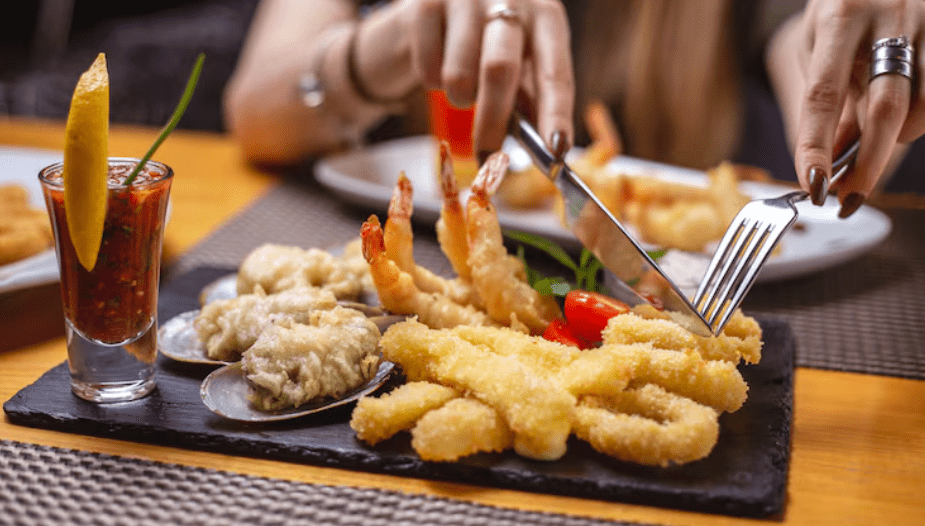
The variety began acting in an unexpected way by day four. Lunch at Casamento’s is oysters. The woman behind the counter, who appeared slightly irritated to be questioned about it, said that the fried catfish at a location without a sign near the Tremé and the crawfish àouffée came from a kitchen that had been preparing it in the same manner since 1987. The week didn’t feel like a deprivation thanks to switching between shellfish and fin fish, as well as between raw and fried and poached preparations. Strangely, it felt abundant.
Most likely, the minerals were building up in ways that were undetectable to the average person. Selenium, iodine, and vitamin B12 don’t accumulate in your body, but they do show up in blood tests and long-term function. In particular, shellfish contains nutrients that land-based proteins frequently cannot match. Sitting inside a century-old oyster house makes it easy to understand why coastal communities have historically had different health profiles from landlocked ones.
There was a genuine moment of skepticism on day six. When a platter of mixed Gulf shrimp with a sauce that was mostly butter arrived, it became unclear if this was still considered clean eating or if it was just an expensive indulgence. Most likely in the middle of the two. Demanding butter would be like missing the whole point of the experiment, and New Orleans doesn’t apologize for it.
The body had become more subdued by day seven. Hunger still occurred, but it did so in a predictable, calm manner rather than as the nervous, restless signal that occasionally follows days of processed food and irregular eating. Most nights, I felt like I was sleeping deeper, but that could mean anything. The body felt well-used, but the weight hadn’t decreased significantly. fed correctly, not merely filled.
It’s more difficult than you might think to sum up what a week of local New Orleans seafood actually accomplishes. You are not changed by it. It doesn’t make things better. However, it does subtly and unobtrusively remind the body of what it’s like to eat food that came from a real place—pulled from real water, by real people, and not far from where you’re sitting. That is not insignificant. It may be everything in a city that values food more than practically any other place in the nation.
