

In Charleston, Mississippi, the air begins to smell different just before Labor Day weekend. Not like cut grass, not like rain. similar to heating lard in a cast-iron pot. For generations, that aroma has permeated the same reunion grounds, signaling the beginning of the fish fry—something that no official invitation can ever fully convey.
Chef Jennifer Hill Booker has discussed this particular memory in a way that only someone who has carried it for decades can do. Large cast-iron pots filled with lard and bubbling. Brim, buffalo, perch, whole catfish, and french fries are all combined and turned golden. The completed fish was served on white bread slices and consumed upright with mustard and hot pepper sauce. No plates are needed. No formalities. Just crunch, heat, and the satisfaction of a perfectly prepared dish.
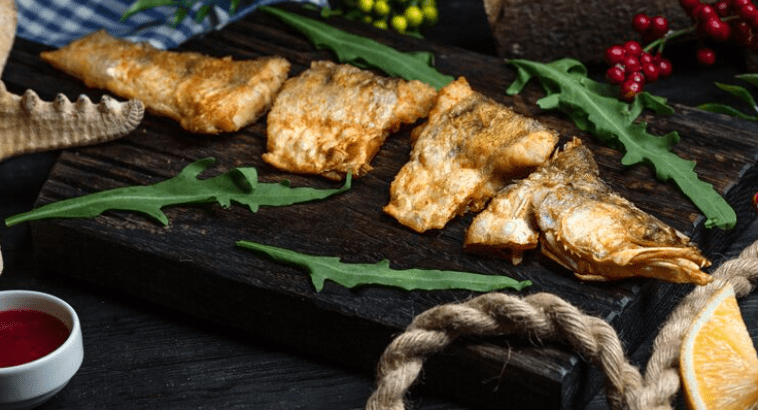
That’s the fried catfish custom of the Mississippi Delta, and it’s stubbornly, almost defiantly, straightforward.
The whole point of this is the cornmeal coating. Not a flour crust, not a thick beer batter. Buttermilk, salt, cayenne, and finely ground yellow cornmeal. More than most people realize, the buttermilk soak is important because it eliminates the muddy undertone that wild-caught catfish may have, leaving the fish underneath cleaner and milder. After soaking the fillets for ten minutes, pat them dry completely, roll them through the seasoned cornmeal, and wait until they float without touching them. Generations of Mississippi cooks have been waiting for that floating moment, which occurs when a catfish fillet rises in hot oil. It denotes completion. It denotes preparedness.
The oil temperature is fixed at 350°F and cannot be changed. If the temperature is too low, the crust will absorb grease and become limp. When it’s too hot, the fish burns on the outside before it cooks through. This is better controlled by cast iron than by any contemporary pan, which is likely why so many Delta cooks still refuse to use anything else. Although that is obviously more romantic than scientific, there is a feeling that the skillet itself contains some institutional memory.
Hushpuppies have long been a staple at the table alongside catfish. Spoonfuls of the batter, which consists of cornmeal, flour, buttermilk, egg, grated onion, and a dash of cayenne, are dropped into the same hot oil and fried until the center is soft and the edges are golden. They might be there primarily to provide food for people while the fish is still too hot to handle. That seems like a very valid explanation.
Throughout the middle of the 20th century, Mississippi catfish farming greatly increased, making farm-raised catfish both widely accessible and genuinely consistent in quality. Farm-raised fillets fry more consistently than wild-caught ones, and because they are uniformly thick and weigh about six ounces each, they are ideal for a crowded fish fry where timing is crucial. However, some Delta cooks are adamant about catching their own. As you might anticipate, that preference hasn’t diminished.
When you watch this recipe described and picture the Charleston reunion grounds, you’ll notice how little has changed. Yes, you can replace the lard with vegetable oil. Perhaps the cast-iron pot is now smaller. However, the recipe follows the same steps as it did five generations ago: dry the fish, season the cornmeal, heat the oil, and wait for the fish to float. There isn’t a modern variation that has taken its place, nor is there a shortcut that makes it better. Food isn’t really the key to that kind of perseverance. It’s about the significance of the food each time it appears.
