

A morning at Toyosu market, a few counter seats at a sushi bar in Ginza or Shinjuku, and perhaps a kaiseki dinner somewhere close to Gion are the typical routes taken by most food visits to Japan. Without a doubt, it’s all worthwhile. The issue with organizing a trip that revolves solely around Tokyo and Kyoto, however, is that Japan’s truly remarkable seafood culture is found mostly elsewhere: in northern islands where sea urchins feed on kelp so rich that it tastes entirely different from anything served in a city restaurant; in morning markets where fishermen are still washing down the boats; and in coastal izakayas where the menu changes with whatever came in that week.
| Region | Seafood Speciality | Key Venue |
|---|---|---|
| Hokkaido – Hakodate | Uni (sea urchin), ikura, sweet shrimp | Donburi Yokocho at Hakodate Morning Market — build your own Katte-don rice bowl |
| Hokkaido – Otaru | Kaisendon (seafood rice bowls), premium sake | Sankaku Market, steps from Otaru Station |
| Hokkaido – Rishiri & Rebun Islands | World-class sea urchin, kelp-fed | Remote northern islands; best accessed by ferry from Wakkanai |
| Kanazawa – Omicho Market | Kanibo (snow crab), buri (yellowtail), nodoguro | Omicho Market — 300-year-old market with 200+ stalls; “Kitchen of Kanazawa” |
| Toyama Bay | Shiro ebi (white shrimp), hotaru ika (firefly squid) | Short train ride from Kanazawa along the Hokuriku Coast |
| Fukuoka – Yobuko Port | Ikizukuri (live dancing squid, served transparent and sliced tableside) | Yobuko, approximately 90 minutes from central Fukuoka |
| Fukuoka – Yanagibashi Market | Fresh sashimi blocks at wholesale prices | “Hakata Kitchen” — authentic fishmonger market used by locals and chefs |
| Shizuoka – Yaizu Port | Katsuo (skipjack tuna), sakura ebi (sakura shrimp) | Japan’s premier skipjack port; peak season: spring |
| Rail Access | Best covered by JR-West or JR-East Pass | Japan Rail Pass — plan route from Tokyo → Kanazawa → Fukuoka for coastal coverage |
The first place to go is Hokkaido, which isn’t precisely a secret but is frequently visited without truly appreciating what makes it unique. The Donburi Yokocho alley within Hakodate’s morning market runs on a straightforward basis that encourages early risers. You fill a bowl with heated rice and add your preferred toppings from the booths, like as uni, ikura, sweet shrimp, and possibly some crab.
Because it doesn’t travel far and hasn’t been sitting in packaging, the uni in southern Hokkaido has a creaminess and saltiness that is noticeably different from what is exported to Tokyo. Otaru’s Sankaku Market, which sells excellent local sake and kaisendon, is located right next to the train station 1 hour north. It’s likely that Otaru is neglected because it’s so accessible; it doesn’t require effort, so it doesn’t feel like a discovery.
The Rishiri and Rebun Islands in far northern Hokkaido are the kind of excursion that requires careful planning and pays off appropriately for the dedicated seafood traveler. Feeding on premium kelp in cool, pure water, the uni harvested there is regarded as one of the greatest in the world. It takes a ferry from Wakkanai and at least one or two nights to get there; it’s not a day trip. However, it’s the kind of location that tends to establish a permanent benchmark for what sea urchin tastes like at its peak.
Kanazawa has a strong argument for being the most underappreciated culinary city in Japan. With over 200 stalls selling snow crab, yellowtail, and the fish that Kanazawa residents consider a source of civic pride—nodoguro, or blackthroat seaperch, sometimes referred to as the “white fish fatty tuna” due to its marbled richness—Omicho Market, which has been in operation for three centuries, is crowded with local chefs and home cooks in the early morning.
It’s the kind of food you don’t get in Tokyo restaurants at the same quality since it doesn’t ship as good as it eats. It’s best served grilled or nigiri. Toyama Bay, which is home to shiro ebi and the remarkable hotaru ika, firefly squid that light bioluminescent blue when alive and taste unlike any other squid preparation, can be reached by taking a quick train ride along the Hokuriku coast.
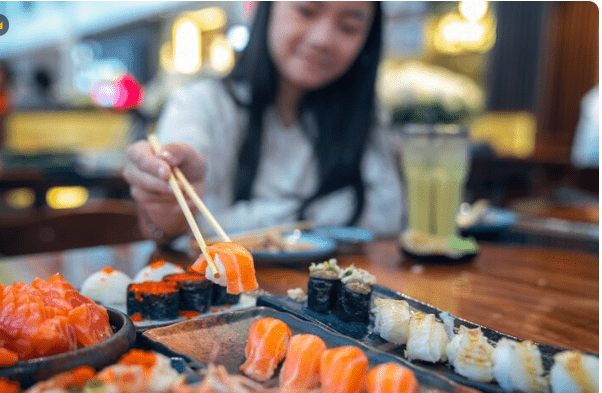
There should be a separate itinerary for Fukuoka. In a scene more akin to a neighborhood get-together than a tourist destination, the yatai kiosks along the Nakagawa riverbank serve mentako and goma saba, mackerel in sesame soy sauce that tastes great with a cold Sapporo, after dark. Yobuko Port, which is about 90 minutes outside the city, offers ikizukuri, which is live squid that is sliced at the table while transparent and still in motion. so’s one of those dishes that you have to try to understand, and Yobuko is the best spot to do so.
