Close Menu
FishonlineFishonline
  • Homepage
  • Contact
  • Privacy Policy
  • Disclaimer
  • About
  • TOS
  • Seafood
  • News
  • Trending
  • Travel
What's Hot

Why the Florida Keys Is Still the Greatest Seafood Destination in America — and How to Eat There Without Being a Tourist

June 23, 2026

How Complex Sustainability Rules Are Leaving American Seafood Consumers Completely Lost in the Supermarket Aisle

June 23, 2026

Pennsylvania Is Proposing New Trout Size Limits That Could Fundamentally Change Weekend Fishing Across the State

June 23, 2026
FishonlineFishonline
Subscribe
  • Homepage
  • Contact
  • Privacy Policy
  • Disclaimer
  • About
  • TOS
  • Seafood
  • News
  • Trending
  • Travel
FishonlineFishonline
Home » How Complex Sustainability Rules Are Leaving American Seafood Consumers Completely Lost in the Supermarket Aisle
Seafood

How Complex Sustainability Rules Are Leaving American Seafood Consumers Completely Lost in the Supermarket Aisle

Mildred BellBy Mildred BellJune 23, 2026Updated:June 23, 2026No Comments3 Mins Read
Facebook Twitter LinkedIn Telegram Pinterest Tumblr Reddit WhatsApp Email
American Seafood Consumers
Share
Facebook Twitter LinkedIn Pinterest Email

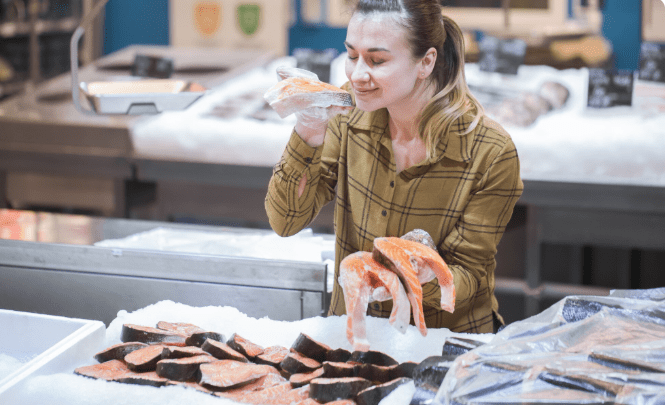
If you spend enough time in the fish area of a large American supermarket, you will eventually get paralyzed. It’s because there’s too much to read, not because there’s nothing to buy. Labels pile on top of one another. Regional certification badges, “responsibly sourced” labels, “sustainably harvested” statements, blue fish emblems, and green checkmarks. Even after reading the back panel of a bag of frozen shrimp for four minutes, you might not be able to determine if it is a better or worse option than the bag next to it. This isn’t a failing of the customer. There is a systemic issue.

Before reaching a retail shelf, the thousands of species that make up the American seafood supply are obtained from dozens of nations via supply chains that may go via several processors, distributors, and repackagers. There are issues with meat as well, but beef is beef. Seafood includes Pacific tuna, Gulf shrimp, Atlantic cod, and Chilean sea bass, each of which has its own population statistics, fishing technique considerations, aquaculture alternatives, and a history of being classified as “avoid” by one organization and “sustainable” by another in the same year.

The most well-known eco-certification is likely the Marine Stewardship Council’s blue fish label, but it coexists with retail-specific grading systems, Seafood Watch color ratings, country-of-origin claims, and a rotating cast of third-party auditors whose standards vary in ways that only experts can monitor.

Furthermore, sustainability requirements have expanded beyond the initial goals of fishery managers. Bycatch rates and stock evaluations are no longer the only factors. Carbon footprints, labor standards on fishing vessels, and crew conditions—including, in certain situations, whether workers have internet access at sea—are being assessed by certification agencies. There is a good reason to take these things into account. Additionally, it is plausible to argue that their addition to an already perplexing consumer-facing label system without a clear explanation exacerbates rather than resolves the issue.

The dispute over wild vs farmed salmon serves as an example of how even knowledgeable consumers find it difficult to adapt to changing expert opinions. Because of worries about open-net pen aquaculture and its effects on the environment, it was long believed that wild-caught Alaska salmon was preferable to farmed Atlantic salmon. Then, in some areas, aquaculture techniques improved. Then, in others, they didn’t. Then the topic of climate constraints on wild Alaska runs came up. Today, the answer is dependent on particular farms, areas, and years—a level of specificity that no grocery store label can convey to a person standing at a refrigerated display case on a Tuesday night with twenty minutes before supper.

Buy American is a sensible place to start, according to NOAA Fisheries. Despite their shortcomings, federal sustainability guidelines that are both legally enforceable and scientifically monitored regulate wild-capture fisheries and aquaculture activities in the United States. Although domestic seafood has a baseline of control that imports from many other nations do not, it is not always the greatest option for the environment in every area. That eliminates a great deal of confusion on its own.
American Seafood Consumers

Large merchants with clear sourcing standards handle part of the work for customers who don’t want to keep track of certification programs on their own. While some local grocers have created their own procurement guidelines, Whole Foods has upheld sustainability requirements for seafood for a longer period of time than most companies. Customers are relying on a retailer’s screening process without having direct access to the underlying data, which limits transparency.

American Seafood Consumers Buy American-caught seafood Marine Stewardship Council (MSC)
Share. Facebook Twitter Pinterest LinkedIn Tumblr Telegram Email
Previous ArticlePennsylvania Is Proposing New Trout Size Limits That Could Fundamentally Change Weekend Fishing Across the State
Next Article Why the Florida Keys Is Still the Greatest Seafood Destination in America — and How to Eat There Without Being a Tourist
Mildred Bell

    Mildred Bell is a full-time digital professional, seasoned traveler, and ardent outdoor enthusiast who infuses her writing with a sincere love of the natural world. In her role as Senior Editor at fishonline.co.uk, the online home of Seafood Audit International, Mildred is in charge of editorial content covering news about the seafood industry, updates on food safety, politics, finance, and commentary from prominent figures in the fishing and seafood industries. Beyond the desk, Mildred has a deeper connection to the material she edits. She is a passionate angler who has spent years fishing open waters, rivers, and coastlines throughout the UK and beyond. Her genuine knowledge of the fishing industry informs all of her editorial choices. Mildred's passion for travel stems from the same restless curiosity. She has traveled to many different continents with a rod, a notebook, and an eye for the stories that others overlook.

    Related Posts

    Why the Florida Keys Is Still the Greatest Seafood Destination in America — and How to Eat There Without Being a Tourist

    June 23, 2026

    Pennsylvania Is Proposing New Trout Size Limits That Could Fundamentally Change Weekend Fishing Across the State

    June 23, 2026

    $250,000 Worth of Stolen Seafood Was Recovered From a Cargo Truck in Guadalupe County. The Story Is Wild

    June 23, 2026
    Add A Comment
    Leave A Reply Cancel Reply

    You must be logged in to post a comment.

    Why the Florida Keys Is Still the Greatest Seafood Destination in America — and How to Eat There Without Being a Tourist

    Seafood June 23, 2026

    The frozen margarita, the conch fritter from a chain restaurant on Duval Street, and the…

    How Complex Sustainability Rules Are Leaving American Seafood Consumers Completely Lost in the Supermarket Aisle

    June 23, 2026

    Pennsylvania Is Proposing New Trout Size Limits That Could Fundamentally Change Weekend Fishing Across the State

    June 23, 2026

    $250,000 Worth of Stolen Seafood Was Recovered From a Cargo Truck in Guadalupe County. The Story Is Wild

    June 23, 2026

    Inside the Fight to Save Wild Atlantic Salmon From a Regulatory Framework That Scientists Say Is Already Too Late

    June 23, 2026

    I Travelled to Five American Oyster Regions in Three Weeks. The Winner Was Not Who Anyone Expected

    June 23, 2026

    The ‘Deadzoning’ Travel Trend Encouraging Seafood Lovers to Ditch the Tourist Trail and Find Genuine Fishing Communities

    June 23, 2026

    Fishonline.co.uk is the official online home of Seafood Audit International, a UK-based food safety and quality management consultancy with more than 25 years of hands-on experience in the global seafood and fishing industries. Based in Wellington, Somerset, we work with fish processors, food businesses, government inspection services, and international organisations to deliver practical, measurable, and cost-effective food safety solutions.We are not a generic food safety company. Seafood and fish products are our entire focus — and that specialisation is what makes us different.Who We AreSeafood Audit International was founded on a straightforward belief: that food safety training and quality management should be practical, accessible, and genuinely useful — not a box-ticking exercise.For over two decades we have worked with clients ranging from high street fish retailers and small-scale processors to large-scale international fishing operations, government bodies, and seafood exporters in the developing world. Our experience stretches from dhows on Lake Victoria to the trawlers of the UK coastline — giving us a depth of real-world knowledge that classroom-only consultancies simply cannot match.Our lead consultant is a fully qualified auditor with extensive experience across British Retail Consortium (BRC) and ISO 9000 quality management standards, HACCP implementation, food hygiene, and the development of national food safety legislation for governments internationally.What We DoSeafood Audit International provides a comprehensive range of training, auditing, and consultancy services tailored specifically to the seafood and fishing industries:Training Courses

    Top Insights

    Why the Florida Keys Is Still the Greatest Seafood Destination in America — and How to Eat There Without Being a Tourist

    June 23, 2026

    How Complex Sustainability Rules Are Leaving American Seafood Consumers Completely Lost in the Supermarket Aisle

    June 23, 2026

    Pennsylvania Is Proposing New Trout Size Limits That Could Fundamentally Change Weekend Fishing Across the State

    June 23, 2026

    $250,000 Worth of Stolen Seafood Was Recovered From a Cargo Truck in Guadalupe County. The Story Is Wild

    June 23, 2026

    Inside the Fight to Save Wild Atlantic Salmon From a Regulatory Framework That Scientists Say Is Already Too Late

    June 23, 2026
    Disclaimer

    Important Editorial Notice: All content on fishonline.co.uk, including that pertaining to business finance, political developments, financial markets, and regulatory changes, is provided solely for informational and discussion purposes. It is merely the opinion of a third party and does not represent the expert advice of fishonline.co.uk or Seafood Audit International.
    We strongly advise against taking any action based on any political, legal, or financial information found on this website without first consulting an impartial expert. Seafood Audit International is not governed by the Financial Conduct Authority (FCA) and is not permitted to offer financial advice. Always seek advice from an independent financial advisor authorized by the FCA before making any financial decisions. Seek legal advice from an experienced attorney.

    © 2026 ThemeSphere. Designed by ThemeSphere.
    • Homepage
    • Contact
    • Privacy Policy
    • Disclaimer
    • About
    • TOS
    • Seafood
    • News
    • Trending
    • Travel

    Type above and press Enter to search. Press Esc to cancel.