

Black cod has experienced an odd transformation somewhere between the grandeur of Nobu’s Tribeca dining room and the spacious aisles of a Midwestern Costco. Once considered a special-occasion indulgence, this dish has quietly made its way into the regular American home cook’s repertoire. It was once ordered in hushed tones during anniversary dinners. These days, people make it on Wednesdays. in sweatpants. A child’s bath time and a load of laundry. Anyone who observes how Americans actually eat can sense this kind of cultural drift, even though it doesn’t make headlines.
The recipe itself is almost too easy. A little sugar, miso, mirin, sake, and occasionally a dash of soy sauce. Wait, broil, whisk, and brush. That’s pretty much it. The Nobu version, which was made popular in the 1990s by Chef Nobu Matsuhisa and was once referred to by food writer Hugh Merwin as “essentially shorthand for the Nobu empire itself,” required a three-day marinade. That part has been courteously overlooked by most weeknight cooks. They’ve found that you can get about 80% of the way there in thirty minutes. And on a Tuesday, eighty percent of Nobu is more than enough.
It’s interesting to note how the discourse surrounding this dish has changed. It was marketed as restaurant-worthy five years ago, the kind of centerpiece for dinner parties you saved for people you wanted to slightly intimidate. Making it “several times a month,” according to Serious Eats writers, and reaching for it whenever there’s aimless fish in the refrigerator, according to Mia Leimkuhler of the New York Times. The fish with no purpose is the final detail that makes a statement. It suggests that the dish is now utilitarian rather than aspirational. a default. An instinct in the kitchen.
The affordability component is more intricate than it appears. Technically known as sablefish, black cod is expensive. A good fishmonger will charge between twenty-five and thirty dollars for a pound, sometimes even more. However, the math at home differs from the math at a restaurant, where a single fillet may cost forty-five dollars before tax and gratuity. A quick cucumber salad, two fillets, and rice make a dish that previously seemed unattainable seem reasonable. Anyhow, it’s reasonable enough to defend on a weeknight. Additionally, cooks have discovered that if the marinade time is short, the same glaze can be used on salmon, mahi-mahi, and even tilapia. The fish is now negotiable. The point is the glaze.
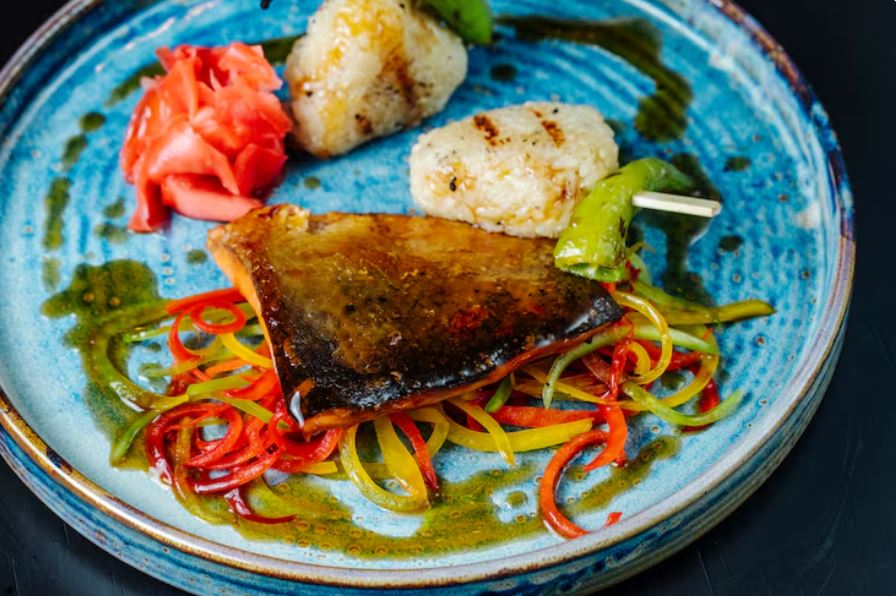
Observing this development gives the impression that Americans are gradually becoming more accustomed to savory-sweet flavor profiles that previously seemed alien. It’s more subdued than a globalized, everything-is-fusion approach. Similar to Sriracha fifteen years ago, white miso has infiltrated pantries. Now, people are aware of what mirin is. It is kept close to the olive oil. It’s difficult to ignore how Japanese pantry staples are no longer considered specialty items. For some home cooks, they are now merely ingredients.
Nevertheless, it’s important to note that there are some issues with the dish. Finding black cod outside of coastal cities isn’t always simple. If you don’t keep an eye on it, the marinade will burn under a broiler in a matter of seconds. Even though nobody wants to acknowledge it, the three-day version is actually superior. Nowadays, there is a slight issue with honesty in food writing: a propensity to insist that everything is quick and forgiving when it isn’t. Patience is rewarded with miso black cod. Impatience is also rewarded, but less so.
More than anything, what appears to be taking place is a gradual rewriting of what is considered accessible. A recipe that originated in a posh Tribeca kitchen has been adopted, altered, broiled, air-fried, and photographed thousands of times. It’s unclear if this is a result of democratization or simply the way food culture has evolved. Perhaps it’s both.
