
Close Menu
FishonlineFishonline
  • Homepage
  • Contact
  • Privacy Policy
  • Disclaimer
  • About
  • TOS
  • Seafood
  • News
  • Trending
  • Travel
What's Hot

The U.S. Seafood Industry’s Quiet Lobbying Victory Hidden Inside the Farm Bill Nobody Read Closely

June 10, 2026

The King Crab Legs Recipe That Looks Impossibly Impressive but Takes Fifteen Minutes and One Pot to Make

June 10, 2026

This One-Pan Salmon Recipe Takes 20 Minutes and Tastes Like Something From a Michelin-Starred Kitchen

June 10, 2026
FishonlineFishonline
Subscribe
  • Homepage
  • Contact
  • Privacy Policy
  • Disclaimer
  • About
  • TOS
  • Seafood
  • News
  • Trending
  • Travel
FishonlineFishonline
Home » The Heavy Metal Limits the EU Just Imposed on Imported Seafood — and Why American Exporters Need to Know About Them
Seafood

The Heavy Metal Limits the EU Just Imposed on Imported Seafood — and Why American Exporters Need to Know About Them

Mildred BellBy Mildred BellMay 18, 2026No Comments4 Mins Read
Facebook Twitter LinkedIn Telegram Pinterest Tumblr Reddit WhatsApp Email
The Heavy Metal Limits the EU
Share
Facebook Twitter LinkedIn Pinterest Email

The seafood industry’s regulations were subtly altered last October somewhere between a freezer warehouse outside of Boston and a wholesale market in Rotterdam. The majority of American exporters were unaware. The container ships continued to sail. The bills continued to be paid. However, a new set of maximum limits for inorganic arsenic in fish, crustaceans, bivalve mollusks, and cephalopods was implemented on October 8, 2025, when the European Union activated Regulation 2025/1891. It’s the kind of regulatory change that doesn’t make headlines in Seattle or New Bedford but can catch up to a business months later, usually at the worst time.

The new regulation is part of a larger initiative to tighten regulations on heavy metals in food that Brussels has been working on for years. Sharks and swordfish contain mercury. Cuttlefish and octopuses contain cadmium. Lead in oysters and mussels. Regulators appear to have concluded that voluntary vigilance is insufficient, and the pattern in the EU’s own monitoring data is not subtle. After years of drifting outside the regulated list, inorganic arsenic is now firmly within it. Speaking with anyone involved in seafood compliance, it seems like this was long overdue. Another question is whether the industry is prepared.

The numbers themselves have the appearance of a chemistry test. Fish: 0.10 mg/kg. 0.050 mg/kg for cephalopods without viscera, such as octopuses, squid, and cuttlefish. Laboratory directors raise an eyebrow at that final figure. A local laboratory with a dusty mass spectrometer is not equipped to detect inorganic arsenic at fifty parts per billion, which is different from the organic forms found naturally in marine life. It necessitates speciation techniques, typically LC-ICP-MS, the type of equipment found in a small number of accredited facilities, and skilled operators. That information alone could completely change the cost structure of a mid-sized Louisiana exporter that ships frozen calamari to Spain.

A single tuna can travel through a patchwork of jurisdictions, which complicates matters for American businesses. A yellowfin that was caught in the Indian Ocean, processed in a Thai facility, and then sent half to a distributor in California and half to Hamburg now exists in two distinct regulatory universes. The FDA in the US uses an action level of 1.0 mg/kg for methylmercury rather than total mercury; compliance officers cannot afford to flatten this distinction, despite the fact that many traders do.
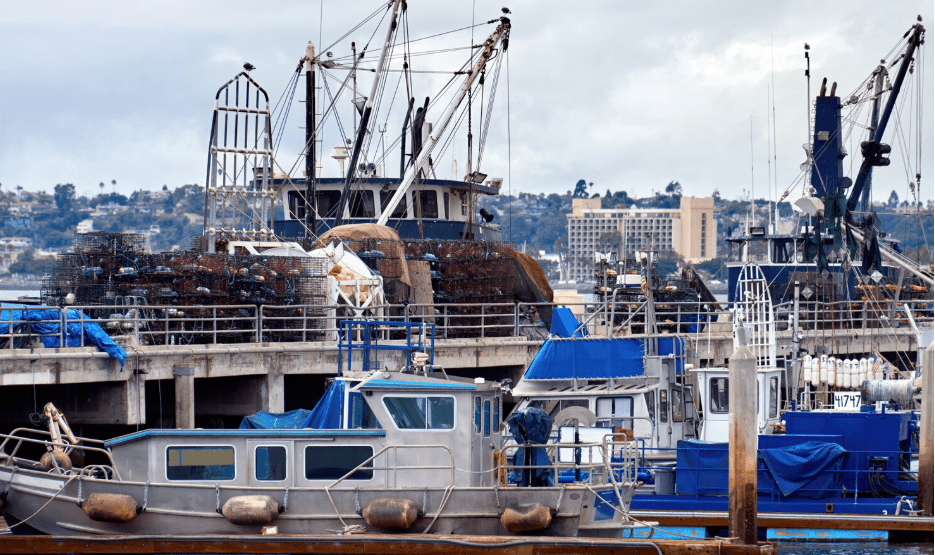
The Heavy Metal Limits the EU

For some species, China’s GB 2762 standard is even more lenient, permitting 1.7 mg/kg of mercury in swordfish. Above all of this, the Codex Alimentarius standard serves as a useful but non-binding global reference. The EU currently has the strictest framework among the major markets, and this difference is growing.

It’s difficult to ignore how frequently the seafood industry has been present in the past. Similar restrictions on antibiotic residues in shrimp changed supply chains throughout Southeast Asia years ago, and early adopters gained a ten-year moat. There might be something similar in the works right now. Exporters who are paying attention have already updated their testing panels, inquired about quantification limits from laboratories, and retrieved species lists to verify scientific names. Those who aren’t will have their batches stored in cold storage in Rotterdam or Antwerp while the paperwork is examined.

The more unsettling question is why these restrictions are in place in the first place. According to scientific evaluations conducted in Europe, inorganic arsenic has been connected to skin lesions and lung, bladder, and skin cancers. The field of toxicology is not new. The willingness of a significant market to convert it into legally binding figures is novel. Although some American exporters will undoubtedly object to the burden, it’s still unclear if the U.S. regulatory framework will eventually follow suit. It might, according to history. As of right now, the simplest and least expensive advice available to anyone in the industry is to read the regulation, contact the lab, and double-check the species name before the container departs the dock.

EU Metal
Share. Facebook Twitter Pinterest LinkedIn Tumblr Telegram Email
Previous ArticleWhy the USDA’s Expanding Role in Seafood Could Be the Biggest Shift in American Fisheries Policy in a Generation
Next Article How Geopolitical Tensions Are Quietly Changing the Way American Travellers Plan Coastal International Food Trips
Mildred Bell

Mildred Bell is a full-time digital professional, seasoned traveler, and ardent outdoor enthusiast who infuses her writing with a sincere love of the natural world. In her role as Senior Editor at fishonline.co.uk, the online home of Seafood Audit International, Mildred is in charge of editorial content covering news about the seafood industry, updates on food safety, politics, finance, and commentary from prominent figures in the fishing and seafood industries. Beyond the desk, Mildred has a deeper connection to the material she edits. She is a passionate angler who has spent years fishing open waters, rivers, and coastlines throughout the UK and beyond. Her genuine knowledge of the fishing industry informs all of her editorial choices. Mildred's passion for travel stems from the same restless curiosity. She has traveled to many different continents with a rod, a notebook, and an eye for the stories that others overlook.

Related Posts

The U.S. Seafood Industry’s Quiet Lobbying Victory Hidden Inside the Farm Bill Nobody Read Closely

June 10, 2026

The King Crab Legs Recipe That Looks Impossibly Impressive but Takes Fifteen Minutes and One Pot to Make

June 10, 2026

The Butter-Poached Lobster Recipe That Home Cooks Are Calling the Most Luxurious Thing They Have Ever Made for Under $30

June 10, 2026
Add A Comment

Comments are closed.

The U.S. Seafood Industry’s Quiet Lobbying Victory Hidden Inside the Farm Bill Nobody Read Closely

Seafood June 10, 2026

In a fish processing facility in Gloucester, Massachusetts, discussions about government funds that have been…

The King Crab Legs Recipe That Looks Impossibly Impressive but Takes Fifteen Minutes and One Pot to Make

June 10, 2026

This One-Pan Salmon Recipe Takes 20 Minutes and Tastes Like Something From a Michelin-Starred Kitchen

June 10, 2026

The Butter-Poached Lobster Recipe That Home Cooks Are Calling the Most Luxurious Thing They Have Ever Made for Under $30

June 10, 2026

10 c Recipes That Nutritionists Say Will Keep You Full Until Well Past Noon

June 10, 2026

How the Global Seafood Alliance’s New Feed and Salmon Standards Could Redefine What ‘Responsible’ Aquaculture Means

June 5, 2026

The EPA Mercury Rule Repeal Could Add Measurable Contamination Levels Back Into Fish Americans Eat Every Week

June 5, 2026

Fishonline.co.uk is the official online home of Seafood Audit International, a UK-based food safety and quality management consultancy with more than 25 years of hands-on experience in the global seafood and fishing industries. Based in Wellington, Somerset, we work with fish processors, food businesses, government inspection services, and international organisations to deliver practical, measurable, and cost-effective food safety solutions.We are not a generic food safety company. Seafood and fish products are our entire focus — and that specialisation is what makes us different.Who We AreSeafood Audit International was founded on a straightforward belief: that food safety training and quality management should be practical, accessible, and genuinely useful — not a box-ticking exercise.For over two decades we have worked with clients ranging from high street fish retailers and small-scale processors to large-scale international fishing operations, government bodies, and seafood exporters in the developing world. Our experience stretches from dhows on Lake Victoria to the trawlers of the UK coastline — giving us a depth of real-world knowledge that classroom-only consultancies simply cannot match.Our lead consultant is a fully qualified auditor with extensive experience across British Retail Consortium (BRC) and ISO 9000 quality management standards, HACCP implementation, food hygiene, and the development of national food safety legislation for governments internationally.What We DoSeafood Audit International provides a comprehensive range of training, auditing, and consultancy services tailored specifically to the seafood and fishing industries:Training Courses

Top Insights

The U.S. Seafood Industry’s Quiet Lobbying Victory Hidden Inside the Farm Bill Nobody Read Closely

June 10, 2026

The King Crab Legs Recipe That Looks Impossibly Impressive but Takes Fifteen Minutes and One Pot to Make

June 10, 2026

This One-Pan Salmon Recipe Takes 20 Minutes and Tastes Like Something From a Michelin-Starred Kitchen

June 10, 2026

The Butter-Poached Lobster Recipe That Home Cooks Are Calling the Most Luxurious Thing They Have Ever Made for Under $30

June 10, 2026

10 c Recipes That Nutritionists Say Will Keep You Full Until Well Past Noon

June 10, 2026
Disclaimer

Important Editorial Notice: All content on fishonline.co.uk, including that pertaining to business finance, political developments, financial markets, and regulatory changes, is provided solely for informational and discussion purposes. It is merely the opinion of a third party and does not represent the expert advice of fishonline.co.uk or Seafood Audit International.
We strongly advise against taking any action based on any political, legal, or financial information found on this website without first consulting an impartial expert. Seafood Audit International is not governed by the Financial Conduct Authority (FCA) and is not permitted to offer financial advice. Always seek advice from an independent financial advisor authorized by the FCA before making any financial decisions. Seek legal advice from an experienced attorney.

© 2026 ThemeSphere. Designed by ThemeSphere.
  • Homepage
  • Contact
  • Privacy Policy
  • Disclaimer
  • About
  • TOS
  • Seafood
  • News
  • Trending
  • Travel

Type above and press Enter to search. Press Esc to cancel.