Close Menu
FishonlineFishonline
  • Homepage
  • Privacy Policy
  • Disclaimer
  • About
  • Terms and Conditions
  • Seafood
  • News
  • Trending
  • Travel
What's Hot

The Baked Stuffed Clam Recipe That Has Been the Most Popular Appetizer on Cape Cod for Forty Years Running

May 11, 2026

How One Rhode Island Oyster Farmer Turned a Struggling Plot of Narragansett Bay Into a Million-Dollar Shellfish Business

May 11, 2026

How One Family’s Annual Lobster Road Trip Through Maine Became a 22-Year Tradition That Has Never Once Been Repeated the Same Way

May 11, 2026
FishonlineFishonline
Subscribe
  • Homepage
  • Privacy Policy
  • Disclaimer
  • About
  • Terms and Conditions
  • Seafood
  • News
  • Trending
  • Travel
FishonlineFishonline
Home » How One Rhode Island Oyster Farmer Turned a Struggling Plot of Narragansett Bay Into a Million-Dollar Shellfish Business
News

How One Rhode Island Oyster Farmer Turned a Struggling Plot of Narragansett Bay Into a Million-Dollar Shellfish Business

Mildred BellBy Mildred BellMay 11, 2026No Comments4 Mins Read
Facebook Twitter LinkedIn Telegram Pinterest Tumblr Reddit WhatsApp Email
How One Rhode Island Oyster Farmer Turned a Struggling Plot of Narragansett Bay Into a Million-Dollar Shellfish Business
Share
Facebook Twitter LinkedIn Pinterest Email

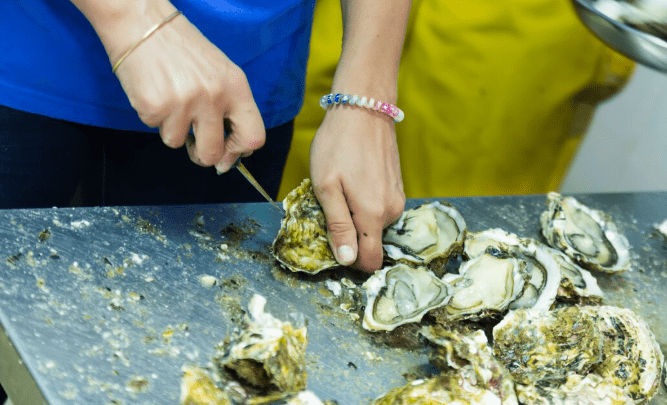
When Perry Raso first used his bare hands to remove a littleneck clam from Point Judith Pond, he was twelve years old. He was not given a business plan. He was unaware that Narragansett Bay might be worth millions of dollars. He simply kept returning to the water year after year, picking up on its moods in the same way that some children pick up on a neighborhood—which corners to avoid and which to trust.

In this field, early intuition is more important than most people realize. The oyster aquaculture industry in Rhode Island did not happen to grow to a $9 million enterprise in 2024. It was made possible by those who viewed the bay more as a long-term partnership than as a resource. Raso, who went on to turn Matunuck Oyster Farm into one of the most well-known shellfish brands in the state, embodies something that is genuinely uncommon in American food production: a small business owner who strategically expanded without losing the plot.

Profile: Rhode Island Oyster Farming — Key FactsValues
IndustryAquaculture / Shellfish Farming
Primary SpeciesEastern Oyster (Crassostrea virginica) — 99% of production
Active Farms (2024)89 farms across Narragansett Bay
Industry Revenue (2024)Nearly $9 million
Revenue in 2019$5.74 million across 81 farms
Total Aquaculture Area392.5 acres of licensed sites in Narragansett Bay
Peak Historical Output1.4 million bushels annually (early 1900s)
Key ChallengesOcean acidification, biofouling, COVID-19 market collapse, climate change
Primary MarketRaw bar / fine dining restaurants (100% of sales)
Research PartnerUniversity of Rhode Island Graduate School of Oceanography
Industry BodyOcean State Shellfish Cooperative, Narragansett
COVID Impact Year2020 — sales dropped below 60% of typical summer volume
Federal Relief Received$809,000 combined via USDA EQIP program (19 growers)

Laziness is not tolerated by the water surrounding South County. A persistent enemy that silently stifles productivity while farmers sleep is biofouling, which is the gradual buildup of barnacles, algae, and invasive organisms clogging cage mesh. Researchers at URI have been measuring what farmers knew deep down: biology outperforms conventional equipment. In recent trials at Rome Point Oyster Farm, a more recent automated system called FlipFarm demonstrated labor cost reductions of up to 60%, and the difference in shell growth was visible to the unaided eye. It’s still unclear if that technology will become commonplace or remain a specialized advancement, but the direction is clear.
How One Rhode Island Oyster Farmer Turned a Struggling Plot of Narragansett Bay Into a Million-Dollar Shellfish Business

What the pandemic exposed about the industry’s vulnerability is more difficult to quantify. Graham Brawley, manager of the Ocean State Shellfish Cooperative, doesn’t have to look up the date March 11, 2020. Calls from wholesale clients ceased. Coolers full of unsold goods. The only viable market for Southern New England oysters was restaurants, which either closed or became skeleton businesses. That summer, sales never exceeded 60% of average volume. It was more like the floor vanishing than a market correction.

A combination of federal relief funds, unyielding patience, and a readiness to reconsider what an oyster can truly be allowed farmers to survive that time. On degraded reef sites, some planted oversized, unmarketable oysters to restore bay ecology and earn money through USDA programs. Although it wasn’t the strategy anyone had devised, it was successful. That improvisation contains a lesson: the most robust operations weren’t always the largest. They were the most flexible.

From a distance, it is easy to underestimate the additional layer of complexity that the climate picture adds. In order to create what she called the first thorough carbonate chemistry baseline for the lower west passage of Narragansett Bay, Jacqueline Rosa, a graduate student at URI’s Graduate School of Oceanography, spent eighteen months installing water sensors and gathering samples at a Wickford oyster farm. Her results are not yet concerning, but they are also not comforting. The very chemistry that enables oysters to form shells is disrupted by ocean acidification, and the effects intensify in the early stages of life when the animals are most susceptible.

Despite everything, it’s difficult to ignore the peculiar optimism that permeates this industry. In 2021, farmers who had witnessed a decline in sales in 2020 planted seed oysters once more. Researchers monitoring trends in acidification are also assisting farmers in selecting better equipment. Unbelievably, the bay continues to produce. And somewhere on a four-acre lease in Narragansett Bay, an oyster that was once hardly noticeable—smaller than a grain of sand, according to those who have held them—is developing into something valuable and, if the vision is realized, even more valuable.

Narragansett Bay Rhode Island
Share. Facebook Twitter Pinterest LinkedIn Tumblr Telegram Email
Previous ArticleHow One Family’s Annual Lobster Road Trip Through Maine Became a 22-Year Tradition That Has Never Once Been Repeated the Same Way
Next Article The Baked Stuffed Clam Recipe That Has Been the Most Popular Appetizer on Cape Cod for Forty Years Running
Mildred Bell

    Mildred Bell is a full-time digital professional, seasoned traveler, and ardent outdoor enthusiast who infuses her writing with a sincere love of the natural world. In her role as Senior Editor at fishonline.co.uk, the online home of Seafood Audit International, Mildred is in charge of editorial content covering news about the seafood industry, updates on food safety, politics, finance, and commentary from prominent figures in the fishing and seafood industries. Beyond the desk, Mildred has a deeper connection to the material she edits. She is a passionate angler who has spent years fishing open waters, rivers, and coastlines throughout the UK and beyond. Her genuine knowledge of the fishing industry informs all of her editorial choices. Mildred's passion for travel stems from the same restless curiosity. She has traveled to many different continents with a rod, a notebook, and an eye for the stories that others overlook.

    Related Posts

    The Oyster Po’ Boy Recipe That New Orleans Locals Say Tourists Are Completely Getting Wrong

    May 5, 2026

    Maine Lobstermen vs. Federal Regulators – The Fight Over Fishing Rights That Could Reshape the Northeast Coast

    May 5, 2026

    The Grilled Lobster Tail Recipe That Every Seafood Chef in New England Swears Is the Only One You Ever Need

    May 5, 2026
    Add A Comment
    Leave A Reply Cancel Reply

    You must be logged in to post a comment.

    The Baked Stuffed Clam Recipe That Has Been the Most Popular Appetizer on Cape Cod for Forty Years Running

    Food May 11, 2026

    On Cape Cod, there is a time when a plate of baked stuffed clams arrives…

    How One Rhode Island Oyster Farmer Turned a Struggling Plot of Narragansett Bay Into a Million-Dollar Shellfish Business

    May 11, 2026

    How One Family’s Annual Lobster Road Trip Through Maine Became a 22-Year Tradition That Has Never Once Been Repeated the Same Way

    May 11, 2026

    Pacific Seafood’s $3.2 Million Fine – How a Seafood Giant Turned Environmental Violations Into a PR War

    May 11, 2026

    How to Make Authentic Louisiana Crawfish Étouffée at Home — Without Watering Down a Single Drop of Flavor

    May 11, 2026

    The Five U.S. Coastal Cities Every Seafood Lover Must Visit Before They Die — Ranked by a Chef Who Has Eaten in All of Them

    May 11, 2026

    The Seafood Restaurant That Closed After 30 Years in the Same Florida Spot Is Now Gone for Good

    May 5, 2026

    Fishonline.co.uk is the official online home of Seafood Audit International, a UK-based food safety and quality management consultancy with more than 25 years of hands-on experience in the global seafood and fishing industries. Based in Wellington, Somerset, we work with fish processors, food businesses, government inspection services, and international organisations to deliver practical, measurable, and cost-effective food safety solutions.We are not a generic food safety company. Seafood and fish products are our entire focus — and that specialisation is what makes us different.Who We AreSeafood Audit International was founded on a straightforward belief: that food safety training and quality management should be practical, accessible, and genuinely useful — not a box-ticking exercise.For over two decades we have worked with clients ranging from high street fish retailers and small-scale processors to large-scale international fishing operations, government bodies, and seafood exporters in the developing world. Our experience stretches from dhows on Lake Victoria to the trawlers of the UK coastline — giving us a depth of real-world knowledge that classroom-only consultancies simply cannot match.Our lead consultant is a fully qualified auditor with extensive experience across British Retail Consortium (BRC) and ISO 9000 quality management standards, HACCP implementation, food hygiene, and the development of national food safety legislation for governments internationally.What We DoSeafood Audit International provides a comprehensive range of training, auditing, and consultancy services tailored specifically to the seafood and fishing industries:Training Courses

    Top Insights

    The Baked Stuffed Clam Recipe That Has Been the Most Popular Appetizer on Cape Cod for Forty Years Running

    May 11, 2026

    How One Rhode Island Oyster Farmer Turned a Struggling Plot of Narragansett Bay Into a Million-Dollar Shellfish Business

    May 11, 2026

    How One Family’s Annual Lobster Road Trip Through Maine Became a 22-Year Tradition That Has Never Once Been Repeated the Same Way

    May 11, 2026

    Pacific Seafood’s $3.2 Million Fine – How a Seafood Giant Turned Environmental Violations Into a PR War

    May 11, 2026

    How to Make Authentic Louisiana Crawfish Étouffée at Home — Without Watering Down a Single Drop of Flavor

    May 11, 2026
    Disclaimer

    Important Editorial Notice: All content on fishonline.co.uk, including that pertaining to business finance, political developments, financial markets, and regulatory changes, is provided solely for informational and discussion purposes. It is merely the opinion of a third party and does not represent the expert advice of fishonline.co.uk or Seafood Audit International.
    We strongly advise against taking any action based on any political, legal, or financial information found on this website without first consulting an impartial expert. Seafood Audit International is not governed by the Financial Conduct Authority (FCA) and is not permitted to offer financial advice. Always seek advice from an independent financial advisor authorized by the FCA before making any financial decisions. Seek legal advice from an experienced attorney.

    © 2026 ThemeSphere. Designed by ThemeSphere.
    • Homepage
    • Privacy Policy
    • Disclaimer
    • About
    • Terms and Conditions
    • Seafood
    • News
    • Trending
    • Travel

    Type above and press Enter to search. Press Esc to cancel.