

There’s a particular smell that drifts through the backyard in Marrero, Louisiana on a Saturday afternoon — a thick, rolling cloud of Old Bay, andouille fat, and something harder to name. Refer to it as familiarity. Call it a kind of belonging that outsiders sometimes feel when they walk into someone else’s ritual and somehow recognize it anyway.
Larry Thompson Jr. — known across south Louisiana simply as Mr. Shrimp — doesn’t overthink it. The man has spent years hauling colossal shrimp out of bayou harbors further south, supplying them to some of New Orleans’ most respected kitchens, and cooking them in ways that made people pull out their phones before they’d even sat down. But ask him what recipe his family has actually eaten for the past thirty years, and the answer comes quick and without drama: the boil. The boil is always present.
It starts the way most serious Louisiana cooking starts — with water, time, and a heavy pot. Three quarts of water, a generous pour of Cajun seafood boil seasoning, celery cut rough, a quartered onion, green bell pepper, a full head of garlic halved right through the middle. Thyme fresh. The whole thing comes to a boil and then simmers for fifteen minutes while the kitchen fills with something that could pass for perfume in this part of the country. It’s possible the long simmer is the step most home cooks rush past. That would be incorrect.
Sweet potatoes go in next, cut into thick chunks, along with sliced andouille — the smoked kind, the kind with actual smoke in it, not just color. This is where the recipe begins building a flavor base that isn’t just seasoned but layered. The potatoes should yield after 20 minutes over medium heat. After that, the corn is quartered lengthwise from the cob and cooked in the pot for just five minutes before the heat is completely turned off. The shrimp are added last, covered, and allowed to finish in the leftover steam for four or five minutes, or until they are firm and curl pink. This is an important part. You’ve missed the point if you overcook shrimp in a boil.
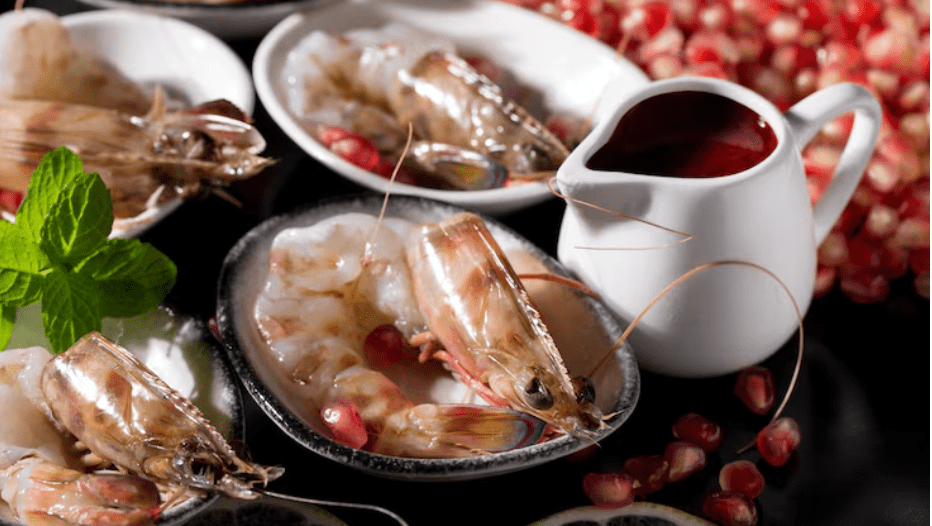
What separates this version from the dozens of shrimp boil recipes floating around the internet is the garlic butter that gets made in a small saucepan while everything else drains — minced garlic, unsalted butter, chopped thyme, Cajun seasoning, melted low and slow. It’s not difficult. But it hits the table alongside a spicy rémoulade made from mayo, Creole mustard, ketchup, hot sauce, grated garlic, Worcestershire, paprika, and cayenne, and suddenly the whole spread feels like something a restaurant would charge thirty dollars for and still not quite get right.
It was precisely this type of cooking that gave rise to Thompson’s business. His catering work, his social media presence — thousands of people watching a man handle colossal shrimp with the confidence of someone who’s done it more times than he can count — all of it traces back to the same bayou-rooted tradition. The brick-and-mortar Mr. Shrimp’s Kitchen in Marrero, ten miles from Bourbon Street, even sells a house seasoning blend called “Throw It in the Pot.” It’s the type of product that only makes sense when the cooking is authentic.
Some recipes seem to endure because they are honest rather than because they are trendy. It’s a long time to stick with a single dish for thirty years. It implies that while the recipe is effective, it also has significance. The table it continues to set has been important. That kind of subdued consistency is its own kind of statement in a city like New Orleans, where food is identity and each neighborhood has its own culinary argument to make.
Depending on the season, the boil lands differently. When available, crawfish can take the place of shrimp. In the summer, corn becomes sweeter. However, the pot, the seasoning, and the final garlic butter remain the same. It turns out that some things don’t have to.
