

The fact that king crab legs are cooked before they get to you is something that most people are unaware of, and it’s what makes this fifteen-minute supper possible. Every cluster that was sold at a supermarket or fish market was flash-frozen on the harvesting vessel as soon as it was caught, cooked first, and then frozen. Cooking them is not the task at home. It’s reheating them without spoiling them, which is a far more forgiving task than it sounds, and results in something that looks like the main course at a seafood restaurant. Just one stockpot. A basket for steaming. Five minutes are needed to bring the liquid to a simmer, for a total of fifteen minutes.
Since the steaming method adds rather than subtracts, it is the best strategy. While steaming allows moisture and aromatic chemicals to enter rather than exit, boiling crab legs washes flavor out through the shells. Before turning on the heat, add a bay leaf, two smashed garlic cloves, and a few lemon wedges to an inch of liquid at the bottom of the pot (water alone is good, but a 50/50 mixture of water and dry white wine is noticeably better).
It is not necessary to steep or infuse these beforehand. They are there to give the steam a scent, which the crab absorbs over the course of its six to eight minutes above the liquid. It’s a simple choice that, when compared to plain water, yields a substantially different outcome at no expense.
Scoring the shells is the one preparation step that truly matters. Before steaming, kitchen shears run along one side of each cluster, making a single cut through the shell’s softer underside that exposes the meat directly to the steam. It is worthwhile to do this three-minute step.
In addition to making serving simpler because the shells are half open and guests don’t have to struggle with them at the table, the seasoned steam reaches the meat rather than just warming the shell. If the clusters are too long for the pot, snap or bend them at the joints. They are adaptable enough to accommodate.
A special moment should be devoted to the butter dilemma. The crab is sweet and briny enough that anything more complex runs the risk of clashing with it rather than enhancing it, so melted unsalted butter with a shake of Old Bay Seasoning is actually enough. Stirring in fresh parsley also adds color and a subtle herbal note that balances the richness. Instead of being squeezed over, the lemon is wedged on the side so that individuals can adjust for themselves.
This is not the type of dish that requires a fancy presentation, so serve it right away with paper towels close by and the tongs still on the counter. The shells are placed on the table. Everybody leans in. When the meal looks and smells like this, it’s difficult to ignore how quickly the discussion ends and resumes, usually around the subject of whether there is more.
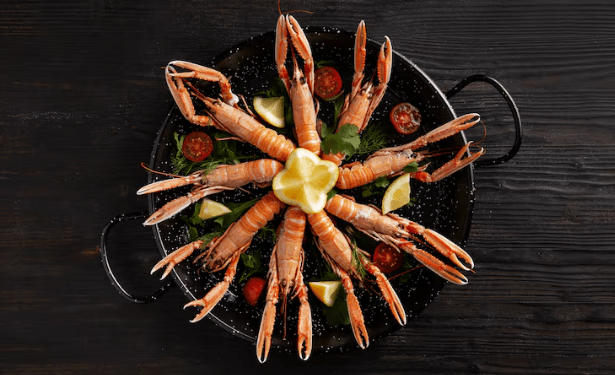
15-Minute Steamed King Crab Legs
Prep5 minutes
Cook6–8 minutes
Total~15 minutes
Serves2–3
Ingredients
2–3 lbsKing crab leg clusters (frozen or thawed)
1 inchWater, or 50/50 water and dry white wine
½ lemonCut into wedges
2 clovesGarlic, lightly smashed
1Bay leaf
½ cup (1 stick)Unsalted butter, melted
1 tbsp (optional)Old Bay Seasoning or fresh parsley, for butter
Method
Set up the pot. Place a steamer basket inside a large stockpot. Add water (or water and wine), lemon wedges, garlic, and bay leaf. Bring to a rolling simmer over high heat.
Prep the crab. Rinse clusters under cold water. Using kitchen shears, cut one side of each shell lengthwise to expose the meat. Snap at joints if needed to fit in the pot.
Steam. Arrange crab legs in the steamer basket. Cover tightly. Reduce to medium-high and steam for 6–8 minutes, until the meat is piping hot throughout.
Serve. Remove with tongs, plate immediately. Serve with the seasoned melted butter and fresh lemon wedges. Don’t wait — eat while hot.
Key reminder: King crab legs are already fully cooked. You’re reheating, not cooking from raw. The only error is oversteaming, which makes the meat rubbery. Stop at the moment the meat is hot throughout.
