

The sound of a casserole dish being placed on a folded dish towel, the scent of something bubbling in the oven, and a grandmother who never once used a recipe card but always managed to get it right are some types of kitchen memories that are difficult to forget. For many Americans who grew up in homes built in the middle of the 20th century, that memory is known as tuna casserole.
In 2026, sourdough starters and sheet-pan salmon with preserved lemon have become so popular in home cooking culture that it seems almost out of style to say it aloud. However, there’s a quiet, unwavering argument that one of the most underappreciated weeknight dinners ever created is the classic tuna noodle casserole—the egg noodle, canned tuna, cream soup variety that Grandma made on Lenten Fridays. Not nostalgic in a patronizing sense. Really good.
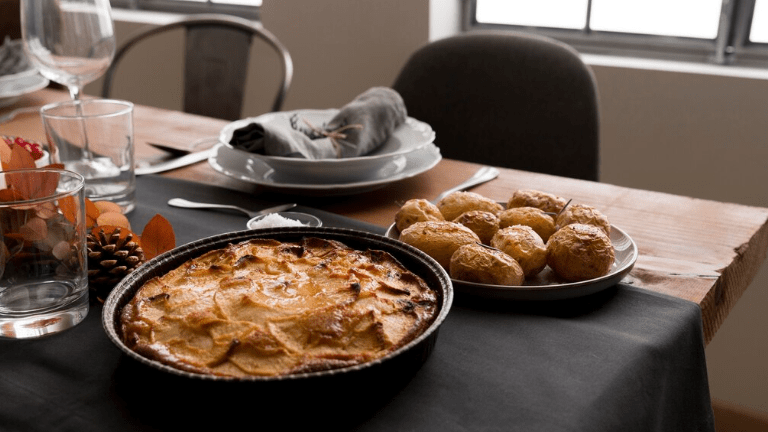
The traditional version is nearly unbelievably straightforward. The egg noodles are barely cooked. Canned tuna, either packed in water or olive oil, depending on your upbringing, is folded into a sauce made from either cream of chicken soup or cream of mushroom, sometimes both. Frozen peas, since nobody has time to quarrel over texture. Melted cheese covered the top, followed by a layer of crushed potato chips—possibly the most significant creative choice a grandmother has ever made—that gave the entire dish a crunchy, salt-forward finish. It bakes for about 30 to 45 minutes at 350 degrees, and it doesn’t require much help to feed a table of people.
When a generation stops cooking, the underlying intuition is lost. Chef John of Allrecipes created a version that completely eschews canned soup in favor of creating a white cheddar béchamel from scratch using butter, flour, cold milk, a dash of cayenne, and a tiny amount of Worcestershire sauce. Although it takes more than an hour and twenty minutes to prepare, store-bought soup shortcuts can’t quite match the depth of the final product. Without that canned-soup shortcut, the dish still turns out rich and creamy, as reviewers have noted with what seems to be sincere surprise. People may have forgotten that convenience cooking and scratch cooking don’t have to be mutually exclusive.
It’s also important to recognize the economic origins of this dish. Tuna casserole is part of the same culinary heritage as cooking from the Great Depression: inexpensive food prepared with consideration, protein spread across a table of five or six people by cleverly utilizing pantry staples. Government cheese, canned olives, hard-boiled eggs, and tomato sauce were all combined inside hollowed-out hot dog buns in a handwritten recipe from the same era that has recently surfaced and is simply titled “A Very Good Sandwich.” More appreciation should be given to home cooks for their ability to create something satisfying out of nearly nothing.
Ironically, the generation that is most likely to write off tuna casserole is also the one that pays $12 for canned fish at specialty grocery stores and refers to it as a “tinned fish moment.” Nearly all of the raw ingredients overlap. Whether that cognitive dissonance will resolve itself into a true revival or remain an unexplored overlap between trends and tradition remains to be seen.
The barrier is lower than it may seem for any home cook under 40 who hasn’t prepared this yet. An egg noodle bag. Two tuna cans. A simple roux if you’re picky, or a can of soup. Chips, cheese, and peas on top. There’s nothing complicated about what comes out of the oven, nor is it attempting to be. It’s simply the type of food that makes a space smell like it’s inhabited by someone.
Quietly, that could be the whole point.
