
Close Menu
FishonlineFishonline
  • Homepage
  • Contact
  • Privacy Policy
  • Disclaimer
  • About
  • TOS
  • Seafood
  • News
  • Trending
  • Travel
What's Hot

The Irish Coastal Drive That Combines Some of Europe’s Most Dramatic Scenery With Its Most Honest Seafood

June 23, 2026

Oregon DEQ vs. Pacific Seafood: The $3.2 Million Fine That Has the Entire U.S. Seafood Industry on Edge

June 23, 2026

Why the Florida Keys Is Still the Greatest Seafood Destination in America — and How to Eat There Without Being a Tourist

June 23, 2026
FishonlineFishonline
Subscribe
  • Homepage
  • Contact
  • Privacy Policy
  • Disclaimer
  • About
  • TOS
  • Seafood
  • News
  • Trending
  • Travel
FishonlineFishonline
Home » How to Make the Authentic Maryland Blue Crab Feast at Home — From the Old Bay Ratio to the Newspaper on the Table
Seafood

How to Make the Authentic Maryland Blue Crab Feast at Home — From the Old Bay Ratio to the Newspaper on the Table

Mildred BellBy Mildred BellJune 15, 2026Updated:June 15, 2026No Comments4 Mins Read
Facebook Twitter LinkedIn Telegram Pinterest Tumblr Reddit WhatsApp Email
Authentic Maryland Blue Crab Feast
Share
Facebook Twitter LinkedIn Pinterest Email

Anyone who grew up close to the Chesapeake will tell you right away that reading the newspaper is required. It is neither a rustic affectation nor a charming aesthetic decision. The table is the newspaper. The idea is that the shells, seasoning, Old Bay residue, and general entropy of a dozen people eating with wooden mallets all land directly on that paper, not on anything that needs to be washed.

At a proper Maryland blue crab feast, the entire surface is covered in thick layers—multiple sections, overlapping. When it’s finished, the table is spotless and the newspaper is rolled up with everything inside. The infrastructure is this. The newspaper is how a crab feast really works, but the crabs are the cause.

The recipe itself is simple, and that’s practically the whole point. A huge stockpot with an elevated steaming rack is filled with twelve live blue crabs. One cup of water, one cup of apple cider vinegar, and one twelve-ounce can of beer make up the liquid underneath the rack, which should be positioned two inches below the rack without contacting the crabs. That beer is often a National Bohemian in Maryland, the regional lager known as Natty Boh, which has a one-eyed mascot that can be seen on signs all across Baltimore.

The crabs won’t notice if you use a different lager. However, if you are doing this correctly, the Natty Boh is important since it places the recipe in a particular location, just as choosing a regional item is always important. The Old Bay does what it does without any one flavor overpowering the others because the vinegar and beer produce steam with a subtle acidity that cuts through the richness of the crab meat.

As the crabs are piled into the basket, the Old Bay ratio—half a cup for every twelve crabs—is sprinkled in between each layer. This is more seasoning than novice chefs would anticipate. When the crabs enter, they will appear heavily, even aggressively, dusty, and that is accurate. The completed dish is salty and flavored in the precise manner that Chesapeake crab is meant to taste after the steam cooks the Old Bay into the shells, cracks, and joints.

Many Eastern Shore crab houses and lifelong watermen favor JO Spice #2, a regional seasoning made in Cambridge, Maryland, to Old Bay because they think the latter is a little too weak or too commercial. Both are appropriate. Both are subject to the half-cup rule. Before adding the crabs, bring the liquid to a rolling boil, cover the pot closely, and steam for 20 to 30 minutes over medium-high heat, depending on the size of the crabs. When the shells turn a vivid reddish-orange, they are finished. Avoid opening the lid before the allotted time has passed.

The crabs immediately land on the newspaper when they emerge. It takes a few crabs for the opening sequence’s logic to become something close to fluency. The seal between the body and the upper shell is broken when you pry open and snap off the pointed flap on the underside of the apron. The entire shell may be lifted off the body in a single motion by placing the thumb beneath the back of the top shell and pressing upward.

While the yellow-green tomalley, sometimes known as “mustard,” is consumed enthusiastically by some and disregarded by others, the gray feathery gills that emerge within are inedible and are referred to as “dead man’s fingers” non Maryland. The white meat chambers open up when the body is split in half down the middle, and the crab knife blade can be used to extract them. Because the claws are shattered at the joints rather than the tip, which tends to force shell particles into the meat, they disappear slowest.
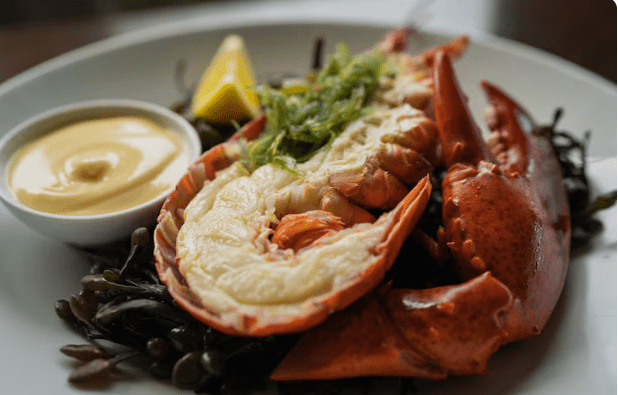
Authentic Maryland Blue Crab Feast

At a crab feast table, with orange hands from Old Bay, newspaper stacked with shells, and a cool beer by the right hand, there’s a sense that the eating and the activity are inextricably linked. The dinner includes the opening. It requires time. It demands focus. Additionally, everyone at the table is essentially doing the same thing at the same pace because it takes time and both hands, which is likely why the format has endured as a social ritual along the Chesapeake for so long. At the end, the newspaper comes off in one piece. It was worth it for the crabs.

Authentic Maryland Blue Crab Feast
Share. Facebook Twitter Pinterest LinkedIn Tumblr Telegram Email
Previous ArticleThe Oyster Farmer Who Took NOAA to Federal Court Over Drakes Bay — and Changed Shellfish Regulation Forever
Next Article How to Plan a Two-Week Pacific Coast Seafood Road Trip From San Diego to Seattle Without Blowing Your Budget
Mildred Bell

Mildred Bell is a full-time digital professional, seasoned traveler, and ardent outdoor enthusiast who infuses her writing with a sincere love of the natural world. In her role as Senior Editor at fishonline.co.uk, the online home of Seafood Audit International, Mildred is in charge of editorial content covering news about the seafood industry, updates on food safety, politics, finance, and commentary from prominent figures in the fishing and seafood industries. Beyond the desk, Mildred has a deeper connection to the material she edits. She is a passionate angler who has spent years fishing open waters, rivers, and coastlines throughout the UK and beyond. Her genuine knowledge of the fishing industry informs all of her editorial choices. Mildred's passion for travel stems from the same restless curiosity. She has traveled to many different continents with a rod, a notebook, and an eye for the stories that others overlook.

Related Posts

Oregon DEQ vs. Pacific Seafood: The $3.2 Million Fine That Has the Entire U.S. Seafood Industry on Edge

June 23, 2026

Why the Florida Keys Is Still the Greatest Seafood Destination in America — and How to Eat There Without Being a Tourist

June 23, 2026

How Complex Sustainability Rules Are Leaving American Seafood Consumers Completely Lost in the Supermarket Aisle

June 23, 2026
Add A Comment

Comments are closed.

The Irish Coastal Drive That Combines Some of Europe’s Most Dramatic Scenery With Its Most Honest Seafood

Travel June 23, 2026

Sheer and dark against whatever the sky is doing that day, the Cliffs of Moher…

Oregon DEQ vs. Pacific Seafood: The $3.2 Million Fine That Has the Entire U.S. Seafood Industry on Edge

June 23, 2026

Why the Florida Keys Is Still the Greatest Seafood Destination in America — and How to Eat There Without Being a Tourist

June 23, 2026

How Complex Sustainability Rules Are Leaving American Seafood Consumers Completely Lost in the Supermarket Aisle

June 23, 2026

Pennsylvania Is Proposing New Trout Size Limits That Could Fundamentally Change Weekend Fishing Across the State

June 23, 2026

$250,000 Worth of Stolen Seafood Was Recovered From a Cargo Truck in Guadalupe County. The Story Is Wild

June 23, 2026

Inside the Fight to Save Wild Atlantic Salmon From a Regulatory Framework That Scientists Say Is Already Too Late

June 23, 2026

Fishonline.co.uk is the official online home of Seafood Audit International, a UK-based food safety and quality management consultancy with more than 25 years of hands-on experience in the global seafood and fishing industries. Based in Wellington, Somerset, we work with fish processors, food businesses, government inspection services, and international organisations to deliver practical, measurable, and cost-effective food safety solutions.We are not a generic food safety company. Seafood and fish products are our entire focus — and that specialisation is what makes us different.Who We AreSeafood Audit International was founded on a straightforward belief: that food safety training and quality management should be practical, accessible, and genuinely useful — not a box-ticking exercise.For over two decades we have worked with clients ranging from high street fish retailers and small-scale processors to large-scale international fishing operations, government bodies, and seafood exporters in the developing world. Our experience stretches from dhows on Lake Victoria to the trawlers of the UK coastline — giving us a depth of real-world knowledge that classroom-only consultancies simply cannot match.Our lead consultant is a fully qualified auditor with extensive experience across British Retail Consortium (BRC) and ISO 9000 quality management standards, HACCP implementation, food hygiene, and the development of national food safety legislation for governments internationally.What We DoSeafood Audit International provides a comprehensive range of training, auditing, and consultancy services tailored specifically to the seafood and fishing industries:Training Courses

Top Insights

The Irish Coastal Drive That Combines Some of Europe’s Most Dramatic Scenery With Its Most Honest Seafood

June 23, 2026

Oregon DEQ vs. Pacific Seafood: The $3.2 Million Fine That Has the Entire U.S. Seafood Industry on Edge

June 23, 2026

Why the Florida Keys Is Still the Greatest Seafood Destination in America — and How to Eat There Without Being a Tourist

June 23, 2026

How Complex Sustainability Rules Are Leaving American Seafood Consumers Completely Lost in the Supermarket Aisle

June 23, 2026

Pennsylvania Is Proposing New Trout Size Limits That Could Fundamentally Change Weekend Fishing Across the State

June 23, 2026
Disclaimer

Important Editorial Notice: All content on fishonline.co.uk, including that pertaining to business finance, political developments, financial markets, and regulatory changes, is provided solely for informational and discussion purposes. It is merely the opinion of a third party and does not represent the expert advice of fishonline.co.uk or Seafood Audit International.
We strongly advise against taking any action based on any political, legal, or financial information found on this website without first consulting an impartial expert. Seafood Audit International is not governed by the Financial Conduct Authority (FCA) and is not permitted to offer financial advice. Always seek advice from an independent financial advisor authorized by the FCA before making any financial decisions. Seek legal advice from an experienced attorney.

© 2026 ThemeSphere. Designed by ThemeSphere.
  • Homepage
  • Contact
  • Privacy Policy
  • Disclaimer
  • About
  • TOS
  • Seafood
  • News
  • Trending
  • Travel

Type above and press Enter to search. Press Esc to cancel.