

Anyone who grew up close to the Chesapeake will tell you right away that reading the newspaper is required. It is neither a rustic affectation nor a charming aesthetic decision. The table is the newspaper. The idea is that the shells, seasoning, Old Bay residue, and general entropy of a dozen people eating with wooden mallets all land directly on that paper, not on anything that needs to be washed.
At a proper Maryland blue crab feast, the entire surface is covered in thick layers—multiple sections, overlapping. When it’s finished, the table is spotless and the newspaper is rolled up with everything inside. The infrastructure is this. The newspaper is how a crab feast really works, but the crabs are the cause.
The recipe itself is simple, and that’s practically the whole point. A huge stockpot with an elevated steaming rack is filled with twelve live blue crabs. One cup of water, one cup of apple cider vinegar, and one twelve-ounce can of beer make up the liquid underneath the rack, which should be positioned two inches below the rack without contacting the crabs. That beer is often a National Bohemian in Maryland, the regional lager known as Natty Boh, which has a one-eyed mascot that can be seen on signs all across Baltimore.
The crabs won’t notice if you use a different lager. However, if you are doing this correctly, the Natty Boh is important since it places the recipe in a particular location, just as choosing a regional item is always important. The Old Bay does what it does without any one flavor overpowering the others because the vinegar and beer produce steam with a subtle acidity that cuts through the richness of the crab meat.
As the crabs are piled into the basket, the Old Bay ratio—half a cup for every twelve crabs—is sprinkled in between each layer. This is more seasoning than novice chefs would anticipate. When the crabs enter, they will appear heavily, even aggressively, dusty, and that is accurate. The completed dish is salty and flavored in the precise manner that Chesapeake crab is meant to taste after the steam cooks the Old Bay into the shells, cracks, and joints.
Many Eastern Shore crab houses and lifelong watermen favor JO Spice #2, a regional seasoning made in Cambridge, Maryland, to Old Bay because they think the latter is a little too weak or too commercial. Both are appropriate. Both are subject to the half-cup rule. Before adding the crabs, bring the liquid to a rolling boil, cover the pot closely, and steam for 20 to 30 minutes over medium-high heat, depending on the size of the crabs. When the shells turn a vivid reddish-orange, they are finished. Avoid opening the lid before the allotted time has passed.
The crabs immediately land on the newspaper when they emerge. It takes a few crabs for the opening sequence’s logic to become something close to fluency. The seal between the body and the upper shell is broken when you pry open and snap off the pointed flap on the underside of the apron. The entire shell may be lifted off the body in a single motion by placing the thumb beneath the back of the top shell and pressing upward.
While the yellow-green tomalley, sometimes known as “mustard,” is consumed enthusiastically by some and disregarded by others, the gray feathery gills that emerge within are inedible and are referred to as “dead man’s fingers” non Maryland. The white meat chambers open up when the body is split in half down the middle, and the crab knife blade can be used to extract them. Because the claws are shattered at the joints rather than the tip, which tends to force shell particles into the meat, they disappear slowest.
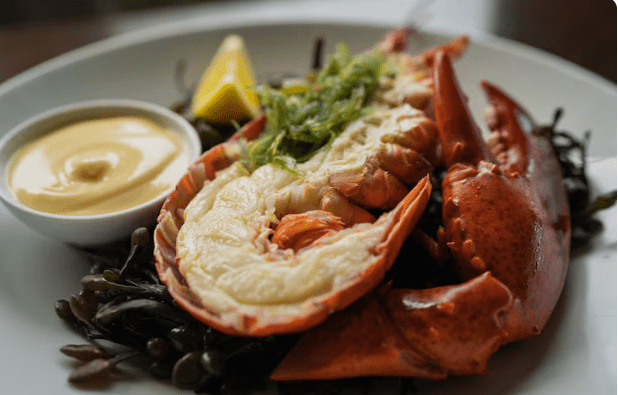
At a crab feast table, with orange hands from Old Bay, newspaper stacked with shells, and a cool beer by the right hand, there’s a sense that the eating and the activity are inextricably linked. The dinner includes the opening. It requires time. It demands focus. Additionally, everyone at the table is essentially doing the same thing at the same pace because it takes time and both hands, which is likely why the format has endured as a social ritual along the Chesapeake for so long. At the end, the newspaper comes off in one piece. It was worth it for the crabs.
