Close Menu
FishonlineFishonline
  • Homepage
  • Contact
  • Privacy Policy
  • Disclaimer
  • About
  • TOS
  • Seafood
  • News
  • Trending
  • Travel
What's Hot

The New England Clam Bake Recipe You Can Actually Pull Off in Your Own Backyard Without a Permit or a Pit

June 15, 2026

FDA Places Seafood and Papayas Under Greater Import Scrutiny — Here’s What Consumers Need to Know

June 15, 2026

Inside the Race to Build America’s First Fully Sustainable Indoor Shrimp Farm in the Heart of the Midwest

June 15, 2026
FishonlineFishonline
Subscribe
  • Homepage
  • Contact
  • Privacy Policy
  • Disclaimer
  • About
  • TOS
  • Seafood
  • News
  • Trending
  • Travel
FishonlineFishonline
Home » FDA Places Seafood and Papayas Under Greater Import Scrutiny — Here’s What Consumers Need to Know
Seafood

FDA Places Seafood and Papayas Under Greater Import Scrutiny — Here’s What Consumers Need to Know

Mildred BellBy Mildred BellJune 15, 2026No Comments4 Mins Read
Facebook Twitter LinkedIn Telegram Pinterest Tumblr Reddit WhatsApp Email
Seafood and Papayas
Seafood and Papayas
Share
Facebook Twitter LinkedIn Pinterest Email

The Food and Drug Administration examined 211 fresh papaya samples that were imported from Mexico during the summer of 2011. Thirty-three samples from 28 different companies in almost all of the nation’s key growing regions tested positive for Salmonella, a rate of 15.6%. The calculation was simple but concerning: about one in six shipments included a human pathogen. Fresh whole papayas from Mexico are placed under Detention Without Physical Examination by the FDA’s Import Alert 21-17.

This means that companies on the alert’s red list have their shipments automatically held at the U.S. border without having to first fail a test. As of its most recent update in March 2026, that notice, which was first issued in reaction to those 2011 findings, has been updated and is still in effect. The papaya issue persisted. It was managed, which is a different matter.

The FDA and CDC looked at eight different Salmonella incidents connected to imported Mexican papayas between 2011 and 2019. With hundreds of illnesses and two fatalities, the 2019 outbreak was the deadliest. It was a major enough public health incident to serve as what Food Safety Magazine later called a “critical inflection point.” Following 2019, the FDA started working more closely with Mexican regulators, including SENASICA and COFEPRIS, as well as the Texas International Produce Association and an industry organization called ProExport Papaya.

Standardizing food safety procedures at the farm and packinghouse level, enhancing agricultural water management (contaminated irrigation water is one of the main ways that Salmonella spreads), and developing a more reliable root cause analysis procedure when contamination was found were the objectives. Since 2020, the frequency of outbreaks seems to have decreased. Food safety researchers continue to closely monitor whether the improvement is robust or brittle under the strain of production scale.

The seafood scenario has distinct contamination issues but the same fundamental structural problem: a lot of imported goods, a limited capacity for inspection, and a risk-based targeting mechanism that tries to focus scarce resources on the most likely issues. One to two percent of food import entries are physically inspected by the FDA. By assigning risk scores to incoming seafood shipments based on country of origin, species, exporter history, and known contamination patterns, the PREDICT system—Predictive Risk-based Evaluation for Dynamic Import Compliance Targeting—makes that tiny inspection fraction more strategically useful.

For instance, tilapia from particular sources has been found in numerous studies to be a species that is often mislabeled as something more valuable at the point of sale, while shrimp from some Asian sourcing countries has a confirmed risk of forbidden antibiotic residue. The PREDICT system focuses investigation resources on shipments where the likelihood of a violation is highest, yet it cannot capture everything due to the volume of trade.

The most recent addition to an already complicated enforcement picture is the PFAS aspect of seafood safety. When the FDA tested 81 retail seafood samples for per- and polyfluoroalkyl chemicals in 2022, it discovered PFOA levels in canned clams from China that were “likely a health concern.”

The study’s obvious consumer-facing result was Bumble Bee and Crown Prince’s voluntary recalls of their canned clam products that were sourced from China. Since then, the FDA has released guidelines indicating that official PFAS import alerts for seafood are being developed; however, the precise implementation schedule has not been made public.

The practical lesson for customers from the papaya scenario is clear: even if you want to remove the peel, properly wash the papaya’s exterior under cold running water before cutting it. As the knife slices, microorganisms are transferred from the skin’s surface into the flesh. The main danger vector is addressed by this easy, low-effort approach.
Seafood and Papayas
Seafood and Papayas

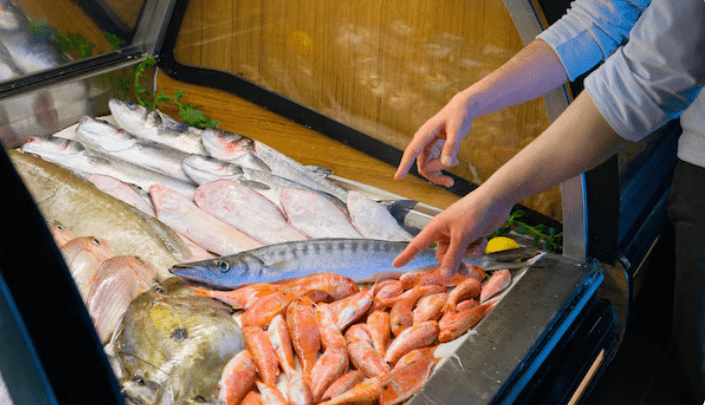
The issue of traceability is more difficult when it comes to seafood; although the inspection system that handles the other 98% of imports is making the most of what it has, the greatest consumer-level option available is to ask where fish originates from and purchase from sellers that can provide an answer.

Import Alert 21-17 Seafood and Papayas SENASICA and COFEPRIS
Share. Facebook Twitter Pinterest LinkedIn Tumblr Telegram Email
Previous ArticleInside the Race to Build America’s First Fully Sustainable Indoor Shrimp Farm in the Heart of the Midwest
Next Article The New England Clam Bake Recipe You Can Actually Pull Off in Your Own Backyard Without a Permit or a Pit
Mildred Bell

    Mildred Bell is a full-time digital professional, seasoned traveler, and ardent outdoor enthusiast who infuses her writing with a sincere love of the natural world. In her role as Senior Editor at fishonline.co.uk, the online home of Seafood Audit International, Mildred is in charge of editorial content covering news about the seafood industry, updates on food safety, politics, finance, and commentary from prominent figures in the fishing and seafood industries. Beyond the desk, Mildred has a deeper connection to the material she edits. She is a passionate angler who has spent years fishing open waters, rivers, and coastlines throughout the UK and beyond. Her genuine knowledge of the fishing industry informs all of her editorial choices. Mildred's passion for travel stems from the same restless curiosity. She has traveled to many different continents with a rod, a notebook, and an eye for the stories that others overlook.

    Related Posts

    How to Make the Authentic Maryland Blue Crab Feast at Home — From the Old Bay Ratio to the Newspaper on the Table

    June 15, 2026

    The Oyster Farmer Who Took NOAA to Federal Court Over Drakes Bay — and Changed Shellfish Regulation Forever

    June 12, 2026

    SalMar Partners With a Google X Spinoff to Build an AI Platform for Salmon Farming — and the Industry Is Paying Attention

    June 12, 2026
    Add A Comment
    Leave A Reply Cancel Reply

    You must be logged in to post a comment.

    The New England Clam Bake Recipe You Can Actually Pull Off in Your Own Backyard Without a Permit or a Pit

    Food June 15, 2026

    The classic New England clambake, which takes place on a beach in Gloucester, Wellfleet, or…

    FDA Places Seafood and Papayas Under Greater Import Scrutiny — Here’s What Consumers Need to Know

    June 15, 2026

    Inside the Race to Build America’s First Fully Sustainable Indoor Shrimp Farm in the Heart of the Midwest

    June 15, 2026

    This Mussels in White Wine Recipe Is the Easiest Impressive Dinner You Will Ever Put on a Weeknight Table

    June 15, 2026

    How to Plan a Two-Week Pacific Coast Seafood Road Trip From San Diego to Seattle Without Blowing Your Budget

    June 15, 2026

    How to Make the Authentic Maryland Blue Crab Feast at Home — From the Old Bay Ratio to the Newspaper on the Table

    June 15, 2026

    The Oyster Farmer Who Took NOAA to Federal Court Over Drakes Bay — and Changed Shellfish Regulation Forever

    June 12, 2026

    Fishonline.co.uk is the official online home of Seafood Audit International, a UK-based food safety and quality management consultancy with more than 25 years of hands-on experience in the global seafood and fishing industries. Based in Wellington, Somerset, we work with fish processors, food businesses, government inspection services, and international organisations to deliver practical, measurable, and cost-effective food safety solutions.We are not a generic food safety company. Seafood and fish products are our entire focus — and that specialisation is what makes us different.Who We AreSeafood Audit International was founded on a straightforward belief: that food safety training and quality management should be practical, accessible, and genuinely useful — not a box-ticking exercise.For over two decades we have worked with clients ranging from high street fish retailers and small-scale processors to large-scale international fishing operations, government bodies, and seafood exporters in the developing world. Our experience stretches from dhows on Lake Victoria to the trawlers of the UK coastline — giving us a depth of real-world knowledge that classroom-only consultancies simply cannot match.Our lead consultant is a fully qualified auditor with extensive experience across British Retail Consortium (BRC) and ISO 9000 quality management standards, HACCP implementation, food hygiene, and the development of national food safety legislation for governments internationally.What We DoSeafood Audit International provides a comprehensive range of training, auditing, and consultancy services tailored specifically to the seafood and fishing industries:Training Courses

    Top Insights

    The New England Clam Bake Recipe You Can Actually Pull Off in Your Own Backyard Without a Permit or a Pit

    June 15, 2026

    FDA Places Seafood and Papayas Under Greater Import Scrutiny — Here’s What Consumers Need to Know

    June 15, 2026

    Inside the Race to Build America’s First Fully Sustainable Indoor Shrimp Farm in the Heart of the Midwest

    June 15, 2026

    This Mussels in White Wine Recipe Is the Easiest Impressive Dinner You Will Ever Put on a Weeknight Table

    June 15, 2026

    How to Plan a Two-Week Pacific Coast Seafood Road Trip From San Diego to Seattle Without Blowing Your Budget

    June 15, 2026
    Disclaimer

    Important Editorial Notice: All content on fishonline.co.uk, including that pertaining to business finance, political developments, financial markets, and regulatory changes, is provided solely for informational and discussion purposes. It is merely the opinion of a third party and does not represent the expert advice of fishonline.co.uk or Seafood Audit International.
    We strongly advise against taking any action based on any political, legal, or financial information found on this website without first consulting an impartial expert. Seafood Audit International is not governed by the Financial Conduct Authority (FCA) and is not permitted to offer financial advice. Always seek advice from an independent financial advisor authorized by the FCA before making any financial decisions. Seek legal advice from an experienced attorney.

    © 2026 ThemeSphere. Designed by ThemeSphere.
    • Homepage
    • Contact
    • Privacy Policy
    • Disclaimer
    • About
    • TOS
    • Seafood
    • News
    • Trending
    • Travel

    Type above and press Enter to search. Press Esc to cancel.