

A firm named Atarraya is raising saltwater shrimp and stacking cargo containers at a site on South Belmont Avenue in Indianapolis, which is close to West Raymond Street and Kentucky Avenue, in the kind of industrial corridor that usually doesn’t inspire much excitement linked to food. The shrimp are Pacific White shrimp, the same species that is raised in warm tropical waters from Ecuador to Thailand.
They are kept in climate-controlled containers with a closed-loop water system that recycles, purifies, and reuses nearly all of its water without releasing any water into the environment. The closest ocean is about 1,200 miles away. The shrimp appear to be unaware.
Atarraya’s technology, dubbed the Shrimpbox, transforms a cargo container into an automated, AI-monitored aquaculture unit that even non-aquaculture experts can run. The company’s claim—four employees, 20 shrimpboxes, and 80 tons of shrimp annually—sounds like a pitch deck, but it comes from ten years of engineering work in Mexico prior to the announcement of the Indianapolis factory in 2022.
The company’s founder and CEO, Daniel Russek, has been clear about their goals: “Aquaculture must be local in order to unleash its true potential to feed the world.” The Indianapolis location, which will require a $4.8 million investment and create 65 jobs, was chosen in part because Indiana promotes itself as an agtech and agricultural state and in part because the Midwest has a large consumer base and almost no local prawn production. If a new industry is to succeed, it must meet these two requirements.
Atarraya is not the only one doing this. One of the first indoor shrimp companies in the United States, RDM Shrimp has been operating biofloc shrimp tanks since 2010 in Fowler, Indiana, a community of around 2,100 people about an hour northwest of Indianapolis. In a way that no frozen or previously iced product can match, RDM sells Pacific White shrimp live, with the head still attached, which is a sign of true freshness. The presence of the head indicates to the customer that the shrimp was alive relatively recently since it contains fat and enzymes that break down swiftly after death.
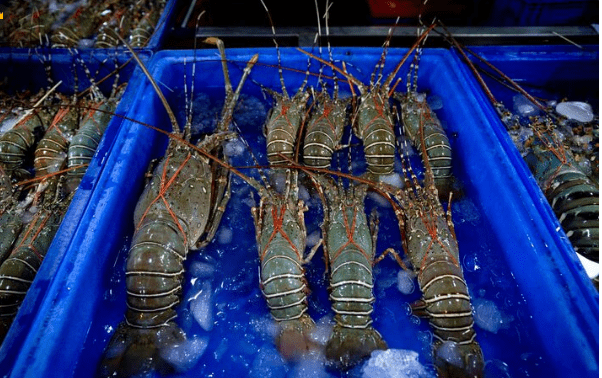
The idea of live shrimp at the point of sale is virtually unheard of in the majority of the American Midwest; it is common in Southeast Asian markets and along the shore, but it does not exist in the traditional indoor retail setting. Midland Co. is situated in the 3,400-person hamlet of Story City, Iowa, and supplies its algae-based RAS shrimp to eateries and Fareway Meat Market outlets throughout the state.
These efforts are addressing both ecological and logistical issues. The vast majority of shrimp consumed in the US is imported, mostly from China, India, Vietnam, Ecuador, and Indonesia. Each person consumes about five pounds of shrimp annually, which is the biggest amount of seafood consumed by any one species.
This supply chain is based on a cold chain that stretches thousands of miles, involves shrimp that have been repeatedly frozen and thawed before being placed on a plate, and in certain countries where it is sourced, leaves a documented trail of antibiotic use, mangrove destruction, and damage to coastal ecosystems that traditional aquaculture inspections have not always been able to uncover. Nearly all of those issues are resolved by indoor RAS farming in a landlocked state, but at the cost of the capital needed to construct the facility and the energy needed to operate it.
Looking at this new group of farms in Indiana and Iowa, it seems to be in a similar situation to what vertical farming was around fifteen years ago: it is genuinely promising, but it is not yet at a scale where the price to consumers is competitive with imported goods, and it faces real economic challenges related to energy and per-pound cost. The technology is being improved. We’re working on the economics. For whatever reason, the shrimp are expanding.
A number of unresolved factors, such as energy pricing, consumer willingness to pay more for locally farmed food, and access to foodservice distribution, will determine if the Midwest becomes a significant shrimp-producing region in the coming ten years. The wager is that they will be the containers on South Belmont Avenue.
