

The classic New England clambake, which takes place on a beach in Gloucester, Wellfleet, or Watch Hill, Rhode Island, with a pit dug in the wet sand and stones heated overnight, requires preparation, a certain location, and in certain localities, a fire permit. It doesn’t happen on a Tuesday in July because someone decided to do something with the lobsters they purchased at the fish counter.
A trip to any supermarket with a good seafood counter is the first step in the backyard version, which uses a 32-quart stockpot on a gas grill or stovetop and yields nearly the same briny, steamed, everything-at-once result in about an hour. It doesn’t require a beach, pit, fire permit, or any prior planning other than purging the clams. What needs to be paid attention to is the layering sequence. Most of the rest is patience.
The pot must be big. For a feast for four to six people, twenty to thirty-two quarts is the realistic range; thirty-two is preferable because the ingredients pile higher than anticipated and the layering technique demands vertical room. Shallots and sausage (chouriço in the traditional Rhode Island and southeastern Massachusetts manner, though kielbasa substitutes without catastrophe) are added to the bottom of the pot and cooked in a few tablespoons of olive oil until the fat begins to render.
This is the base layer, and everything above it is cooked by the steam that contains the sausage’s fat and liquid. Next, cover the sausage with half of the Old Bay and add the potatoes. The lobster came next. The clams, mussels, maize, and the remainder of the Old Bay came next. Two cups of water and an entire bottle of dry white wine are added on top. The lid is put on. The temperature rises.
The difference between a clambake with a clear, oceanic broth and one with grit at the bottom of each bowl is the clam purge. Sand is home to steamer clams. When they are bought, they are not completely clean. Before boiling, they should be submerged in cold salted water for 30 to 60 minutes in the refrigerator to allow them to release the sand they are carrying. This will immediately and clearly improve the broth that is produced.
The cool temperature keeps the clams relaxed rather than agitated, and the salt concentration—roughly one tablespoon per quart of water—matters. After the purge, rinse and scrub them. Most people regret skipping this section.
After the pot is sealed and heated to a high temperature, there isn’t much visible activity for the first fifteen minutes. After that, steam begins to really escape around the lid. For a further fifteen to twenty minutes, the temperature decreases to medium-high. There is a genuine temptation to open the lid, but it is worthwhile to resist.
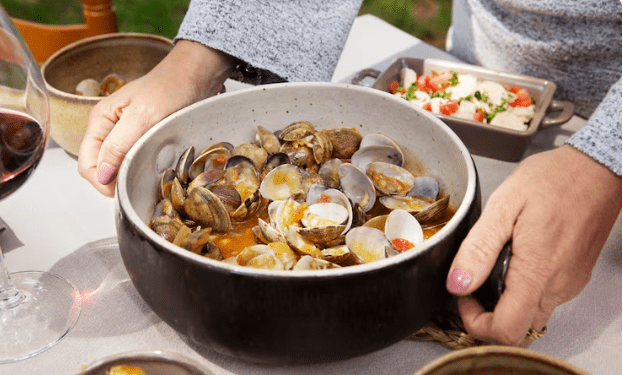
The job is being done by the trapped steam, which escapes each time the lid is removed. The bake is finished when all of the clams and mussels have opened and the lobster shells have turned a vivid crimson. Similar to mussels, any shellfish that failed to open are thrown out. Everything else is placed on the largest platter that is available or, if it’s a summer evening, straight onto newspaper.
