

A good Niçoise salad transitions from feeling like diet food to feeling like something you’d order at a little restaurant by the water in Nice, usually around the second bite. Perhaps that’s the idea. The dish was never intended to be harsh. It was created by people who enjoyed eating healthily and didn’t see why a midday meal couldn’t serve as both a satisfying meal and a source of energy.
It’s interesting how frequently nutritionists mention this specific salad on their own initiative. When you ask a dietitian to describe a “complete” meal, a surprising number of them point to a plate of tuna, egg, potato, green beans, and olive oil. It’s not fancy advice. No powder is used, and there’s no superfood selling point. It’s simply fiber, slow-carbohydrates, protein, and healthy fat in roughly the correct amounts, almost by historical accident.
Much of the heavy lifting is done by the tuna. Drained, a single can contains about 25 grams of protein for just over 100 calories, along with omega-3 fatty acids and a good amount of selenium and vitamin B12. If you pair that with one or two soft-boiled eggs, which should be runny in the middle if you’re cooking them the way most chefs do, you can easily meet your protein needs for a meal. This combination is popular among dietitians because it doesn’t contain protein from bars or shakes. It’s food that also happens to be effective.
The salad gets its reputation for being exceptionally well-rounded from the vegetables. Blanching green beans until they squeak between your teeth adds fiber and a tiny bit of vitamin C. Tomatoes add water content and lycopene. In reality, potatoes—often the most despised item on a health-conscious plate—contribute potassium and a stable form of carbohydrate that doesn’t cause blood sugar spikes like refined starches do, especially after they’ve cooled, which slightly alters their starch structure. Olives provide vitamin E and monounsaturated fat. This is not exotic at all. Long before anyone was keeping track of macros, this type of nutrition was practiced in French kitchens.
The salad also imposes a particular pace, which is difficult to ignore. You really can’t write one in a hurry. The beans require their own pot, the potatoes require their own, and the eggs must be timed carefully to avoid becoming chalky and depressing. Peeling eggs under cold running water and slicing tomatoes while the dressing mixes in a jar are part of the little ritual. It’s arguable whether the ritual improves the meal’s health. However, instead of inhaling something at a desk, it probably encourages people to actually sit down and eat it.
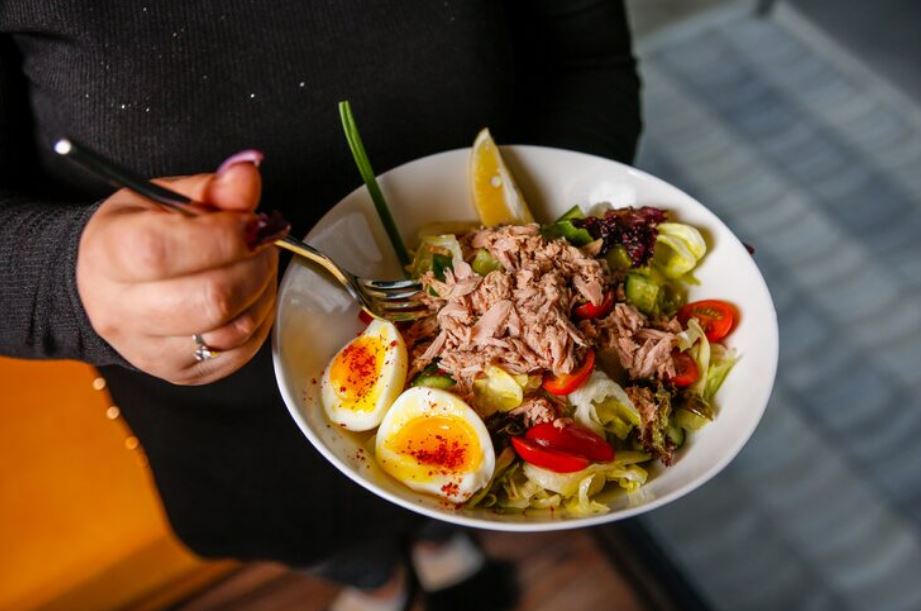
Dressing is more important than most people realize. A quick whisk of olive oil, mustard, lemon or red wine vinegar, and perhaps a few chopped anchovies serves two purposes: it binds the ingredients together and provides an additional layer of healthy fat that aids in the body’s absorption of fat-soluble vitamins from the vegetables. You lose part of the reason this combination works in the first place if you omit the dressing or drown the salad in something heavier.
It’s fair to wonder if any one salad merits this much praise. Most likely not completely; nutritionists are the ones who understand that a varied diet cannot be replaced by a single meal. However, there’s a feeling that this one deserves recognition in part because it doesn’t contain any highly processed ingredients, added sugar concealed in a dressing, or anything that requires a label to explain itself.
Versions differ, as one might expect. While some cooks insist on using capers and Niçoise olives, others substitute kalamatas and omit the capers completely. Some people replace canned tuna with freshly seared tuna. The nutritionists who continue to recommend it don’t seem to care about any of that. No matter which coastal town’s version you follow, the fundamentals of the dish—protein, healthy fat, vegetables, and a self-behaving starch—remain the same.
