

There’s a subtle trend in how people eat, not so much in restaurants as in home kitchens, lunch desks, and the kinds of meals that people take pictures of before finishing them. bowls of seafood. They’re appearing everywhere, and to be honest, it’s difficult to ignore why. For years, registered dietitians and gut health specialists have been encouraging people to eat seafood, and lately, the science has begun to catch up with the enthusiasm. Eating at least two servings of seafood per week offers quantifiable, significant health benefits, according to a thorough review of more than ten thousand studies conducted by researchers on behalf of the International Coalition of Fisheries Associations. Not every now and then. Regularly.
The gut connection is genuine and continues to be underestimated. Fatty fish like salmon, sardines, and mackerel contain omega-3 fatty acids, which do more than just shield your heart. By actively lowering inflammation throughout the digestive tract, they promote the kind of gut environment that allows beneficial bacteria to flourish. The majority of people may still only think of seafood in terms of cardiovascular health, failing to see the bigger picture that nutritionists have been painting for years. Fish oil supplements have some advantages, but eating whole seafood offers a nutritional complexity that no capsule can truly match—protein, B vitamins, iodine, and selenium all working together, according to Ashli Greenwald, a registered dietitian at Johns Hopkins Clinical Nutrition.
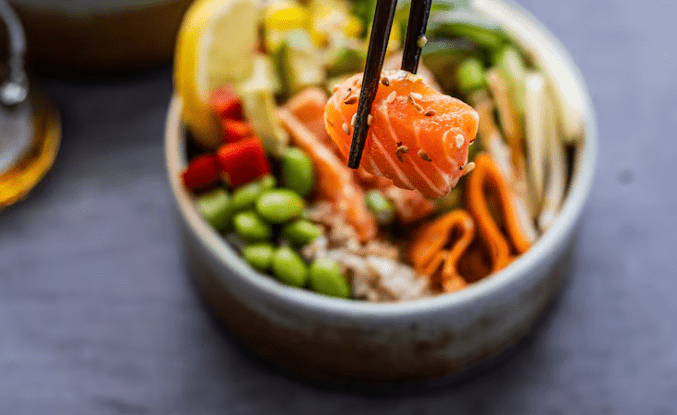
What does twice a week actually entail? Bowls become truly useful in this situation. They are quick, forgiving, and adaptable. It takes about twenty minutes to prepare a salmon rice bowl with edamame, cucumber ribbons, and a miso-ginger drizzle. It contains enough omega-3 fatty acids to meet a significant amount of your weekly requirements. Sardines contain more omega-3 fatty acids per ounce than nearly anything found in the ocean, so a bowl of sardines and white beans over arugula may seem unassuming. These are meals that fit into actual schedules, not intricate creations requiring expertise.
For good reason, tuna poke bowls are now practically iconic. The flavor profile of wild-caught ahi tuna over sushi rice with avocado and sesame rewards minimal effort while providing lean protein and healthy fats. In a similar vein, a bowl of shrimp and quinoa with roasted corn and a lime-cilantro dressing feels substantial without being overpowering. When calculating their weekly intake, people sometimes seem to overlook the fact that shrimp qualifies as seafood in every significant sense. Perhaps less glamorous on social media, the mackerel grain bowl may be the most nutrient-dense choice on any list like this, especially for those watching their blood pressure or cholesterol.
Every dietary preference and nearly every budget can find a version of this. Sardines on a farro bowl with preserved lemon and fresh herbs have recently gained real appreciation in food writing circles, marking the long-overdue rehabilitation of the reputation of canned fish. Thawed and pan-seared, frozen salmon fillets are just as nutritious as anything fresh when served over a bowl of brown rice and wilted spinach. Someone shouldn’t skip their second serving of the week because of the substantial price difference between fresh and frozen seafood.
For the warmer months, cod and mango bowls offer something lighter: flaky white fish with tropical sweetness and a brightness that makes eating healthfully feel less like discipline. Over wild rice with roasted asparagus, trout—which doesn’t always receive the attention it deserves—tastes great. Bowls of scallops and oyster mushrooms create a truly sophisticated connection between the land and the sea. Outside of Scandinavian cooking, herring is still incredibly underutilized. Its powerful flavor anchors a bowl of pickled vegetables and rye grains in ways that are difficult to duplicate.
The logic is clear and the research is consistent. Eating more seafood, especially the oily, omega-3-rich types, at least twice a week promotes immune response, gut integrity, brain health, and heart function in ways that are challenging to accomplish with supplements alone. The bowl format simply facilitates maintaining the habit. There’s a sense that this specific nexus between practical cooking and nutritional science has finally found a home where the majority of people can truly benefit.
