

It’s possible that the shrimp on your plate originated in a Vietnamese pond, traveled through a Chinese processing plant, arrived at a port in California, and ended up on a New Orleans restaurant menu labeled “locally sourced Gulf shrimp.” Technically, no one lied, or at least that’s what the law permits them to assert.
The unsettling truth at the core of American seafood labeling is that. The industry has long been aware of a loophole that allows imported seafood to be processed alongside domestic catch, combined into a single batch, and then sold to customers under labels suggesting local origin. It’s lawful. It’s typical. Furthermore, the federal government has done remarkably little about it for years.
The Country of Origin Labeling Act, or COOL, is the mechanism that makes this trick work. Seafood products are currently labeled according to the location of their last major processing, not the location of the fish’s actual capture. Legally, Russian pollock that is caught in the Bering Sea, transported to China for processing, and then exported back to American grocery stores is considered a Chinese product. It can occasionally turn into something even more difficult to track down.
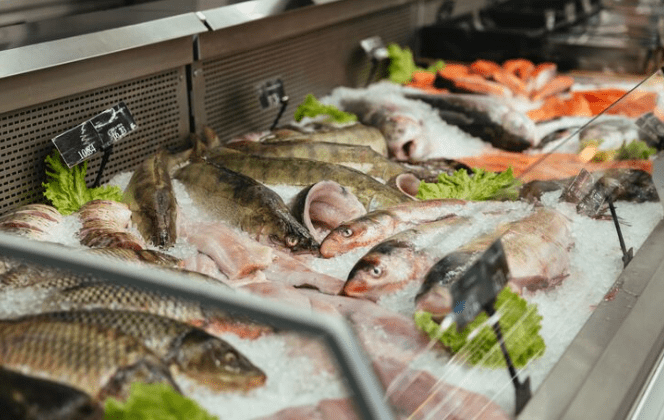
The entire batch frequently avoids origin scrutiny when Russian-caught fish is mixed with Alaskan-caught fish inside a Chinese plant and pressed into frozen fillets or fish sticks. This problem was identified by the Stimson Center in 2024, but it hasn’t been fixed. While a federal ban on Russian imports is in effect, the school lunch program and military commissaries may receive seafood linked to Russian state revenue. This is not a small bureaucratic detail.
It’s difficult to ignore the states’ weariness with waiting. The most recent state to act independently was Louisiana in June of last year. A rule that had previously felt more like a suggestion was finally given real teeth when Governor Jeff Landry signed House Bill 857 into law. Retailers who are found to be selling mixed foreign seafood as locally sourced are subject to fines under the new law that start at $15,000 and increase to $50,000 for repeat offenses.
Landry put it simply while standing on the stage at Jean Lafitte Auditorium, surrounded by the kind of weathered faces you see on working fishing boats: safeguarding livelihoods. Mississippi took a similar step, mandating that all seafood and crawfish sold in the state be labeled as either domestic or imported starting in July 2025. In an effort to promote more precise national standards, Senator Cindy Hyde-Smith introduced the federal LABEL Act in October 2025.
However, this is where the optimism becomes more nuanced. Even though state-level action is welcome, it leaves a patchwork. While a consumer in Ohio or Illinois purchasing frozen shrimp at a big-box store is likely not protected, a shrimper from Louisiana is at his dock. The federal structure is still disjointed. The closest thing the United States has to a national traceability system is NOAA’s Seafood Import Monitoring Program, which only covers 40 to 45 percent of seafood imports and leaves out high-risk species like salmon and pollock, which are the fish most involved in the Russian ban enforcement issue.
Observers of the seafood trade believe that the industry has had every chance to self-correct but hasn’t. Self-certification letters attesting to the non-Russian origin of their product were added by importers to their documentation. That’s a good place to start, but self-certification is by definition an honor system, and this is a $30 billion yearly import market with intricate, multi-national supply chains.
The underlying problem is that American consumers have a sincere desire to eat seafood from within the country. They’re prepared to spend more on it. When they make this decision, they think they’re doing what’s best for the environment and local fishermen. This trust is being subtly abused, not always by overt fraud but by the kind of legal ambiguity that makes assigning blame nearly impossible. For years, fishermen in Louisiana have said this. Now, the question is whether Washington is paying attention at last or if federal reform will continue to come a bit too late.
