
On a gloomy morning, the view of the Norwegian coastline remains largely unchanged: open-water cages, verdant hills giving way to chilly fjords, and the subtle scent of fish and salt. However, if you take a closer look at what’s really going on inside those operations, you’ll notice a real difference. There are active cameras. There are tracking sensors. Decisions that a farmer using a clipboard used to make alone are now made by algorithms.
Norway was not unintentionally involved in this. For many years, the nation has operated one of the most intensive aquaculture operations on the planet, producing more than 1.5 million metric tons of farmed Atlantic salmon annually. Additionally, since the 1980s, its wild salmon stocks have decreased by more than 50%. There are two pressures coming together: expand the industry while reducing environmental harm in some way. As it happens, AI might be the only instrument that can thread that needle.
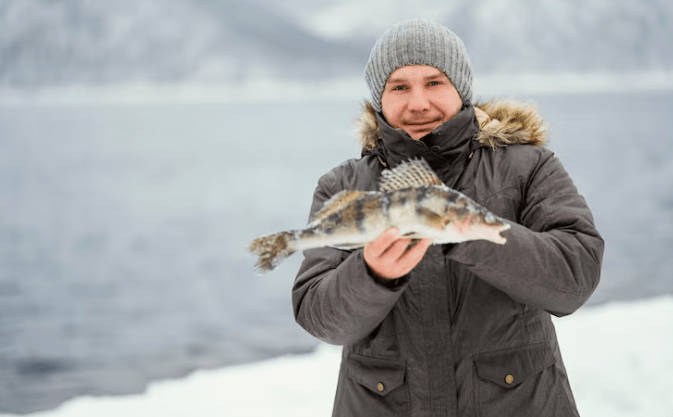
Cermaq, BioSort, and ScaleAQ have been working on a sensor system called iFarm that can identify individual fish within a pen, counting the number of sea lice on a single animal, and tracking details as specific as dot patterns on a salmon’s body. It’s the kind of monitoring that, on an industrial scale, would have seemed ridiculous to even try by hand. As a five-year development program, it is currently being tested. Early disease detection, less physical handling of fish, and a move away from flock-level management toward what researchers refer to as individualized care are the objectives, not surveillance for its own sake.
That change is more significant than it may seem. For years, sea lice infestations have afflicted Norwegian salmon farming, resulting in welfare conditions that critics haven’t kept quiet about and mortality rates that cost the industry millions. There is a significant shift in the way the operation actually operates from treating an entire pen to identifying and treating individual fish.
The issue of escapees is another. Every year, an estimated 300,000 farmed salmon escape into Norwegian rivers, where they interbreed with wild populations and reduce the genetic fitness that wild salmon have accumulated over millennia. According to a study released in late 2025, a machine learning system that was trained on about 90,000 photos of salmon scales is now able to quickly differentiate between farmed and wild fish. Although it’s still unclear if that identification capability will scale quickly enough to actually address the issue, science is advancing in a way that wasn’t possible five years ago.
A different approach has been adopted by Scotland-based Ace Aquatec, which uses AI-trained cameras to identify seals from porpoises and whales close to fish pens and initiate deterrent reactions specific to each species. According to reports, seals consumed one million fish from Scottish farms in a single year, costing the industry about £12 million. As this technology advances, it’s difficult to ignore how much of what formerly required human judgment and eyes is being silently transferred to trained systems.
There is a general perception that aquaculture is becoming genuinely fascinating in a way that it hasn’t been before, especially among investors. The infrastructure used to manage fish is rapidly changing, not because the fish themselves have changed. It’s still unclear if that results in cleaner operations or just more effective ones.
These days, data is shaping Norwegian salmon just as much as water and feed. The fjords have the same appearance. Beneath, everything is different.
