

Standing inside a major fish market before the majority of people have had their morning coffee has a subtly overwhelming effect. There is no one to impress you, the floors are wet, and the lights are harsh. That’s precisely the point. These locations serve a purpose rather than a show, which may be why they end up being some of the most genuine travel experiences on the planet. A detour is worthwhile in certain markets. A few are worth planning an entire trip around.
Even after its wholesale operations moved to Toyosu in 2018, Tokyo’s Tsukiji, which used to be the largest seafood market in the world, continues to attract the kind of subdued respect typically associated with museums. Alongside tea vendors and tamagoyaki makers who have been refining the same egg recipe for decades, vendors like Sugimoto, whose knives bear the weight and precision of samurai craftsmanship, have remained in place. At Toyosu, a record-breaking bluefin tuna brought in $3.1 million. Until you taste the fish, that figure seems ridiculous. There is a feeling that seafood is treated with a theological seriousness that is unmatched anywhere else in the world.
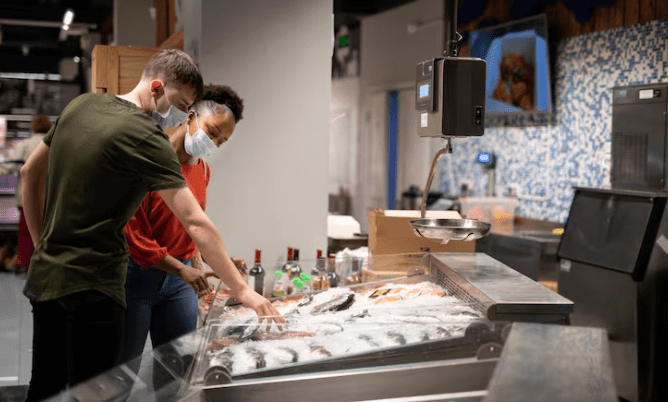
The Noryangjin Fish Market in Seoul is open twenty-four hours a day, but if you arrive before six in the morning, you’ll find yourself in something more akin to controlled chaos than a market. There are more than 700 vendors offering everything from live octopus to dried squid, and the early-morning wholesale auctions have a genuinely unique vibe. The best course of action is to locate a vendor, remove your fish from the tank, and bring it upstairs for cooking. Without actually owning a boat, it may be the most direct connection between the ocean and the plate that a traveler can witness.
London’s Billingsgate Market began selling fish in 1699, when the city was very different from what it is today. It still opens at hours that seem almost cruel—long before dawn—and carries a vast array of exotic species in large quantities, all surrounded by a no-nonsense vibe that makes it obvious that this is not a tourist destination. It just so happens to be one. Thirty stores, two cafes, and an ice factory that supplies caterers and processors throughout the city. Here, it’s not uncommon to witness a Michelin-trained chef silently quarrel over the cost of a monkfish.
Unabashedly, Pike Place Market in Seattle is the most theatrical of them all. For years, fish vendors have been tossing their catch over the counter, making what is essentially a transaction into a small-scale spectacle. Beneath the show, however, is a truly remarkable market, particularly for its produce and Dungeness crab that come from farms in Washington before dawn. Standing there before noon with the fog still hanging over Puget Sound makes it difficult to ignore the significance of this location to the city beyond business.
The most underappreciated market on this list is likely Essaouira’s Port de Pêche in Morocco. Vendors set up along the waterfront with whatever had arrived that morning once the blue fishing boats have returned to the harbor. Mostly sardines, cooked over open flames with just lemon and salt. There is a real difference between today’s catch and yesterday’s when you go with a local. The entire scene seems more like something from a different century, complete with fishing nets draped over wooden poles, squawking gulls, and salt air. It may be the most truthful dining experience a traveler can have.
Geographically, culturally, and in terms of what they sell, these markets have very little in common. They have one thing in common: they refuse to change who they are. They are typically more memorable because of that than the fish itself.
