Close Menu
FishonlineFishonline
  • Homepage
  • Contact
  • Privacy Policy
  • Disclaimer
  • About
  • TOS
  • Seafood
  • News
  • Trending
  • Travel
What's Hot

Why the Global Seafood Industry Is More Fragile Than It Looks — and Which American Suppliers Are Most at Risk

June 18, 2026

NOAA Just Reopened Its Comment Period on Seafood Competitiveness – Here’s Why Every Fisherman Should Respond.

June 18, 2026

The Crispy Fish Taco Recipe That Went Viral on Instagram and Then Showed Up in Every Coastal Restaurant in America

June 18, 2026
FishonlineFishonline
Subscribe
  • Homepage
  • Contact
  • Privacy Policy
  • Disclaimer
  • About
  • TOS
  • Seafood
  • News
  • Trending
  • Travel
FishonlineFishonline
Home » Why the Global Seafood Industry Is More Fragile Than It Looks — and Which American Suppliers Are Most at Risk
News

Why the Global Seafood Industry Is More Fragile Than It Looks — and Which American Suppliers Are Most at Risk

Mildred BellBy Mildred BellJune 18, 2026No Comments4 Mins Read
Facebook Twitter LinkedIn Telegram Pinterest Tumblr Reddit WhatsApp Email
Why the Global Seafood Industry Is More Fragile Than It Looks — and Which American Suppliers Are Most at Risk
Share
Facebook Twitter LinkedIn Pinterest Email

A mid-sized Louisiana seafood processing plant’s loading docks appear surprisingly ordinary. Fish caught thousands of miles away are waiting to be distributed somewhere in the cold storage as trucks arrive and rubber-booted workers move between stacked crates. Here, nothing appears to be brittle. Everything appears to be under control. That’s why it’s so simple to overlook the underlying reality.

Environmental change poses a significant risk to over 90% of the world’s blue food production, including aquaculture and capture fisheries, according to UC Santa Barbara researchers. That figure, which was published in Nature Sustainability, is not a cautionary tale about some far-off future. It describes the present moment. The United States is one of the world’s most exposed countries, along with China and Thailand. which is remarkable given that the majority of American consumers still believe that seafood is consistently and consistently available.
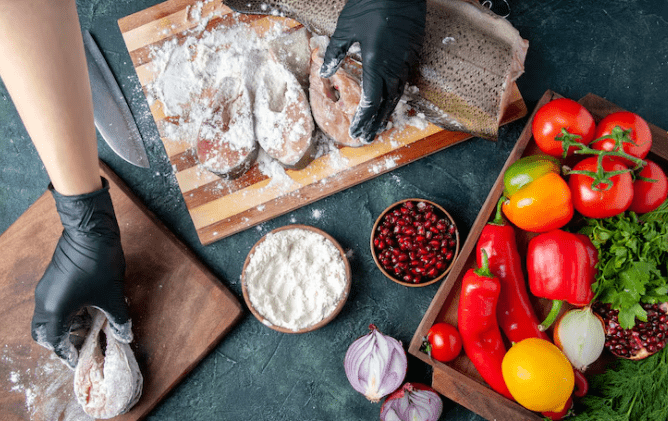
Why the Global Seafood Industry Is More Fragile Than It Looks — and Which American Suppliers Are Most at Risk

The issues pile up in subtle ways. Sea level rise, changing ocean temperatures, and an increase in algal blooms are all subtly weakening the industry’s reliance on coastal infrastructure. These are not distinct crises. The same suppliers are impacted by these interrelated pressures that arrive at about the same time. The researchers claim that the risks to freshwater and marine fisheries in the United States are disproportionately high, especially when it comes to species invasion and warming waters. It’s possible that the industry hasn’t fully realized the operational implications of that.

The most traded food item in the world is seafood. Just that fact ought to draw more attention than it usually does. Before anyone at the retail end asks a single question about the fish’s true origin, it can be caught in the Pacific, processed in Southeast Asia, frozen, and transported to a distribution center in the Midwest of the United States. The intricacy is not coincidental. It is structural. Furthermore, risk is concealed in supply chain complexity.

In the industry, there is a belief that certifications address this issue. Companies that are serious about responsible sourcing rely heavily on third-party labels, such as MSC, ASC, and various fishery improvement projects. In order to map the actual locations of the risks in its own supply chain, Mars, which runs the largest pet care company in the world and sources massive amounts of fish byproducts, started collaborating with WWF in 2009. As their sustainability lead Andrew Russell put it, what they discovered showed them not only where they were succeeding but also where there were real issues. They are still working on it fifteen years later. You should learn something from that timeline.

Large-scale American suppliers deal with a more difficult-to-solve version of this issue. There are actual traceability gaps. It is still challenging to obtain trustworthy vessel-level data from far-off water fleets, especially those that operate close to borders with lax enforcement. Not only does illegal, unreported, and unregulated fishing skew catch data, but it also indicates that someone is profiting from an unaccounted-for resource somewhere along the supply chain. Eventually, that manifests as scarcity.

It’s simple to ignore how much of this risk is concentrated in particular production systems. Stressors related to climate change are more prevalent in marine fisheries. Disease outbreaks and hypoxia—low oxygen levels that can quickly destroy fish stocks—are more likely to affect aquaculture. The majority of large American distributors, who are caught between the two production methods, lack risk diversification. They are simultaneously exposed to two distinct types of it.

It seems like the reckoning is happening more slowly than it should as one watches this industry deal with these pressures. The science is obvious. Vulnerabilities in the supply chain are recorded. Whether there are the financial incentives to promote the kind of industry-wide adaptation that researchers claim is desperately needed is still up for debate. To date, conservation partnerships and individual businesses have been largely responsible for holding the line.

Fragile Suppliers
Share. Facebook Twitter Pinterest LinkedIn Tumblr Telegram Email
Previous ArticleNOAA Just Reopened Its Comment Period on Seafood Competitiveness – Here’s Why Every Fisherman Should Respond.
Mildred Bell

    Mildred Bell is a full-time digital professional, seasoned traveler, and ardent outdoor enthusiast who infuses her writing with a sincere love of the natural world. In her role as Senior Editor at fishonline.co.uk, the online home of Seafood Audit International, Mildred is in charge of editorial content covering news about the seafood industry, updates on food safety, politics, finance, and commentary from prominent figures in the fishing and seafood industries. Beyond the desk, Mildred has a deeper connection to the material she edits. She is a passionate angler who has spent years fishing open waters, rivers, and coastlines throughout the UK and beyond. Her genuine knowledge of the fishing industry informs all of her editorial choices. Mildred's passion for travel stems from the same restless curiosity. She has traveled to many different continents with a rod, a notebook, and an eye for the stories that others overlook.

    Related Posts

    NOAA Just Reopened Its Comment Period on Seafood Competitiveness – Here’s Why Every Fisherman Should Respond.

    June 18, 2026

    How One Louisiana Family Has Been Catching and Selling Blue Crabs From the Same Dock for Five Generations

    June 18, 2026

    The Alabama Bill That Could Reshape Seafood Labeling Rules for Every Retailer in the Gulf States

    June 18, 2026
    Add A Comment
    Leave A Reply Cancel Reply

    You must be logged in to post a comment.

    Why the Global Seafood Industry Is More Fragile Than It Looks — and Which American Suppliers Are Most at Risk

    News June 18, 2026

    A mid-sized Louisiana seafood processing plant’s loading docks appear surprisingly ordinary. Fish caught thousands of…

    NOAA Just Reopened Its Comment Period on Seafood Competitiveness – Here’s Why Every Fisherman Should Respond.

    June 18, 2026

    The Crispy Fish Taco Recipe That Went Viral on Instagram and Then Showed Up in Every Coastal Restaurant in America

    June 18, 2026

    The Peruvian Ceviche Trail That Food Travellers Are Calling the Most Revelatory Culinary Journey in the Western Hemisphere

    June 18, 2026

    How One Louisiana Family Has Been Catching and Selling Blue Crabs From the Same Dock for Five Generations

    June 18, 2026

    The Alabama Bill That Could Reshape Seafood Labeling Rules for Every Retailer in the Gulf States

    June 18, 2026

    The NOAA Rule Change That Fishermen in the Gulf of Mexico Have Been Fighting for Three Years Is Finally Happening

    June 18, 2026

    Fishonline.co.uk is the official online home of Seafood Audit International, a UK-based food safety and quality management consultancy with more than 25 years of hands-on experience in the global seafood and fishing industries. Based in Wellington, Somerset, we work with fish processors, food businesses, government inspection services, and international organisations to deliver practical, measurable, and cost-effective food safety solutions.We are not a generic food safety company. Seafood and fish products are our entire focus — and that specialisation is what makes us different.Who We AreSeafood Audit International was founded on a straightforward belief: that food safety training and quality management should be practical, accessible, and genuinely useful — not a box-ticking exercise.For over two decades we have worked with clients ranging from high street fish retailers and small-scale processors to large-scale international fishing operations, government bodies, and seafood exporters in the developing world. Our experience stretches from dhows on Lake Victoria to the trawlers of the UK coastline — giving us a depth of real-world knowledge that classroom-only consultancies simply cannot match.Our lead consultant is a fully qualified auditor with extensive experience across British Retail Consortium (BRC) and ISO 9000 quality management standards, HACCP implementation, food hygiene, and the development of national food safety legislation for governments internationally.What We DoSeafood Audit International provides a comprehensive range of training, auditing, and consultancy services tailored specifically to the seafood and fishing industries:Training Courses

    Top Insights

    Why the Global Seafood Industry Is More Fragile Than It Looks — and Which American Suppliers Are Most at Risk

    June 18, 2026

    NOAA Just Reopened Its Comment Period on Seafood Competitiveness – Here’s Why Every Fisherman Should Respond.

    June 18, 2026

    The Crispy Fish Taco Recipe That Went Viral on Instagram and Then Showed Up in Every Coastal Restaurant in America

    June 18, 2026

    The Peruvian Ceviche Trail That Food Travellers Are Calling the Most Revelatory Culinary Journey in the Western Hemisphere

    June 18, 2026

    How One Louisiana Family Has Been Catching and Selling Blue Crabs From the Same Dock for Five Generations

    June 18, 2026
    Disclaimer

    Important Editorial Notice: All content on fishonline.co.uk, including that pertaining to business finance, political developments, financial markets, and regulatory changes, is provided solely for informational and discussion purposes. It is merely the opinion of a third party and does not represent the expert advice of fishonline.co.uk or Seafood Audit International.
    We strongly advise against taking any action based on any political, legal, or financial information found on this website without first consulting an impartial expert. Seafood Audit International is not governed by the Financial Conduct Authority (FCA) and is not permitted to offer financial advice. Always seek advice from an independent financial advisor authorized by the FCA before making any financial decisions. Seek legal advice from an experienced attorney.

    © 2026 ThemeSphere. Designed by ThemeSphere.
    • Homepage
    • Contact
    • Privacy Policy
    • Disclaimer
    • About
    • TOS
    • Seafood
    • News
    • Trending
    • Travel

    Type above and press Enter to search. Press Esc to cancel.