
Close Menu
FishonlineFishonline
  • Homepage
  • Contact
  • Privacy Policy
  • Disclaimer
  • About
  • TOS
  • Seafood
  • News
  • Trending
  • Travel
What's Hot

The U.S. Seafood Industry’s Quiet Lobbying Victory Hidden Inside the Farm Bill Nobody Read Closely

June 10, 2026

The King Crab Legs Recipe That Looks Impossibly Impressive but Takes Fifteen Minutes and One Pot to Make

June 10, 2026

This One-Pan Salmon Recipe Takes 20 Minutes and Tastes Like Something From a Michelin-Starred Kitchen

June 10, 2026
FishonlineFishonline
Subscribe
  • Homepage
  • Contact
  • Privacy Policy
  • Disclaimer
  • About
  • TOS
  • Seafood
  • News
  • Trending
  • Travel
FishonlineFishonline
Home » Louisiana Just Tightened the Net on Imported Seafood , Here’s What It Means for Your Dinner Plate
Food

Louisiana Just Tightened the Net on Imported Seafood , Here’s What It Means for Your Dinner Plate

Mildred BellBy Mildred BellJune 2, 2026Updated:June 2, 2026No Comments4 Mins Read
Facebook Twitter LinkedIn Telegram Pinterest Tumblr Reddit WhatsApp Email
Your Dinner Plate
Your Dinner Plate
Share
Facebook Twitter LinkedIn Pinterest Email

Enter a seafood restaurant in New Orleans, the kind with a handwritten daily menu on a chalkboard, a bowl of àouffée arriving in a cloud of steam, and the aroma of butter and cayenne reaching the table before the server does. Until recently, most diners didn’t think to ask where that crawfish actually came from, and most restaurants weren’t required to provide a clear response. The crawfish may have originated in the Atchafalaya Basin and been collected by a commercial trapper whose family has been working those waters for many generations.

Alternatively, it may have come from a Chinese processing plant in a frozen bag, been combined with a smaller amount of local goods at some stage in the supply chain, and been sold with a description that provided no meaningful information about where it came from. On a plate, both items may appear the same. Frequently, the costs associated with them are not. Louisiana has made the decision to begin mandating that the distinction be made apparent.

The new law makes it unlawful to mix domestic and foreign catch in order to conceal its origin. This practice has been so common in the distribution of seafood in Gulf states that industry insiders and regulators have been characterizing it as one of the worst-kept secrets in the industry. Restaurants in Louisiana must now officially disclose on their menus if they serve imported shrimp or crawfish.

Seafood markets, food retailers, and wholesalers must keep meticulous invoice records that track the provenance of each seafood purchase. Penalties for infractions are designed to increase in severity: a first offense of mislabeling or combining domestic and imported goods may result in a fine of up to $15,000; a third infraction may cost up to $50,000. These are not symbolic sums intended to be absorbed as operating expenses. Their goal is to alter the math.

The Louisiana Department of Health has switched from the warning-letter strategy that typified previous enforcement to active citation and fining. According to reports, both fast-food chains and upscale restaurants are on the list of establishments that have received citations, indicating that the compliance issue was not limited to the lower end of the market.

That width is telling in some way. Selling unlabeled imported seafood as if it were domestic was not a fringe activity. It was so prevalent and lucrative that it continued to exist concurrently in several market niches. The fact that voluntary compliance was not yielding the labeling accuracy that the legislation ostensibly demanded led directly to the new enforcement stance.

Alongside the economic dimension, the safety factor is important to consider on its own terms. Inspections over the past ten years have revealed the presence of foreign shrimp and crawfish treated with prohibited veterinary chemicals, such as malachite green, chloramphenicol, and nitrofurans, in Gulf state markets. These products were usually transported through distribution networks that sufficiently concealed their origin to evade detection at the retail level.

A customer or regulator can at least exercise proper scrutiny when a product’s place of origin is accurately labeled. That scrutiny does not occur when it is disguised as domestic catch. Although the labeling rules are usually framed largely as consumer protection and economic protection for the local fishing sector, they are, in this sense, also a food safety safeguard.
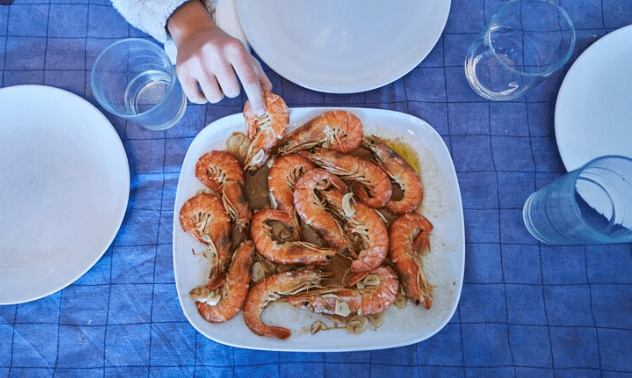
Your Dinner Plate
Your Dinner Plate

These regulations seem to represent something that the shrimpers and crawfish trappers who work in Louisiana’s coastal and wetland waters have been fighting for without much success for a long time. For the better part of two decades, they have watched their market share decline due to cheaper imports from overseas that often find their way into retail and food service with ambiguous or deceptive labeling.

It remains to be seen if the enforcement is upheld and if the fines are truly collected and significant enough to change behavior on a big scale. Citations are being sent out. The penalties are recorded on paper. Although it’s still uncertain if the crawfish in the next bowl of àouffée in New Orleans come from the Atchafalaya or anywhere else, there should now be a means to find out.

Louisiana Department of Health Louisiana Eats Fresh campaign Your Dinner Plate
Share. Facebook Twitter Pinterest LinkedIn Tumblr Telegram Email
Previous ArticleWhat Really Happens to the Seafood That Does Not Pass FDA Import Inspection — the Answer Will Surprise You
Next Article The Tiny Nova Scotia Fishing Town That Has Become One of North America’s Most Exciting Culinary Destinations
Mildred Bell

Mildred Bell is a full-time digital professional, seasoned traveler, and ardent outdoor enthusiast who infuses her writing with a sincere love of the natural world. In her role as Senior Editor at fishonline.co.uk, the online home of Seafood Audit International, Mildred is in charge of editorial content covering news about the seafood industry, updates on food safety, politics, finance, and commentary from prominent figures in the fishing and seafood industries. Beyond the desk, Mildred has a deeper connection to the material she edits. She is a passionate angler who has spent years fishing open waters, rivers, and coastlines throughout the UK and beyond. Her genuine knowledge of the fishing industry informs all of her editorial choices. Mildred's passion for travel stems from the same restless curiosity. She has traveled to many different continents with a rod, a notebook, and an eye for the stories that others overlook.

Related Posts

This One-Pan Salmon Recipe Takes 20 Minutes and Tastes Like Something From a Michelin-Starred Kitchen

June 10, 2026

The Michelin-Starred Chef Who Quit Fine Dining to Open a Seafood Shack in Maine — and Has No Regrets

June 5, 2026

The Crab Cake Recipe That Won a Maryland State Competition Three Years in a Row — and It Is Simpler Than You Think

June 4, 2026
Add A Comment
Leave A Reply Cancel Reply

You must be logged in to post a comment.

The U.S. Seafood Industry’s Quiet Lobbying Victory Hidden Inside the Farm Bill Nobody Read Closely

Seafood June 10, 2026

In a fish processing facility in Gloucester, Massachusetts, discussions about government funds that have been…

The King Crab Legs Recipe That Looks Impossibly Impressive but Takes Fifteen Minutes and One Pot to Make

June 10, 2026

This One-Pan Salmon Recipe Takes 20 Minutes and Tastes Like Something From a Michelin-Starred Kitchen

June 10, 2026

The Butter-Poached Lobster Recipe That Home Cooks Are Calling the Most Luxurious Thing They Have Ever Made for Under $30

June 10, 2026

10 c Recipes That Nutritionists Say Will Keep You Full Until Well Past Noon

June 10, 2026

How the Global Seafood Alliance’s New Feed and Salmon Standards Could Redefine What ‘Responsible’ Aquaculture Means

June 5, 2026

The EPA Mercury Rule Repeal Could Add Measurable Contamination Levels Back Into Fish Americans Eat Every Week

June 5, 2026

Fishonline.co.uk is the official online home of Seafood Audit International, a UK-based food safety and quality management consultancy with more than 25 years of hands-on experience in the global seafood and fishing industries. Based in Wellington, Somerset, we work with fish processors, food businesses, government inspection services, and international organisations to deliver practical, measurable, and cost-effective food safety solutions.We are not a generic food safety company. Seafood and fish products are our entire focus — and that specialisation is what makes us different.Who We AreSeafood Audit International was founded on a straightforward belief: that food safety training and quality management should be practical, accessible, and genuinely useful — not a box-ticking exercise.For over two decades we have worked with clients ranging from high street fish retailers and small-scale processors to large-scale international fishing operations, government bodies, and seafood exporters in the developing world. Our experience stretches from dhows on Lake Victoria to the trawlers of the UK coastline — giving us a depth of real-world knowledge that classroom-only consultancies simply cannot match.Our lead consultant is a fully qualified auditor with extensive experience across British Retail Consortium (BRC) and ISO 9000 quality management standards, HACCP implementation, food hygiene, and the development of national food safety legislation for governments internationally.What We DoSeafood Audit International provides a comprehensive range of training, auditing, and consultancy services tailored specifically to the seafood and fishing industries:Training Courses

Top Insights

The U.S. Seafood Industry’s Quiet Lobbying Victory Hidden Inside the Farm Bill Nobody Read Closely

June 10, 2026

The King Crab Legs Recipe That Looks Impossibly Impressive but Takes Fifteen Minutes and One Pot to Make

June 10, 2026

This One-Pan Salmon Recipe Takes 20 Minutes and Tastes Like Something From a Michelin-Starred Kitchen

June 10, 2026

The Butter-Poached Lobster Recipe That Home Cooks Are Calling the Most Luxurious Thing They Have Ever Made for Under $30

June 10, 2026

10 c Recipes That Nutritionists Say Will Keep You Full Until Well Past Noon

June 10, 2026
Disclaimer

Important Editorial Notice: All content on fishonline.co.uk, including that pertaining to business finance, political developments, financial markets, and regulatory changes, is provided solely for informational and discussion purposes. It is merely the opinion of a third party and does not represent the expert advice of fishonline.co.uk or Seafood Audit International.
We strongly advise against taking any action based on any political, legal, or financial information found on this website without first consulting an impartial expert. Seafood Audit International is not governed by the Financial Conduct Authority (FCA) and is not permitted to offer financial advice. Always seek advice from an independent financial advisor authorized by the FCA before making any financial decisions. Seek legal advice from an experienced attorney.

© 2026 ThemeSphere. Designed by ThemeSphere.
  • Homepage
  • Contact
  • Privacy Policy
  • Disclaimer
  • About
  • TOS
  • Seafood
  • News
  • Trending
  • Travel

Type above and press Enter to search. Press Esc to cancel.