
Close Menu
FishonlineFishonline
  • Homepage
  • Contact
  • Privacy Policy
  • Disclaimer
  • About
  • TOS
  • Seafood
  • News
  • Trending
  • Travel
What's Hot

The Irish Coastal Drive That Combines Some of Europe’s Most Dramatic Scenery With Its Most Honest Seafood

June 23, 2026

Oregon DEQ vs. Pacific Seafood: The $3.2 Million Fine That Has the Entire U.S. Seafood Industry on Edge

June 23, 2026

Why the Florida Keys Is Still the Greatest Seafood Destination in America — and How to Eat There Without Being a Tourist

June 23, 2026
FishonlineFishonline
Subscribe
  • Homepage
  • Contact
  • Privacy Policy
  • Disclaimer
  • About
  • TOS
  • Seafood
  • News
  • Trending
  • Travel
FishonlineFishonline
Home » Why Gulf Coast Shrimpers Say Federal Regulations Are Finishing What Hurricane Katrina Started — and Nobody Cares
News

Why Gulf Coast Shrimpers Say Federal Regulations Are Finishing What Hurricane Katrina Started — and Nobody Cares

Mildred BellBy Mildred BellJune 19, 2026Updated:June 19, 2026No Comments4 Mins Read
Facebook Twitter LinkedIn Telegram Pinterest Tumblr Reddit WhatsApp Email
Gulf Coast Shrimpers
Share
Facebook Twitter LinkedIn Pinterest Email

As you go along Louisiana Highway 56 in the direction of the Gulf, you will come to a place where the road begins to seem uncertain. This is where the land narrows, the marsh approaches from both sides, and the number of boats parked in yards begins to surpass that of cars. The shrimp boat is a family asset in a town like Chauvin or Dulac that falls into the same category as the house: it is something that is passed down, maintained at actual cost, and essential to people’s understanding of what they do. Additionally, it’s becoming more and more parked rather than running. For many families, it is now just not financially feasible to put a boat in the water.

The origins of Gulf Coast shrimping can be traced back to a number of overlapping tragedies; most conversations begin with Hurricane Katrina in 2005, which is true but not comprehensive. The infrastructure was physically devastated by Katrina. Biloxi’s processing facilities were destroyed. Along the Mississippi and Louisiana shores, hundreds of ships were lost or severely damaged. Most of those who rebuilt did so by taking out loans in the hopes that the market would rebound. They failed to take into consideration the possibility that the market would not turn around in their favor.

By the time they returned to the water, the American plate was increasingly dominated by inexpensive farmed shrimp from Vietnam, India, Ecuador, and Indonesia. Then, after the Deepwater Horizon leak in 2010, many Gulf fishing areas were closed, and consumers who had not heard of Biloxi prior to Katrina began to mistrust the safety of Gulf seafood. The full recuperation never materialized.

The import figures are startling. Nowadays, around 90% of the shrimp consumed in the US is imported. It is nearly impossible for a small operator to reconcile the 30–50% wholesale pricing difference between imported farmed product and indigenous wild-caught Gulf shrimp with any degree of marketing or brand loyalty.

Gulf shrimpers are conscious of the fact that they are offering a truly superior product, one that is wild-caught, has a cleaner flavor, has greater nutritional integrity, and is caught in accordance with some of the world’s most stringent environmental rules. However, when a supermarket consumer decides to buy in bulk, they frequently do so in response to a price, and Gulf shrimpers continually lose the pricing battle.

Shrimpers frequently discuss the regulatory burden, although it usually receives less attention than the import competition. From an environmental or management perspective, mandatory vessel monitoring systems, turtle excluder device restrictions, permitting moratoriums that restrict new entrants to the fisheries, and fuel costs that have increased without any structural relief are all justifiable.

When combined, they serve as a compounding tax on remaining in business on a fleet where the typical operator is operating on thin margins with outdated equipment and substantial debt. The existence of the restrictions isn’t the main source of frustration. The reason for this is that the antibiotic-laced imported product that is placed next to theirs in the freezer case does not seem to be subject to the same regulatory framework that penalizes a shrimper in Dulac for a reporting error.

The Save Our Shrimpers Act and the SHRIMP Act, which both seek to improve import testing and country-of-origin labeling, have received some support from Congress, especially from delegates from Gulf states. It is actually doubtful whether either will pass the current legislative environment.
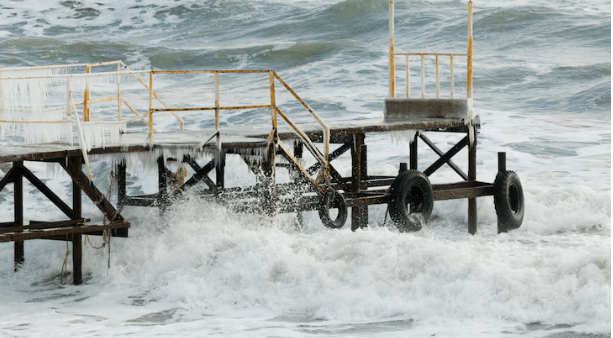
Gulf Coast Shrimpers

Legislation pertaining to the wellbeing of domestic fishing communities has a long history of progressing slowly, and rural coastal livelihoods have generally received little political attention. The most impacted communities typically have minimal clout since they don’t make up a sizable voting bloc, they lack significant lobbying resources, and most Americans don’t think about their industry when they’re not eating shrimp.

Gulf Coast Shrimpers Seafood Vessel Monitoring Systems (VMS)
Share. Facebook Twitter Pinterest LinkedIn Tumblr Telegram Email
Previous ArticleI Took the Trans-Siberian Railway and Ate Nothing but Local Fish the Entire Way — Here Is What I Discovered
Next Article Vietnam Just Suspended Controversial Minimum Size Rules for Tuna — and American Importers Have Questions
Mildred Bell

Mildred Bell is a full-time digital professional, seasoned traveler, and ardent outdoor enthusiast who infuses her writing with a sincere love of the natural world. In her role as Senior Editor at fishonline.co.uk, the online home of Seafood Audit International, Mildred is in charge of editorial content covering news about the seafood industry, updates on food safety, politics, finance, and commentary from prominent figures in the fishing and seafood industries. Beyond the desk, Mildred has a deeper connection to the material she edits. She is a passionate angler who has spent years fishing open waters, rivers, and coastlines throughout the UK and beyond. Her genuine knowledge of the fishing industry informs all of her editorial choices. Mildred's passion for travel stems from the same restless curiosity. She has traveled to many different continents with a rod, a notebook, and an eye for the stories that others overlook.

Related Posts

Inside the Fight to Save Wild Atlantic Salmon From a Regulatory Framework That Scientists Say Is Already Too Late

June 23, 2026

New Sheepshead Size and Catch Limits Could Hit Local Seafood Shops Harder Than Owners Expected

June 22, 2026

The Airbnb Study That Reveals Exactly What American Families Actually Need From Coastal Travel Accommodation

June 22, 2026
Add A Comment

Comments are closed.

The Irish Coastal Drive That Combines Some of Europe’s Most Dramatic Scenery With Its Most Honest Seafood

Travel June 23, 2026

Sheer and dark against whatever the sky is doing that day, the Cliffs of Moher…

Oregon DEQ vs. Pacific Seafood: The $3.2 Million Fine That Has the Entire U.S. Seafood Industry on Edge

June 23, 2026

Why the Florida Keys Is Still the Greatest Seafood Destination in America — and How to Eat There Without Being a Tourist

June 23, 2026

How Complex Sustainability Rules Are Leaving American Seafood Consumers Completely Lost in the Supermarket Aisle

June 23, 2026

Pennsylvania Is Proposing New Trout Size Limits That Could Fundamentally Change Weekend Fishing Across the State

June 23, 2026

$250,000 Worth of Stolen Seafood Was Recovered From a Cargo Truck in Guadalupe County. The Story Is Wild

June 23, 2026

Inside the Fight to Save Wild Atlantic Salmon From a Regulatory Framework That Scientists Say Is Already Too Late

June 23, 2026

Fishonline.co.uk is the official online home of Seafood Audit International, a UK-based food safety and quality management consultancy with more than 25 years of hands-on experience in the global seafood and fishing industries. Based in Wellington, Somerset, we work with fish processors, food businesses, government inspection services, and international organisations to deliver practical, measurable, and cost-effective food safety solutions.We are not a generic food safety company. Seafood and fish products are our entire focus — and that specialisation is what makes us different.Who We AreSeafood Audit International was founded on a straightforward belief: that food safety training and quality management should be practical, accessible, and genuinely useful — not a box-ticking exercise.For over two decades we have worked with clients ranging from high street fish retailers and small-scale processors to large-scale international fishing operations, government bodies, and seafood exporters in the developing world. Our experience stretches from dhows on Lake Victoria to the trawlers of the UK coastline — giving us a depth of real-world knowledge that classroom-only consultancies simply cannot match.Our lead consultant is a fully qualified auditor with extensive experience across British Retail Consortium (BRC) and ISO 9000 quality management standards, HACCP implementation, food hygiene, and the development of national food safety legislation for governments internationally.What We DoSeafood Audit International provides a comprehensive range of training, auditing, and consultancy services tailored specifically to the seafood and fishing industries:Training Courses

Top Insights

The Irish Coastal Drive That Combines Some of Europe’s Most Dramatic Scenery With Its Most Honest Seafood

June 23, 2026

Oregon DEQ vs. Pacific Seafood: The $3.2 Million Fine That Has the Entire U.S. Seafood Industry on Edge

June 23, 2026

Why the Florida Keys Is Still the Greatest Seafood Destination in America — and How to Eat There Without Being a Tourist

June 23, 2026

How Complex Sustainability Rules Are Leaving American Seafood Consumers Completely Lost in the Supermarket Aisle

June 23, 2026

Pennsylvania Is Proposing New Trout Size Limits That Could Fundamentally Change Weekend Fishing Across the State

June 23, 2026
Disclaimer

Important Editorial Notice: All content on fishonline.co.uk, including that pertaining to business finance, political developments, financial markets, and regulatory changes, is provided solely for informational and discussion purposes. It is merely the opinion of a third party and does not represent the expert advice of fishonline.co.uk or Seafood Audit International.
We strongly advise against taking any action based on any political, legal, or financial information found on this website without first consulting an impartial expert. Seafood Audit International is not governed by the Financial Conduct Authority (FCA) and is not permitted to offer financial advice. Always seek advice from an independent financial advisor authorized by the FCA before making any financial decisions. Seek legal advice from an experienced attorney.

© 2026 ThemeSphere. Designed by ThemeSphere.
  • Homepage
  • Contact
  • Privacy Policy
  • Disclaimer
  • About
  • TOS
  • Seafood
  • News
  • Trending
  • Travel

Type above and press Enter to search. Press Esc to cancel.