

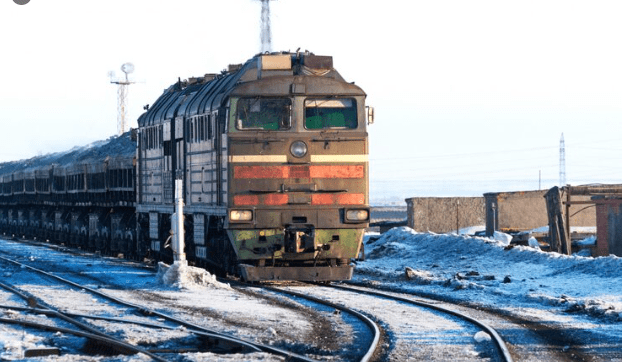
Early in the evening, the train departs Moscow’s Yaroslavsky Station, and by the time the station lights disappear behind you and the city vanishes into birch woodland, you begin to realize that the next six days will be unlike any other type of travel. Meals are served when the train stops, people converse in the hallways, and the outside world primarily appears as a series of platform stops where, if you know to look, ladies in winter coats sell fish from baskets. The Trans-Siberian Railway is a journey that operates on its own schedule.
Before leaving, the fish-only restriction seemed logical. On day two, somewhere east of the Urals, standing on a platform at minus-eight degrees and purchasing a packet of smoked muksun from a vendor who weighed it by hand and provided change from a coat pocket made it feel more intimate. Muksun is a solid, fatty whitefish from the Siberian Arctic waterways that is marketed smoked and has a skin that easily peels off. Underneath, the meat is solid and pallid, with a taste you wouldn’t anticipate from something so well preserved. It goes nicely with the black tea that is delivered in glass holders by the carriage attendant, the provodnitsa, at any time you ask for it, as well as the dark bread offered at the same stalls.
Lake Baikal is the journey’s revelation, particularly when the train arrives in Irkutsk and the platform vendors shift. Since omul is an endemic whitefish that is only found in Baikal, it can only be purchased here. The smoked variety that is offered at the station stops in this area is distinct enough from the rest of the route to really stop you.
For a freshwater fish, it is incredibly fatty—almost buttery—and the smoking process uses native Siberian wood, which gives the meat a simultaneously sweet and resinous flavor. It takes around thirty seconds for some vendors to wrap it in newspaper and tie it with a string. One of those dining experiences that is hard to really describe afterward is eating it while standing on the platform while the train sits in the station for forty minutes, gazing out onto the ice-covered expanse of the largest and deepest lake in the world.
The other preparation that is worth looking for is stroganina, but it needs more careful preparation. This is uncooked fish, usually omul or nelma, that has been frozen solid and then cut with a knife into thin, translucent ribbons. Before eating, each ribbon is dipped in a tiny bowl containing salt, black pepper, and raw onion.
It has a chilly, slippery texture that falls between sashimi and prosciutto, and it has a subtle, clear flavor that the seasoning enhances without overpowering. Stroganina was created by indigenous Siberian peoples as a practical method: freezing fish maintained its nutrients, such as lipids and fat-soluble vitamins, which were vital in an area where fresh produce was hard to come by during the long winter months.
In a way that isn’t immediately apparent, the carriage samovar—the hot water urn that runs constantly in every typical Russian rail compartment—becomes essential to the fish diet. Smoked fish doesn’t need to be refrigerated; when combined with hot water for tea and the dried bread found at most stations, it makes a substantial enough meal to last for several days without much exercise, which is essentially what train travel entails.
This diet has a surprisingly practical quality that makes you feel as though you’ve unintentionally replicated how humans endured the long Siberian winters before refrigeration. The protein and fat came from the fish. The heat came from the samovar.
