
Close Menu
FishonlineFishonline
  • Homepage
  • Contact
  • Privacy Policy
  • Disclaimer
  • About
  • TOS
  • Seafood
  • News
  • Trending
  • Travel
What's Hot

The Irish Coastal Drive That Combines Some of Europe’s Most Dramatic Scenery With Its Most Honest Seafood

June 23, 2026

Oregon DEQ vs. Pacific Seafood: The $3.2 Million Fine That Has the Entire U.S. Seafood Industry on Edge

June 23, 2026

Why the Florida Keys Is Still the Greatest Seafood Destination in America — and How to Eat There Without Being a Tourist

June 23, 2026
FishonlineFishonline
Subscribe
  • Homepage
  • Contact
  • Privacy Policy
  • Disclaimer
  • About
  • TOS
  • Seafood
  • News
  • Trending
  • Travel
FishonlineFishonline
Home » Can Travelling to a New Coastal Region Trigger Unexpected Food Allergies? Doctors and Travellers Share Startling Stories
Food

Can Travelling to a New Coastal Region Trigger Unexpected Food Allergies? Doctors and Travellers Share Startling Stories

Mildred BellBy Mildred BellJune 22, 2026No Comments3 Mins Read
Facebook Twitter LinkedIn Telegram Pinterest Tumblr Reddit WhatsApp Email
Can Travelling to a New Coastal Region Trigger Unexpected Food Allergies
Share
Facebook Twitter LinkedIn Pinterest Email

In a small fishing town on the Pacific coast, a woman from Ohio told me that after eating shrimp her entire life without any problems, she developed hives twenty minutes after consuming a bowl of cioppino. Back home, she didn’t have a shrimp allergy. Or so she believed. Her story has become strangely prevalent among frequent travelers, and it raises an almost unbelievable question: can merely relocating to a coastal area actually cause a new food allergy?

Many allergists believe that the short answer is more complex than a simple yes or no. Allergies are not created by travel alone. People are exposed to allergens, cooking techniques, and even local fish and shellfish species that they have never seen before. A species of crab found off the coast of Maine is not biologically identical to one found in Southeast Asia. A person with a borderline sensitivity may experience a reaction that never materialized at home due to the slight differences in the proteins.

Additionally, doctors claim that travelers underestimate the risk of cross-contact because they believe they are being cautious. Squid, mussels, and white fish may be fried in the same oil on the same grill with the same tongs in a coastal restaurant’s kitchen. Due to the food coming into contact with a surface that came into contact with something else first, a person with a known fish allergy may order something entirely unrelated and still react.

It’s important to note that, contrary to how it is sometimes presented online, allergists are quick to refute the notion that allergies develop suddenly and permanently overnight. Several researchers have noted that it’s more likely that a person already had a mild or undiagnosed sensitivity that remained dormant until it surfaced in a high-exposure setting, such as a coastal area with a lot of seafood. Although a first reaction overseas can seem abrupt and terrifying, it rarely happens out of the blue.

Many people are surprised to learn that histamine also plays a part. Even those without a true shellfish or fish allergy may experience elevated histamine levels that mimic an allergic reaction when certain fish are not kept at consistently cold temperatures. Symptoms that resemble anaphylaxis but are caused by spoiling rather than an immune reaction include flushing, cramping in the stomach, and a racing heart. It can be stressful to distinguish between the two in a foreign clinic and in a language you don’t speak well.
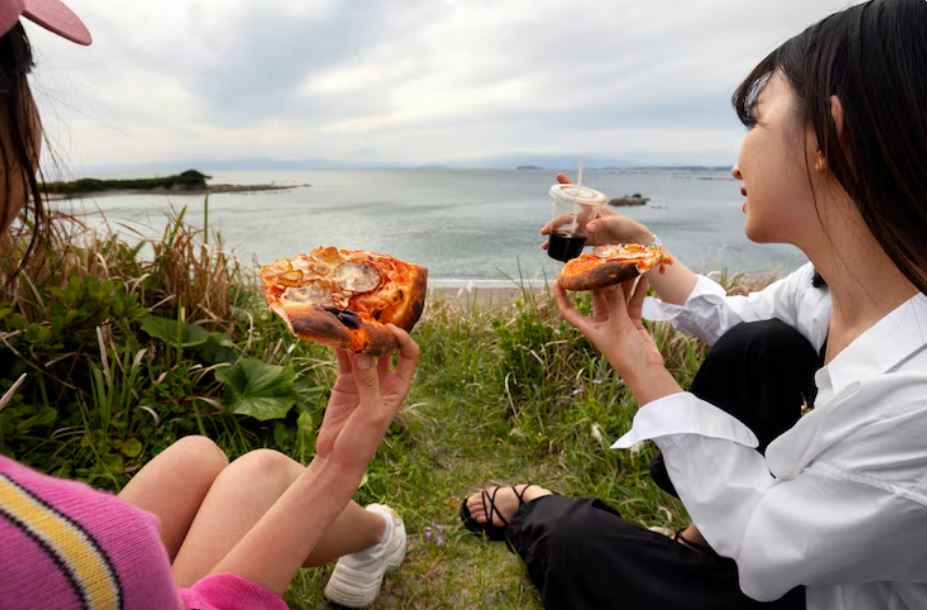
Can Travelling to a New Coastal Region Trigger Unexpected Food Allergies

Travelers who’ve been through it tend to share a similar piece of advice afterward: don’t assume past safety guarantees future safety, especially with seafood. In a Mediterranean port town, a man recovering from a reaction expressed regret for not asking more questions about how the fish was prepared, stored, and caught instead of assuming that “fish is fish.”

Doctors still don’t fully understand why some people react differently in different coastal regions. The advice to bring antihistamines, find the nearest clinic before arriving, and handle unfamiliar seafood with a little more caution than the menu’s allure might suggest is what does appear to be consistent. Everywhere you look, the sea looks the same. It frequently isn’t clear what’s swimming in it or how it gets on your plate.

Food Allergies
Share. Facebook Twitter Pinterest LinkedIn Tumblr Telegram Email
Previous ArticleThe Airbnb Study That Reveals Exactly What American Families Actually Need From Coastal Travel Accommodation
Next Article The ASC’s New Seafood Label Standard Debuted at Expo Global 2026 — and Industry Reaction Was Immediate
Mildred Bell

Mildred Bell is a full-time digital professional, seasoned traveler, and ardent outdoor enthusiast who infuses her writing with a sincere love of the natural world. In her role as Senior Editor at fishonline.co.uk, the online home of Seafood Audit International, Mildred is in charge of editorial content covering news about the seafood industry, updates on food safety, politics, finance, and commentary from prominent figures in the fishing and seafood industries. Beyond the desk, Mildred has a deeper connection to the material she edits. She is a passionate angler who has spent years fishing open waters, rivers, and coastlines throughout the UK and beyond. Her genuine knowledge of the fishing industry informs all of her editorial choices. Mildred's passion for travel stems from the same restless curiosity. She has traveled to many different continents with a rod, a notebook, and an eye for the stories that others overlook.

Related Posts

The Sheet Pan Shrimp Fajita Recipe That Has Become the Most Saved Weeknight Dinner on Every Food Platform

June 23, 2026

The Smoked Salmon Dip Recipe That Every Pacific Northwest Family Brings to Every Gathering, Every Single Time

June 22, 2026

Seafood Pasta Recipes That Go Far Beyond Shrimp Scampi — and Are Worth Every Minute of Effort

June 22, 2026
Add A Comment

Comments are closed.

The Irish Coastal Drive That Combines Some of Europe’s Most Dramatic Scenery With Its Most Honest Seafood

Travel June 23, 2026

Sheer and dark against whatever the sky is doing that day, the Cliffs of Moher…

Oregon DEQ vs. Pacific Seafood: The $3.2 Million Fine That Has the Entire U.S. Seafood Industry on Edge

June 23, 2026

Why the Florida Keys Is Still the Greatest Seafood Destination in America — and How to Eat There Without Being a Tourist

June 23, 2026

How Complex Sustainability Rules Are Leaving American Seafood Consumers Completely Lost in the Supermarket Aisle

June 23, 2026

Pennsylvania Is Proposing New Trout Size Limits That Could Fundamentally Change Weekend Fishing Across the State

June 23, 2026

$250,000 Worth of Stolen Seafood Was Recovered From a Cargo Truck in Guadalupe County. The Story Is Wild

June 23, 2026

Inside the Fight to Save Wild Atlantic Salmon From a Regulatory Framework That Scientists Say Is Already Too Late

June 23, 2026

Fishonline.co.uk is the official online home of Seafood Audit International, a UK-based food safety and quality management consultancy with more than 25 years of hands-on experience in the global seafood and fishing industries. Based in Wellington, Somerset, we work with fish processors, food businesses, government inspection services, and international organisations to deliver practical, measurable, and cost-effective food safety solutions.We are not a generic food safety company. Seafood and fish products are our entire focus — and that specialisation is what makes us different.Who We AreSeafood Audit International was founded on a straightforward belief: that food safety training and quality management should be practical, accessible, and genuinely useful — not a box-ticking exercise.For over two decades we have worked with clients ranging from high street fish retailers and small-scale processors to large-scale international fishing operations, government bodies, and seafood exporters in the developing world. Our experience stretches from dhows on Lake Victoria to the trawlers of the UK coastline — giving us a depth of real-world knowledge that classroom-only consultancies simply cannot match.Our lead consultant is a fully qualified auditor with extensive experience across British Retail Consortium (BRC) and ISO 9000 quality management standards, HACCP implementation, food hygiene, and the development of national food safety legislation for governments internationally.What We DoSeafood Audit International provides a comprehensive range of training, auditing, and consultancy services tailored specifically to the seafood and fishing industries:Training Courses

Top Insights

The Irish Coastal Drive That Combines Some of Europe’s Most Dramatic Scenery With Its Most Honest Seafood

June 23, 2026

Oregon DEQ vs. Pacific Seafood: The $3.2 Million Fine That Has the Entire U.S. Seafood Industry on Edge

June 23, 2026

Why the Florida Keys Is Still the Greatest Seafood Destination in America — and How to Eat There Without Being a Tourist

June 23, 2026

How Complex Sustainability Rules Are Leaving American Seafood Consumers Completely Lost in the Supermarket Aisle

June 23, 2026

Pennsylvania Is Proposing New Trout Size Limits That Could Fundamentally Change Weekend Fishing Across the State

June 23, 2026
Disclaimer

Important Editorial Notice: All content on fishonline.co.uk, including that pertaining to business finance, political developments, financial markets, and regulatory changes, is provided solely for informational and discussion purposes. It is merely the opinion of a third party and does not represent the expert advice of fishonline.co.uk or Seafood Audit International.
We strongly advise against taking any action based on any political, legal, or financial information found on this website without first consulting an impartial expert. Seafood Audit International is not governed by the Financial Conduct Authority (FCA) and is not permitted to offer financial advice. Always seek advice from an independent financial advisor authorized by the FCA before making any financial decisions. Seek legal advice from an experienced attorney.

© 2026 ThemeSphere. Designed by ThemeSphere.
  • Homepage
  • Contact
  • Privacy Policy
  • Disclaimer
  • About
  • TOS
  • Seafood
  • News
  • Trending
  • Travel

Type above and press Enter to search. Press Esc to cancel.