
Close Menu
FishonlineFishonline
  • Homepage
  • Contact
  • Privacy Policy
  • Disclaimer
  • About
  • TOS
  • Seafood
  • News
  • Trending
  • Travel
What's Hot

The Irish Coastal Drive That Combines Some of Europe’s Most Dramatic Scenery With Its Most Honest Seafood

June 23, 2026

Oregon DEQ vs. Pacific Seafood: The $3.2 Million Fine That Has the Entire U.S. Seafood Industry on Edge

June 23, 2026

Why the Florida Keys Is Still the Greatest Seafood Destination in America — and How to Eat There Without Being a Tourist

June 23, 2026
FishonlineFishonline
Subscribe
  • Homepage
  • Contact
  • Privacy Policy
  • Disclaimer
  • About
  • TOS
  • Seafood
  • News
  • Trending
  • Travel
FishonlineFishonline
Home » Oregon DEQ vs. Pacific Seafood: The $3.2 Million Fine That Has the Entire U.S. Seafood Industry on Edge
Seafood

Oregon DEQ vs. Pacific Seafood: The $3.2 Million Fine That Has the Entire U.S. Seafood Industry on Edge

Mildred BellBy Mildred BellJune 23, 2026No Comments4 Mins Read
Facebook Twitter LinkedIn Telegram Pinterest Tumblr Reddit WhatsApp Email
Oregon DEQ vs. Pacific Seafood
Share
Facebook Twitter LinkedIn Pinterest Email

Pacific Seafood is one of the major seafood processing enterprises in the United States, operating operations up and down the Pacific Coast and selling fish to stores, restaurants, and distributors across the country. Without legal counsel and environmental professionals, it is not a tiny operation. When interpreting the Oregon DEQ’s decision to sanction the corporation $3.2 million for wastewater violations across three coastal plants, it is important to keep in mind that this isn’t an instance of a marginal operator taking short cuts. What American fish processing can actually do under current environmental regulations is at the heart of this controversy.

Regulators cited the Charleston factory for releasing untreated fish parts, oil, grease, and chlorine into coastal waters, resulting in the biggest penalty of $2.98 million. The Brookings facility received a $114,000 fine for effluent that exceeded authorized limits for biochemical oxygen demand and suspended particles, two standard measurements of organic waste load in wastewater.

The Warrenton plant was fined $104,800 for exceeding chlorine limits and failing to notify unpermitted discharges within the statutory timeframe. Across all three, the Oregon DEQ’s main allegation is that Pacific Seafood failed to deploy effective pollution controls despite years of regulatory engagement and continues to degrade coastal water quality in the process.

Pacific Seafood’s reaction is worth considering carefully, because it’s not a simple denial. Since 2017, the corporation claims to have made large investments in plant renovations. What it contests is the standard itself. According to Pacific Seafood, the DEQ is enforcing wastewater treatment requirements that would demand the company reduce certain contaminants to levels thousands of times below those found in drinking water — a threshold they describe as technologically impossible with current treatment infrastructure. Whether or not that exact framing holds up under independent technical evaluation is uncertain, but the argument has resonated among the broader processing sector in ways that imply it’s not purely a public relations position.

The Charleston predicament is where the economic implications become concrete. Pacific Seafood says the environmental limits there have already prompted them to shut down portions of the crab processing operations, costing thirty-five jobs and lowering local processing capacity at a time when coastal communities in Oregon are already under economic pressure. It is difficult to replace a seafood processing facility. The workers with experience handling live shellfish and high-volume fish processing, the cold storage, and the specialized infrastructure don’t move swiftly or affordably. Pacific Seafood makes an argument that is hard to reject without delving into the details when it expresses fear that Oregon’s regulatory framework may force seafood jobs out of state or abroad.

A structural criticism that processors in several states have voiced for years is the source of the wider business fear around this case: regulators are severe on punishment if breaches are reported, but they are hesitant to publish clear, updated standards for treatment needs. Before beginning construction, businesses investing in new infrastructure must choose the goal. The investment calculation breaks down if the standard is changing or if the technology to achieve it is not yet commercially available. Seafood producers in Oregon are complaining about this, and the Pacific Seafood case has given it a figure that is difficult to ignore: $3.2 million.
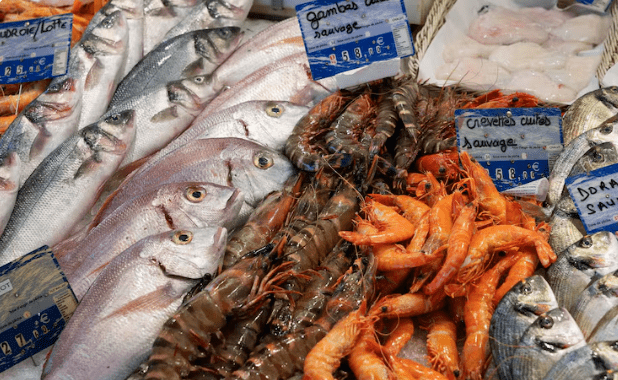
Oregon DEQ vs. Pacific Seafood

Fundamentally, the Oregon DEQ believes that coastal ecosystems do not wait for business to catch up. Real, quantifiable harm is caused by the discharge of fish waste, grease, and chlorine into estuaries and nearshore marine habitats. Pacific Seafood’s operations were not adhering to the conditions of the permits that the agency issued, and it is its responsibility to enforce those permits. It is challenging to settle this dispute amicably on either side since both things can be true at the same time—the standards may be strict and the infractions may be genuine.

Oregon DEQ vs. Pacific Seafood Pacific Seafood Group
Share. Facebook Twitter Pinterest LinkedIn Tumblr Telegram Email
Previous ArticleWhy the Florida Keys Is Still the Greatest Seafood Destination in America — and How to Eat There Without Being a Tourist
Next Article The Irish Coastal Drive That Combines Some of Europe’s Most Dramatic Scenery With Its Most Honest Seafood
Mildred Bell

    Mildred Bell is a full-time digital professional, seasoned traveler, and ardent outdoor enthusiast who infuses her writing with a sincere love of the natural world. In her role as Senior Editor at fishonline.co.uk, the online home of Seafood Audit International, Mildred is in charge of editorial content covering news about the seafood industry, updates on food safety, politics, finance, and commentary from prominent figures in the fishing and seafood industries. Beyond the desk, Mildred has a deeper connection to the material she edits. She is a passionate angler who has spent years fishing open waters, rivers, and coastlines throughout the UK and beyond. Her genuine knowledge of the fishing industry informs all of her editorial choices. Mildred's passion for travel stems from the same restless curiosity. She has traveled to many different continents with a rod, a notebook, and an eye for the stories that others overlook.

    Related Posts

    Why the Florida Keys Is Still the Greatest Seafood Destination in America — and How to Eat There Without Being a Tourist

    June 23, 2026

    How Complex Sustainability Rules Are Leaving American Seafood Consumers Completely Lost in the Supermarket Aisle

    June 23, 2026

    Pennsylvania Is Proposing New Trout Size Limits That Could Fundamentally Change Weekend Fishing Across the State

    June 23, 2026
    Add A Comment
    Leave A Reply Cancel Reply

    You must be logged in to post a comment.

    The Irish Coastal Drive That Combines Some of Europe’s Most Dramatic Scenery With Its Most Honest Seafood

    Travel June 23, 2026

    Sheer and dark against whatever the sky is doing that day, the Cliffs of Moher…

    Oregon DEQ vs. Pacific Seafood: The $3.2 Million Fine That Has the Entire U.S. Seafood Industry on Edge

    June 23, 2026

    Why the Florida Keys Is Still the Greatest Seafood Destination in America — and How to Eat There Without Being a Tourist

    June 23, 2026

    How Complex Sustainability Rules Are Leaving American Seafood Consumers Completely Lost in the Supermarket Aisle

    June 23, 2026

    Pennsylvania Is Proposing New Trout Size Limits That Could Fundamentally Change Weekend Fishing Across the State

    June 23, 2026

    $250,000 Worth of Stolen Seafood Was Recovered From a Cargo Truck in Guadalupe County. The Story Is Wild

    June 23, 2026

    Inside the Fight to Save Wild Atlantic Salmon From a Regulatory Framework That Scientists Say Is Already Too Late

    June 23, 2026

    Fishonline.co.uk is the official online home of Seafood Audit International, a UK-based food safety and quality management consultancy with more than 25 years of hands-on experience in the global seafood and fishing industries. Based in Wellington, Somerset, we work with fish processors, food businesses, government inspection services, and international organisations to deliver practical, measurable, and cost-effective food safety solutions.We are not a generic food safety company. Seafood and fish products are our entire focus — and that specialisation is what makes us different.Who We AreSeafood Audit International was founded on a straightforward belief: that food safety training and quality management should be practical, accessible, and genuinely useful — not a box-ticking exercise.For over two decades we have worked with clients ranging from high street fish retailers and small-scale processors to large-scale international fishing operations, government bodies, and seafood exporters in the developing world. Our experience stretches from dhows on Lake Victoria to the trawlers of the UK coastline — giving us a depth of real-world knowledge that classroom-only consultancies simply cannot match.Our lead consultant is a fully qualified auditor with extensive experience across British Retail Consortium (BRC) and ISO 9000 quality management standards, HACCP implementation, food hygiene, and the development of national food safety legislation for governments internationally.What We DoSeafood Audit International provides a comprehensive range of training, auditing, and consultancy services tailored specifically to the seafood and fishing industries:Training Courses

    Top Insights

    The Irish Coastal Drive That Combines Some of Europe’s Most Dramatic Scenery With Its Most Honest Seafood

    June 23, 2026

    Oregon DEQ vs. Pacific Seafood: The $3.2 Million Fine That Has the Entire U.S. Seafood Industry on Edge

    June 23, 2026

    Why the Florida Keys Is Still the Greatest Seafood Destination in America — and How to Eat There Without Being a Tourist

    June 23, 2026

    How Complex Sustainability Rules Are Leaving American Seafood Consumers Completely Lost in the Supermarket Aisle

    June 23, 2026

    Pennsylvania Is Proposing New Trout Size Limits That Could Fundamentally Change Weekend Fishing Across the State

    June 23, 2026
    Disclaimer

    Important Editorial Notice: All content on fishonline.co.uk, including that pertaining to business finance, political developments, financial markets, and regulatory changes, is provided solely for informational and discussion purposes. It is merely the opinion of a third party and does not represent the expert advice of fishonline.co.uk or Seafood Audit International.
    We strongly advise against taking any action based on any political, legal, or financial information found on this website without first consulting an impartial expert. Seafood Audit International is not governed by the Financial Conduct Authority (FCA) and is not permitted to offer financial advice. Always seek advice from an independent financial advisor authorized by the FCA before making any financial decisions. Seek legal advice from an experienced attorney.

    © 2026 ThemeSphere. Designed by ThemeSphere.
    • Homepage
    • Contact
    • Privacy Policy
    • Disclaimer
    • About
    • TOS
    • Seafood
    • News
    • Trending
    • Travel

    Type above and press Enter to search. Press Esc to cancel.