

Some people are so insane that they will fly fourteen hours to get a bowl of soup. You encounter them at six in the morning while shuffling through Lisbon arrivals or in the customs line at Fukuoka. They are carrying nothing but a duffel and an address written on a napkin, and their eyes are pink from the cabin air. They have come for the university, the percebes, and Penang’s lone hawker stand, which opens at four in the morning and closes when the chili crab runs out. Until recently, they all appeared somewhat defeated upon landing, as though the journey had already cost more than the meal could reimburse.
That appears to be changing. Budget and mid-tier airlines have quietly introduced a class of seat upgrades that fall somewhere between economy and the ridiculous theater of business class, virtually without any announcement. seats with bubbles. Bulkheads that bid. High-end economy pods that come with a mattress pad and pillow, as well as, on some carriers these days, a hot meal that doesn’t taste like reheated grief. It’s not a luxury. It’s sufficient and more practical than luxury.
The worst part of a seafood pilgrimage isn’t the price of the meal; rather, it’s arriving so ruined that your palate has gone numb, as a friend who conducts food tours in Southeast Asia put it bluntly over coffee last month. Your sinuses are still under pressure somewhere over Frankfurt, so even after spending $400 traveling to a fishing village in Galicia, you are unable to taste the goose barnacles. That math is altered by the bubble seat. You can purchase the vacant seat next to you and something more akin to a body that is still functional upon arrival for about $200 more than a cheap ticket.
Riana Ang-Canning, a writer for Business Insider, talked about placing a bid on one of these seats for a trip from Vancouver to New Zealand. Three seats for two people would cost less than $250 each way. It’s the kind of math that once seemed unachievable. Travelers on a tight budget were meant to suffer. Get nothing, pay nothing. However, airlines have begun to notice that there is a sizable and expanding group of people who prefer enough class over business class. sufficient space for sleeping. Enough honor to go hungry instead of shattered.
It’s important to note that this isn’t totally selfless. Carriers discovered that passengers would pay for what used to be free, and that empty middle seats were leaking revenue. Selling space back to those who once owned it seems a bit cynical. However, there is a real practical impact for the seafood addict who travels from Doha to Sydney via Singapore. You get to a place where you can eat.
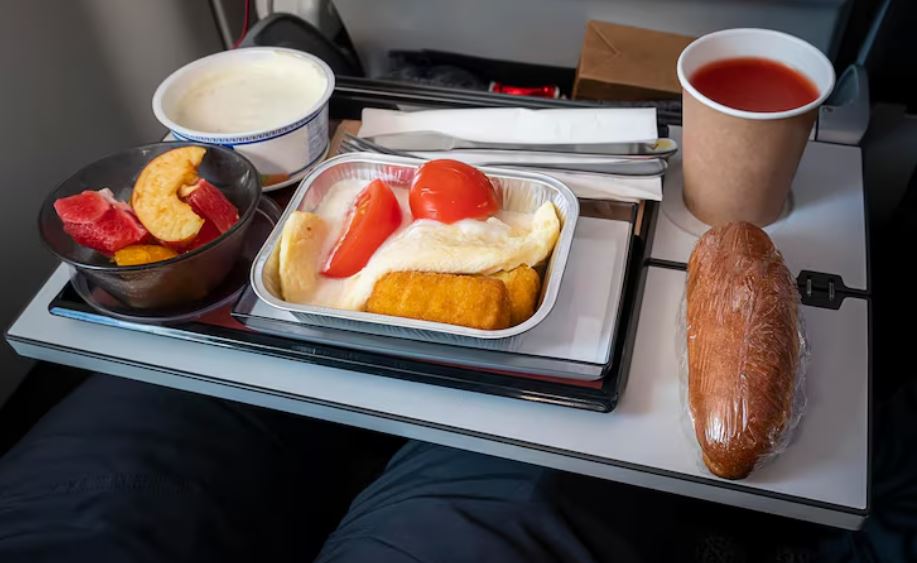
The pilgrimages themselves have become more peculiar and targeted. In February, people take flights to Aomori for scallops, San Sebastián for kokotxas, and that unpronounceable izakaya outside Kanazawa. Cheaper long-haul fares have rendered geography irrelevant, and the food internet has made obscure obsessions seem attainable. The in-between was what was lacking, what kept these travels feeling a little crazy. the actual transit.
It’s difficult not to wonder if the airlines have discovered something they don’t fully comprehend as you watch this develop. The bubble seat is not a high-end item. It’s consent. It informs a certain type of traveler—the one with an economy ticket and a reservation at Sushi Saito—that the trip doesn’t have to negate the destination. It remains to be seen if the carriers will continue to price it humanely. These things tend to infiltrate. The $200 upgrade today will cost $450 next year; somewhere along the line, the deal breaks down.
However, the math holds for the time being. That morning, a flight, a seat that allows you to sleep, and a bowl of something taken out of cold water. Those who pursue this type of meal have a sense that travel and food are finally compatible. It took some time. It required an industry to determine that selling the middle was worthwhile. However, the pilgrimage finally seems to come to an end where it should—at the table, not during the recuperation process.
