Close Menu
FishonlineFishonline
  • Homepage
  • Contact
  • Privacy Policy
  • Disclaimer
  • About
  • TOS
  • Seafood
  • News
  • Trending
  • Travel
What's Hot

How the Farm Bill’s Seafood Provisions Could Shift Billions of Dollars in Federal Agricultural Support Toward Fisheries

June 12, 2026

The Federal Seafood Traceability Rule That the Industry Loved to Hate Is Now Being Praised by the Same People Who Fought It

June 12, 2026

The Fishmongers of New York City’s Chinatown Are Facing Their Greatest Threat Yet — and It Has Nothing to Do With Fish

June 12, 2026
FishonlineFishonline
Subscribe
  • Homepage
  • Contact
  • Privacy Policy
  • Disclaimer
  • About
  • TOS
  • Seafood
  • News
  • Trending
  • Travel
FishonlineFishonline
Home » The Federal Seafood Traceability Rule That the Industry Loved to Hate Is Now Being Praised by the Same People Who Fought It
Seafood

The Federal Seafood Traceability Rule That the Industry Loved to Hate Is Now Being Praised by the Same People Who Fought It

Mildred BellBy Mildred BellJune 12, 2026Updated:June 12, 2026No Comments3 Mins Read
Facebook Twitter LinkedIn Telegram Pinterest Tumblr Reddit WhatsApp Email
The Federal Seafood Traceability Rule That the Industry Loved to Hate Is Now Being Praised by the Same People Who Fought It
Share
Facebook Twitter LinkedIn Pinterest Email

Observing someone defend something they once attempted to destroy is particularly ironic. The irony in Washington seafood trade circles takes the form of the Seafood Import Monitoring Program, a federal traceability regulation that the industry fought, ridiculed, and eventually sued for years. Some of those same players are now subtly—almost reluctantly—referring to it as one of the positive developments for their company.

That wasn’t how it began. The National Fisheries Institute and eight seafood companies filed a lawsuit to halt the Obama administration’s final-day push for the Seafood Traceability Rule, which required importers of species like tuna, swordfish, grouper, and red snapper to document their fish from boat to U.S. border. The burden of paperwork, they claimed. the disadvantage of competition. the excessive bureaucracy. U.S. District Judge Amit P. Mehta, a federal judge, disagreed. The regulation endured. It became operative on January 1st, 2018.
The Federal Seafood Traceability Rule That the Industry Loved to Hate Is Now Being Praised by the Same People Who Fought It

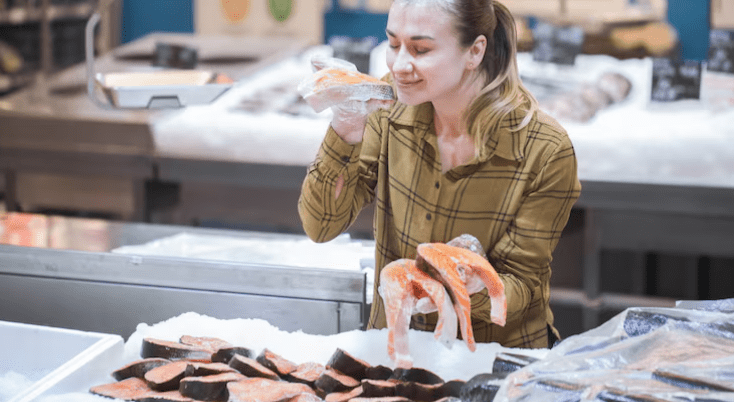
It’s important to focus on what transpired next. Something changed gradually, from the back offices of major seafood distributors along the Gulf Coast to markets like Pike Place in Seattle. Businesses that had feared the costs of compliance started to notice something else: the rule was eliminating the bad actors they had long harbored resentment toward. Honest suppliers had no way to prove that a competitor was undercutting prices by selling tilapia that was mislabeled as red snapper. It’s possible that this was happening more often than anyone acknowledged. They had that proof thanks to traceability.

It turns out that seafood fraud wasn’t limited to consumers. The market was being corroded from the inside out. Roughly one in five of the more than 25,000 seafood samples tested globally had incorrect labels, according to Oceana’s research. Industry insiders had always found that figure in a published report to be abstract. It became tangible when it was observed at the retail level, where premium species routinely performed worse than suspiciously inexpensive substitutes.

Speaking with those who work in the seafood distribution industry gives the impression that many businesses were aware of the fraud issue from the beginning but decided it would be less expensive to oppose regulation than to comply with it. Over time, that computation turned out to be incorrect. Regardless of its annoyances, the rule required documentation throughout the supply chain, and documentation has a way of improving the appearance of legitimate operations in contrast.

The original reasoning was expanded beyond what critics had anticipated when the FDA expanded traceability requirements in 2022 to include the majority of seafood throughout the entire supply chain, from boat to final point of sale. Compared to the original rule, even that encountered less organized opposition. It’s difficult to ignore what that silence implies.

Whether this change is a true ideological shift or just a practical adaptation is still up for debate. Most likely the latter, and that’s perfectly acceptable. Transparency did not win over the fishing industry. It found that, despite being unwanted, transparency was safeguarding its own market share. That’s a different thing, perhaps more durable but smaller and less inspiring.

In the end, the rule showed that the interests of consumers, environmentalists, and ethical companies were never truly at odds—something that effective regulation sometimes manages. All they required was a mechanism for alignment. In a sense, the fish remained unchanged. The documents did.

Praised Traceability
Share. Facebook Twitter Pinterest LinkedIn Tumblr Telegram Email
Previous ArticleThe Fishmongers of New York City’s Chinatown Are Facing Their Greatest Threat Yet — and It Has Nothing to Do With Fish
Next Article How the Farm Bill’s Seafood Provisions Could Shift Billions of Dollars in Federal Agricultural Support Toward Fisheries
Mildred Bell

    Mildred Bell is a full-time digital professional, seasoned traveler, and ardent outdoor enthusiast who infuses her writing with a sincere love of the natural world. In her role as Senior Editor at fishonline.co.uk, the online home of Seafood Audit International, Mildred is in charge of editorial content covering news about the seafood industry, updates on food safety, politics, finance, and commentary from prominent figures in the fishing and seafood industries. Beyond the desk, Mildred has a deeper connection to the material she edits. She is a passionate angler who has spent years fishing open waters, rivers, and coastlines throughout the UK and beyond. Her genuine knowledge of the fishing industry informs all of her editorial choices. Mildred's passion for travel stems from the same restless curiosity. She has traveled to many different continents with a rod, a notebook, and an eye for the stories that others overlook.

    Related Posts

    How the Farm Bill’s Seafood Provisions Could Shift Billions of Dollars in Federal Agricultural Support Toward Fisheries

    June 12, 2026

    The Grandma-Approved Tuna Casserole Recipe That Deserves a Serious Second Look From Every Home Cook Under 40

    June 12, 2026

    The $3.2 Million Fine That Could Change How Every Seafood Processor in America Thinks About Water Waste

    June 12, 2026
    Add A Comment
    Leave A Reply Cancel Reply

    You must be logged in to post a comment.

    How the Farm Bill’s Seafood Provisions Could Shift Billions of Dollars in Federal Agricultural Support Toward Fisheries

    Seafood June 12, 2026

    You’ll hear some variation of the same grievance in every Maine coastal fishing town, whether…

    The Federal Seafood Traceability Rule That the Industry Loved to Hate Is Now Being Praised by the Same People Who Fought It

    June 12, 2026

    The Fishmongers of New York City’s Chinatown Are Facing Their Greatest Threat Yet — and It Has Nothing to Do With Fish

    June 12, 2026

    The Grandma-Approved Tuna Casserole Recipe That Deserves a Serious Second Look From Every Home Cook Under 40

    June 12, 2026

    The $3.2 Million Fine That Could Change How Every Seafood Processor in America Thinks About Water Waste

    June 12, 2026

    How to Make the Perfect Cioppino at Home — the San Francisco Fisherman’s Stew That Has Warmed Souls Since 1938

    June 12, 2026

    The San Francisco Restaurant That Has Served the Same Cioppino Recipe Since 1938 — and Will Never Change It

    June 12, 2026

    Fishonline.co.uk is the official online home of Seafood Audit International, a UK-based food safety and quality management consultancy with more than 25 years of hands-on experience in the global seafood and fishing industries. Based in Wellington, Somerset, we work with fish processors, food businesses, government inspection services, and international organisations to deliver practical, measurable, and cost-effective food safety solutions.We are not a generic food safety company. Seafood and fish products are our entire focus — and that specialisation is what makes us different.Who We AreSeafood Audit International was founded on a straightforward belief: that food safety training and quality management should be practical, accessible, and genuinely useful — not a box-ticking exercise.For over two decades we have worked with clients ranging from high street fish retailers and small-scale processors to large-scale international fishing operations, government bodies, and seafood exporters in the developing world. Our experience stretches from dhows on Lake Victoria to the trawlers of the UK coastline — giving us a depth of real-world knowledge that classroom-only consultancies simply cannot match.Our lead consultant is a fully qualified auditor with extensive experience across British Retail Consortium (BRC) and ISO 9000 quality management standards, HACCP implementation, food hygiene, and the development of national food safety legislation for governments internationally.What We DoSeafood Audit International provides a comprehensive range of training, auditing, and consultancy services tailored specifically to the seafood and fishing industries:Training Courses

    Top Insights

    How the Farm Bill’s Seafood Provisions Could Shift Billions of Dollars in Federal Agricultural Support Toward Fisheries

    June 12, 2026

    The Federal Seafood Traceability Rule That the Industry Loved to Hate Is Now Being Praised by the Same People Who Fought It

    June 12, 2026

    The Fishmongers of New York City’s Chinatown Are Facing Their Greatest Threat Yet — and It Has Nothing to Do With Fish

    June 12, 2026

    The Grandma-Approved Tuna Casserole Recipe That Deserves a Serious Second Look From Every Home Cook Under 40

    June 12, 2026

    The $3.2 Million Fine That Could Change How Every Seafood Processor in America Thinks About Water Waste

    June 12, 2026
    Disclaimer

    Important Editorial Notice: All content on fishonline.co.uk, including that pertaining to business finance, political developments, financial markets, and regulatory changes, is provided solely for informational and discussion purposes. It is merely the opinion of a third party and does not represent the expert advice of fishonline.co.uk or Seafood Audit International.
    We strongly advise against taking any action based on any political, legal, or financial information found on this website without first consulting an impartial expert. Seafood Audit International is not governed by the Financial Conduct Authority (FCA) and is not permitted to offer financial advice. Always seek advice from an independent financial advisor authorized by the FCA before making any financial decisions. Seek legal advice from an experienced attorney.

    © 2026 ThemeSphere. Designed by ThemeSphere.
    • Homepage
    • Contact
    • Privacy Policy
    • Disclaimer
    • About
    • TOS
    • Seafood
    • News
    • Trending
    • Travel

    Type above and press Enter to search. Press Esc to cancel.