

When eating salmon at home, the skin is nearly always the turning point. For the first thirty seconds, nothing seems to be happening when you place the fillet in a hot, shimmering skillet with oil and a knob of butter over medium-high heat. After three or four minutes, the skin has crisped into something that produces a sound when you tap it.
The edges then begin to become opaque, and you fight the impulse to move it. This dish is repeated because of that sound and the aroma emanating from the pan. In total, it takes twenty minutes. The cleanup is a single pan, yet the outcome is comparable to what a professional restaurant costs thirty dollars for.
Using the leftover heat and fond after the fish is removed, the skillet method creates a pan sauce. Garlic is added first, and it takes only 30 seconds to become fragrant—not long enough to brown, but long enough to bloom. Next, add fresh spinach or cherry tomatoes, which will immediately wilt into any remaining space in the pan.
The crucial step is to add a tablespoon of cold butter at the end to give the sauce body rather than just thin cream after pouring heavy cream and letting it boil for two minutes to slightly diminish. This method, known as monter au beurre in French, is what distinguishes a pan sauce that reads like home cooking from one that reads like expert restaurant cooking. After the final two minutes, the salmon is basted with the sauce and removed.
A distinct issue is resolved by the sheet-pan approach. The sheet-pan method requires your complete focus for roughly four minutes, whereas the skillet method demands it for twenty; the oven takes care of the rest. While the salmon is still warming up on the counter, halved baby potatoes or asparagus spears are roasted for 20 minutes at 425 degrees.
After that, the skillet is removed, the veggies are pushed to the edges, and the salmon fillets are placed in the center and covered with glaze or olive oil. Mustard with honey works great. This also applies to miso butter, which is just lemon juice and high-quality olive oil. Dinner is ready when you put it back in the oven for eight to twelve minutes. The nicest part of either way is probably that the veggies have absorbed the salmon fat that has been leaking into the pan in the last few minutes.
Making either of them on a Tuesday night without any special reason or enthusiasm gives me the impression that this is how home cooking should feel, not how it generally does. Effective, gratifying, and superior to expectations. Moisture is the one factor that most home chefs make a mistake with when preparing salmon; a damp fillet steams rather than sears, and the skin becomes soft rather than crisp. Before doing anything else, pat it dry. After that, everything is simple. The majority of the job is being done by the pan.
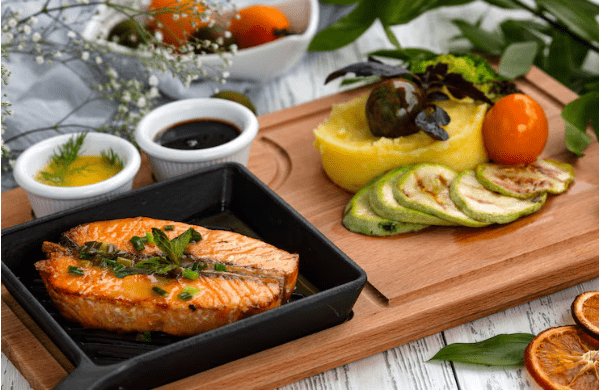
Creamy Skillet Method
Serves 2–4 · 20 minutes · 1 pan
Ingredients
2–4 filletsSalmon (skin-on, patted dry)
1 tbspOlive oil
2 tbspUnsalted butter, divided
2–3 clovesGarlic, minced
1½ cupsSpinach or cherry tomatoes
¼ cupHeavy cream
To tasteSea salt and cracked black pepper
Method
Season. Pat salmon dry. Season both sides with salt and pepper.
Sear. Heat oil and 1 tbsp butter over medium-high until shimmering. Skin-side down, 3–4 minutes. Flip, 2–3 minutes. Remove to a plate.
Build sauce. Reduce heat to medium. Cook garlic 30 seconds. Add spinach/tomatoes, wilt. Pour in cream, bubble 2 minutes. Stir in remaining butter.
Finish. Return salmon to pan, spoon sauce over, simmer 2 minutes. Serve immediately.
Sheet-Pan Method
Serves 4 · 30–35 minutes · 1 sheet pan
Ingredients
4 filletsSalmon (skin-on)
1 lbBaby potatoes (halved) or asparagus
2 tbspOlive oil
As neededHoney mustard or lemon-olive oil glaze
To serveLemon wedges, fresh parsley
Method
Preheat. Oven to 425°F / 220°C. Line a sheet pan with parchment.
Roast veg. Toss potatoes or asparagus with olive oil, salt, pepper. Roast 20 minutes.
Add salmon. Push vegetables aside. Place salmon in the centre, brush with glaze of choice.
Bake. 8–12 minutes until salmon flakes easily. Serve with lemon wedges.
