
Close Menu
FishonlineFishonline
  • Homepage
  • Contact
  • Privacy Policy
  • Disclaimer
  • About
  • TOS
  • Seafood
  • News
  • Trending
  • Travel
What's Hot

The Federal Seafood Traceability Rule That the Industry Loved to Hate Is Now Being Praised by the Same People Who Fought It

June 12, 2026

The Fishmongers of New York City’s Chinatown Are Facing Their Greatest Threat Yet — and It Has Nothing to Do With Fish

June 12, 2026

The Grandma-Approved Tuna Casserole Recipe That Deserves a Serious Second Look From Every Home Cook Under 40

June 12, 2026
FishonlineFishonline
Subscribe
  • Homepage
  • Contact
  • Privacy Policy
  • Disclaimer
  • About
  • TOS
  • Seafood
  • News
  • Trending
  • Travel
FishonlineFishonline
Home » The Fishmongers of New York City’s Chinatown Are Facing Their Greatest Threat Yet — and It Has Nothing to Do With Fish
Food

The Fishmongers of New York City’s Chinatown Are Facing Their Greatest Threat Yet — and It Has Nothing to Do With Fish

Mildred BellBy Mildred BellJune 12, 2026No Comments4 Mins Read
Facebook Twitter LinkedIn Telegram Pinterest Tumblr Reddit WhatsApp Email
The Fishmongers of New York City's Chinatown Are Facing Their Greatest Threat Yet — and It Has Nothing to Do With Fish
Share
Facebook Twitter LinkedIn Pinterest Email

The corner of Eighth Avenue in Sunset Park, Brooklyn, smells just like you would expect on a warm Saturday morning: salt, wet concrete, something living, and something recently dead. Blue crabs scramble sideways over one another in wooden bins that are overflowing. Behind a table of whole striped bass, a fishmonger wearing a full rubber apron moves his hands quickly and speaks more quickly. Consumers close in, pointing, haggling, sometimes shaking their heads and turning to leave, only to come back thirty seconds later. It’s noisy. It’s disorganized. Almost no other food market in this city is able to be as vibrant as this one.

The people standing ankle-deep in ice water behind those bins sense it more than anyone else, but something is subtly changing beneath all of this activity.
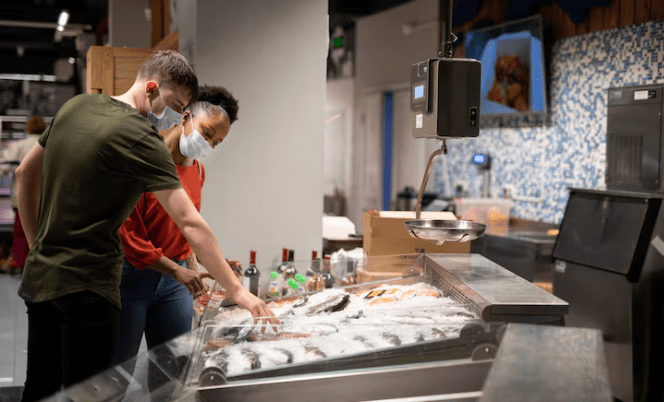
The Fishmongers of New York City's Chinatown Are Facing Their Greatest Threat Yet — and It Has Nothing to Do With Fish
The Fishmongers of New York City’s Chinatown Are Facing Their Greatest Threat Yet — and It Has Nothing to Do With Fish

The fishmongers in Manhattan, Brooklyn, and Queens’ Chinatowns have endured a great deal. Health scares, bureaucratic pressure, supply chain chaos, and the particular American suspicion of markets that look like real food rather than something vacuum-sealed and labeled. A bacterial outbreak linked to multiple fish markets in Chinatown made headlines in 2014, prompting authorities to advise customers to wear gloves when handling raw, whole fish. Small cuts allowed the bacteria, Mycobacterium marinum, to enter the skin; in the first report, the number of affected individuals was about thirty, but it was later revised to closer to sixty-six. The coverage wasn’t very attractive. However, the markets made it through.

Invisible things are more difficult to survive. For years, the Chinatown neighborhoods of Brooklyn and Manhattan have seen a steady increase in rent, pushing out the low-margin businesses that fish markets are nearly always. Rarely does gentrification arrive with a wrecking ball. It is delivered as a juice bar. Next, a small hotel. Next, a landlord discovers that the building’s value has tripled from ten years ago. The fishmonger who has been working on that corner for twenty-five years simply watches his lease renewal come back at an absurd amount without receiving any official notice that the neighborhood is changing.

Additionally, there is the regulatory pressure that has been steadily increasing for decades. Small-market customs, where fish are sold whole and alive and handled by human hands with little ceremony, are awkwardly positioned on top of federal and state food safety regulations, which are mainly focused on mass industrial production. The regulations aren’t always incorrect. However, because they are designed for a different type of market, applying them consistently tends to have a greater negative impact on small operators than on large distributors.

What these markets actually offer is frequently overlooked in these discussions. Not just fish, though the fish is exceptional, sourced through networks that extend from the Bronx’s Fulton Fish Market, the second-largest fish market in the world after Tokyo, to local supply chains that have been in operation for generations. They offer a gathering spot, a culinary culture, and a sort of sensory education about the origins of dinner. No refrigerated display case can duplicate the experience of a customer at a Chinatown stall sorting through a bin of live crabs, weighing one in each hand, and making a decision.

It’s difficult to ignore how much of this is hidden from the larger city. While the restaurants are praised by the food press, the markets that supply them are mainly ignored. It is improbable that the fishmongers themselves will conduct interviews or plan campaigns. By nature and situation, they are people who put in a lot of effort and arrive early, but they don’t really expect gratitude.

It’s still genuinely unclear if enough of them will be able to survive in the face of growing rents, stricter laws, and a city that seems more and more geared toward people who don’t really want to smell fish on their street corner. However, none of that is visible on a Saturday morning in Sunset Park. The crabs continue to scramble. The aprons remain damp. Additionally, someone’s grandmother continues to receive the exact fish she requested.

Chinatown Fishmongers
Share. Facebook Twitter Pinterest LinkedIn Tumblr Telegram Email
Previous ArticleThe Grandma-Approved Tuna Casserole Recipe That Deserves a Serious Second Look From Every Home Cook Under 40
Next Article The Federal Seafood Traceability Rule That the Industry Loved to Hate Is Now Being Praised by the Same People Who Fought It
Mildred Bell

    Mildred Bell is a full-time digital professional, seasoned traveler, and ardent outdoor enthusiast who infuses her writing with a sincere love of the natural world. In her role as Senior Editor at fishonline.co.uk, the online home of Seafood Audit International, Mildred is in charge of editorial content covering news about the seafood industry, updates on food safety, politics, finance, and commentary from prominent figures in the fishing and seafood industries. Beyond the desk, Mildred has a deeper connection to the material she edits. She is a passionate angler who has spent years fishing open waters, rivers, and coastlines throughout the UK and beyond. Her genuine knowledge of the fishing industry informs all of her editorial choices. Mildred's passion for travel stems from the same restless curiosity. She has traveled to many different continents with a rod, a notebook, and an eye for the stories that others overlook.

    Related Posts

    How to Make the Perfect Cioppino at Home — the San Francisco Fisherman’s Stew That Has Warmed Souls Since 1938

    June 12, 2026

    The Hidden Cost of America’s Imported Seafood Addiction — and the Regulatory Gap That Makes It Possible

    June 11, 2026

    How a Three-Ingredient Lemon Butter Sauce Transformed the Way America’s Home Cooks Are Finishing Fish Dishes

    June 11, 2026
    Add A Comment
    Leave A Reply Cancel Reply

    You must be logged in to post a comment.

    The Federal Seafood Traceability Rule That the Industry Loved to Hate Is Now Being Praised by the Same People Who Fought It

    Seafood June 12, 2026

    Observing someone defend something they once attempted to destroy is particularly ironic. The irony in…

    The Fishmongers of New York City’s Chinatown Are Facing Their Greatest Threat Yet — and It Has Nothing to Do With Fish

    June 12, 2026

    The Grandma-Approved Tuna Casserole Recipe That Deserves a Serious Second Look From Every Home Cook Under 40

    June 12, 2026

    The $3.2 Million Fine That Could Change How Every Seafood Processor in America Thinks About Water Waste

    June 12, 2026

    How to Make the Perfect Cioppino at Home — the San Francisco Fisherman’s Stew That Has Warmed Souls Since 1938

    June 12, 2026

    The San Francisco Restaurant That Has Served the Same Cioppino Recipe Since 1938 — and Will Never Change It

    June 12, 2026

    How to Spend 48 Hours in Charleston, South Carolina Eating Shrimp and Grits at Every Meal Without Any Regrets

    June 11, 2026

    Fishonline.co.uk is the official online home of Seafood Audit International, a UK-based food safety and quality management consultancy with more than 25 years of hands-on experience in the global seafood and fishing industries. Based in Wellington, Somerset, we work with fish processors, food businesses, government inspection services, and international organisations to deliver practical, measurable, and cost-effective food safety solutions.We are not a generic food safety company. Seafood and fish products are our entire focus — and that specialisation is what makes us different.Who We AreSeafood Audit International was founded on a straightforward belief: that food safety training and quality management should be practical, accessible, and genuinely useful — not a box-ticking exercise.For over two decades we have worked with clients ranging from high street fish retailers and small-scale processors to large-scale international fishing operations, government bodies, and seafood exporters in the developing world. Our experience stretches from dhows on Lake Victoria to the trawlers of the UK coastline — giving us a depth of real-world knowledge that classroom-only consultancies simply cannot match.Our lead consultant is a fully qualified auditor with extensive experience across British Retail Consortium (BRC) and ISO 9000 quality management standards, HACCP implementation, food hygiene, and the development of national food safety legislation for governments internationally.What We DoSeafood Audit International provides a comprehensive range of training, auditing, and consultancy services tailored specifically to the seafood and fishing industries:Training Courses

    Top Insights

    The Federal Seafood Traceability Rule That the Industry Loved to Hate Is Now Being Praised by the Same People Who Fought It

    June 12, 2026

    The Fishmongers of New York City’s Chinatown Are Facing Their Greatest Threat Yet — and It Has Nothing to Do With Fish

    June 12, 2026

    The Grandma-Approved Tuna Casserole Recipe That Deserves a Serious Second Look From Every Home Cook Under 40

    June 12, 2026

    The $3.2 Million Fine That Could Change How Every Seafood Processor in America Thinks About Water Waste

    June 12, 2026

    How to Make the Perfect Cioppino at Home — the San Francisco Fisherman’s Stew That Has Warmed Souls Since 1938

    June 12, 2026
    Disclaimer

    Important Editorial Notice: All content on fishonline.co.uk, including that pertaining to business finance, political developments, financial markets, and regulatory changes, is provided solely for informational and discussion purposes. It is merely the opinion of a third party and does not represent the expert advice of fishonline.co.uk or Seafood Audit International.
    We strongly advise against taking any action based on any political, legal, or financial information found on this website without first consulting an impartial expert. Seafood Audit International is not governed by the Financial Conduct Authority (FCA) and is not permitted to offer financial advice. Always seek advice from an independent financial advisor authorized by the FCA before making any financial decisions. Seek legal advice from an experienced attorney.

    © 2026 ThemeSphere. Designed by ThemeSphere.
    • Homepage
    • Contact
    • Privacy Policy
    • Disclaimer
    • About
    • TOS
    • Seafood
    • News
    • Trending
    • Travel

    Type above and press Enter to search. Press Esc to cancel.