

There’s a particular sound that hits you before you even see the counter at Pike Place Fish Market — the shout of an order, then the echo of three or four voices repeating it back, then a wet thud as a salmon lands in someone’s waiting arms. It’s been that way since 1986, when a near-bankrupt fish stall reinvented itself as performance art. So when word started circulating that Seattle’s most famous market was entering a new expansion phase, the first question on everyone’s mind, fairly or not, was whether the fish would keep flying.
They will. That much seems settled, even if almost everything around the stall is about to look different.
The expansion isn’t really about the fish market itself, at least not directly. It’s about the larger machine surrounding it. The Pike Place Market Preservation and Development Authority has been finalizing its Master Plan implementation through 2026, building on a series of community conversations that wrapped up the year prior as the organization works toward finalizing implementation plans with input from the community and feedback from PDA council members. It’s the kind of bureaucratic phrase that undersells what’s actually happening: a historic market is recalibrating itself for a city that’s about to host the world.
That timing isn’t incidental. Seattle is gearing up for the 2026 World Cup, and city planners have been racing to finish the new Waterfront Park before then. Recent proposals out of the PDA Council have focused on investing along Western Avenue and the Downunder section of the market specifically to boost foot traffic near the Waterfront Park. Watching the construction fencing go up along that stretch in recent months, it’s hard not to notice how deliberately the market is positioning itself to catch the wave of visitors that a global tournament tends to bring.
None of this is the market’s first rodeo with expansion, either. Longtime visitors will remember 2017, when the MarketFront opened — a $74 million addition that added 30,000 square feet of retail and public open space to the market’s north end, built right over what used to be a parking lot. That project always felt incomplete in a way, dead-ending at a viaduct with a narrow path toward the water. The next phase, the Overlook Walk, is finally closing that gap, connecting the MarketFront Pavilion down to the waterfront with an elevated public park and walking route. It’s the kind of infrastructure that takes a decade to feel finished, and Seattle has had patience for it, mostly.
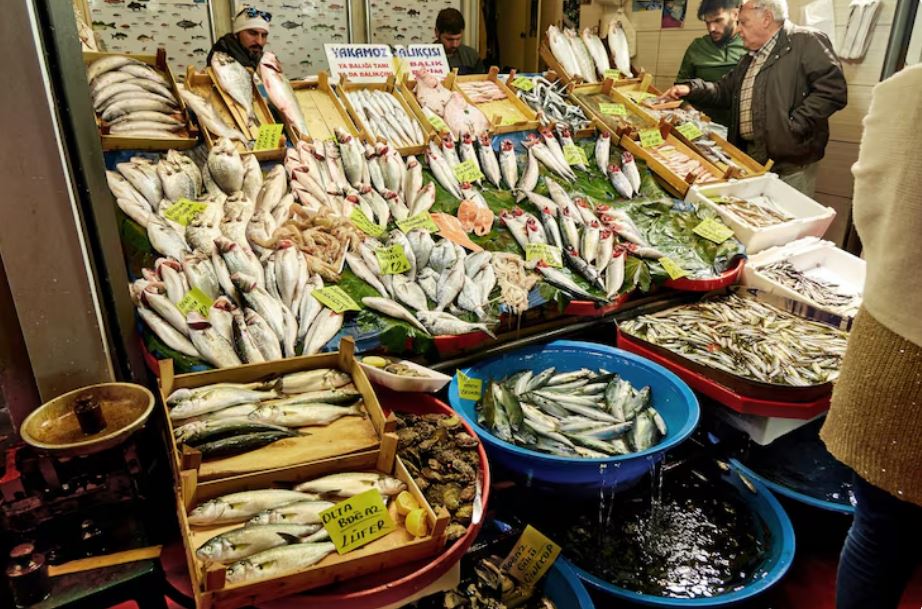
It’s possible that some of the anxiety around “expansion” says more about how people feel about Pike Place than about the construction itself. This is a market that survived internment-era upheaval, decades of neglect, a near-demolition in the 1960s, and a pandemic that briefly emptied its arcades of both crowds and flying fish alike. Every time something changes, longtime regulars brace for the place to lose whatever makes it feel real. So far, it hasn’t.
The fishmongers themselves — the business has been employee-owned since 2018 — seem unbothered. Picture them tomorrow morning: rubber boots, orange overalls, ice scattered across the case, a tourist filming on a phone held sideways. The ritual hasn’t needed updating in nearly four decades. Why would a waterfront walkway change that?
There’s a feeling, watching this unfold from a distance, that Pike Place Market is trying to do something genuinely difficult — grow without performing growth, modernize without sanding off the parts that made ten million people a year want to visit in the first place. Whether that balance holds once the World Cup crowds actually arrive is still unclear. But for now, somewhere under that “Caution: Low Flying Fish” sign, business continues exactly as it always has.
