
Close Menu
FishonlineFishonline
  • Homepage
  • Contact
  • Privacy Policy
  • Disclaimer
  • About
  • TOS
  • Seafood
  • News
  • Trending
  • Travel
What's Hot

Seattle’s Pike Place Fish Market Just Revealed a Major Expansion — and the Flying Fish Are Going Nowhere

June 17, 2026

The EU’s New Forced Labor Regulations Are Coming for Seafood Companies — and Most American Suppliers Are Not Ready

June 17, 2026

Why America’s Seafood Labeling Laws Are Still So Weak — and the Lawmakers Who Keep Blocking Reform

June 17, 2026
FishonlineFishonline
Subscribe
  • Homepage
  • Contact
  • Privacy Policy
  • Disclaimer
  • About
  • TOS
  • Seafood
  • News
  • Trending
  • Travel
FishonlineFishonline
Home » The EU’s New Forced Labor Regulations Are Coming for Seafood Companies — and Most American Suppliers Are Not Ready
News

The EU’s New Forced Labor Regulations Are Coming for Seafood Companies — and Most American Suppliers Are Not Ready

Mildred BellBy Mildred BellJune 17, 2026No Comments4 Mins Read
Facebook Twitter LinkedIn Telegram Pinterest Tumblr Reddit WhatsApp Email
The EU's New Forced Labor Regulations Are Coming for Seafood Companies — and Most American Suppliers Are Not Ready
Share
Facebook Twitter LinkedIn Pinterest Email

When a regulation is still two years away, an industry experiences a certain kind of denial. It seems far away. Controllable. Until it isn’t, it is someone else’s problem. That’s about where the majority of American seafood suppliers appear to be at the moment due to the European Union’s Forced Labor Regulation, which comes with something more direct than tariffs or quotas: a complete prohibition on selling anything in the EU that was produced, even partially, using forced labor.

On December 14, 2027, the regulation will go into full force. It sounds like a lengthy runway. When you take into account what compliance actually requires, it isn’t. The kind companies have become accustomed to filing and forgetting, so this is not a reporting requirement. It’s a product ban, period. EU authorities have the authority to remove shrimp shipments, tuna loins, and bags of frozen scallops from shelves, block them at the border, and order their destruction if they are discovered to have been produced using forced labor anywhere upstream. Notably, changing suppliers later on won’t make the infraction go away. This is stated clearly in the regulation.

Timing is what makes this more difficult for American businesses. A different, related issue has already been introduced by the EU: new seafood digital traceability regulations that went into effect on January 10. The industry association that represents processors throughout the continent, Seafood Europe, has been warning for months that the rollout would be disorderly. Yes, it was. Days after the regulations went into effect, the group’s president, Guus Pastoor, told a trade publication that “what we anticipated is now reality”—different member states interpreting the same requirements differently, exporters caught unsure of which national IT system applies to them. In contrast, the UK appears to have prepared more carefully and reported fewer early setbacks. Just that difference reveals who has been paying attention and who hasn’t.

The situation for American suppliers becomes more complicated when you add the Forced Labor Regulation to that traceability mess. The majority of seafood that enters U.S. supply chains, such as shrimp from Southeast Asia, some whitefish processed in China, and some squid and crab sourced through lengthy, opaque subcontracting chains, travel through areas that the EU has already identified as having a higher risk of labor violations.

American businesses that co-pack or re-export goods to European retailers might not even be aware of the number of hands that touched the product before it was delivered. The uncomfortable part is that. Forced labor risks that are hidden three or four tiers down in a supply chain may not always be detected by certification programs that businesses have relied on for years, such as MSC labeling. According to reports, certified seafood may still carry that risk covertly and undetected, passing audits that weren’t designed to find it.
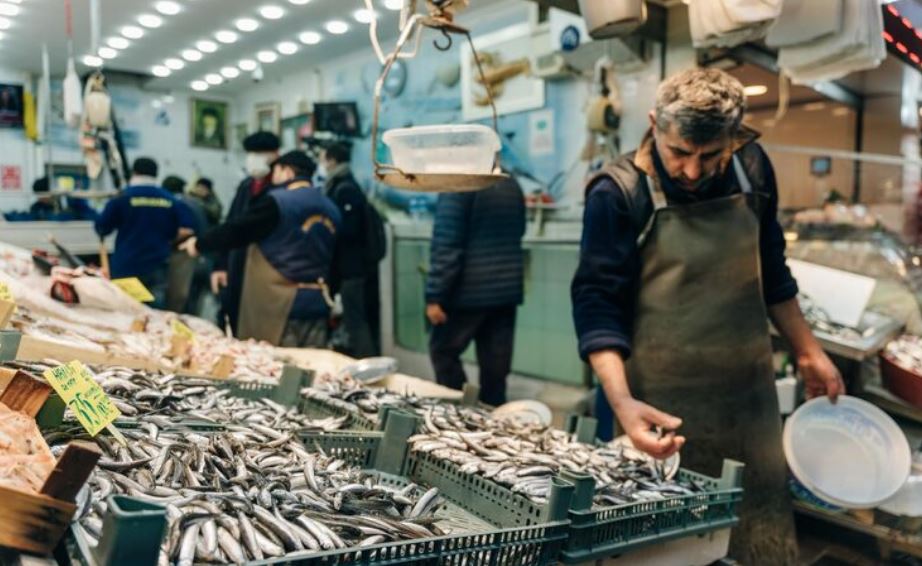
The EU's New Forced Labor Regulations Are Coming for Seafood Companies — and Most American Suppliers Are Not Ready
The EU’s New Forced Labor Regulations Are Coming for Seafood Companies — and Most American Suppliers Are Not Ready

This asymmetry is difficult to ignore. The United States has a tool for enforcing forced labor that is primarily based on tariffs and targeted import prohibitions that apply to about 50 countries on a case-by-case basis. It doesn’t matter where you’re based, how much money you make, or whether you’re a small distributor selling at a Lyon trade show or a multinational processor; the EU’s approach is more expansive and less lenient. You are vulnerable if your product is sold in the EU and it was made using forced labor.

The enforcement scaffolding is still being constructed in Brussels. The deadline for member states to designate national authorities is mid-December 2025. By June 2026, the Commission must provide implementation guidelines. Investigations can be conducted on supply chain documentation, supplier audits, and the type of paper trail that most seafood companies, to be honest, don’t currently keep in any usable form, but none of that infrastructure being incomplete should be mistaken for slack.

Speaking with those who keep a close eye on this, it seems that American exporters are approaching 2027 in the same manner as those who put off paying their taxes: it will happen eventually, but it won’t happen right now. That might be alright. Perhaps smaller suppliers receive a longer grace period in practice than the law permits, and enforcement begins slowly, concentrating on the biggest operators in the highest-risk regions. It is feasible. However, despite two years’ notice and a regulator’s insistence that nothing had changed significantly, European seafood traceability regulations just demonstrated how disastrous things can go. The consequences of the forced labor rule are greater than those of a traceability error. This time, goods are not delayed at customs. They are destroyed.

American Suppliers EU's New Forced Labor Regulations Seafood Companies
Share. Facebook Twitter Pinterest LinkedIn Tumblr Telegram Email
Previous ArticleWhy America’s Seafood Labeling Laws Are Still So Weak — and the Lawmakers Who Keep Blocking Reform
Next Article Seattle’s Pike Place Fish Market Just Revealed a Major Expansion — and the Flying Fish Are Going Nowhere
Mildred Bell

    Mildred Bell is a full-time digital professional, seasoned traveler, and ardent outdoor enthusiast who infuses her writing with a sincere love of the natural world. In her role as Senior Editor at fishonline.co.uk, the online home of Seafood Audit International, Mildred is in charge of editorial content covering news about the seafood industry, updates on food safety, politics, finance, and commentary from prominent figures in the fishing and seafood industries. Beyond the desk, Mildred has a deeper connection to the material she edits. She is a passionate angler who has spent years fishing open waters, rivers, and coastlines throughout the UK and beyond. Her genuine knowledge of the fishing industry informs all of her editorial choices. Mildred's passion for travel stems from the same restless curiosity. She has traveled to many different continents with a rod, a notebook, and an eye for the stories that others overlook.

    Related Posts

    Seattle’s Pike Place Fish Market Just Revealed a Major Expansion — and the Flying Fish Are Going Nowhere

    June 17, 2026

    Why America’s Seafood Labeling Laws Are Still So Weak — and the Lawmakers Who Keep Blocking Reform

    June 17, 2026

    The Smoked Trout Salad Recipe That a Vermont Inn Has Served Every Sunday Brunch for Twenty-Five Years

    June 17, 2026
    Add A Comment
    Leave A Reply Cancel Reply

    You must be logged in to post a comment.

    Seattle’s Pike Place Fish Market Just Revealed a Major Expansion — and the Flying Fish Are Going Nowhere

    Food June 17, 2026

    There’s a particular sound that hits you before you even see the counter at Pike…

    The EU’s New Forced Labor Regulations Are Coming for Seafood Companies — and Most American Suppliers Are Not Ready

    June 17, 2026

    Why America’s Seafood Labeling Laws Are Still So Weak — and the Lawmakers Who Keep Blocking Reform

    June 17, 2026

    The Smoked Trout Salad Recipe That a Vermont Inn Has Served Every Sunday Brunch for Twenty-Five Years

    June 17, 2026

    15 Mother’s Day Seafood Recipes Passed Down Through Generations That Are Worth Every Minute of Kitchen Time

    June 17, 2026

    NOAA Is at Seafood Expo North America 2026 and Fishermen Have a Long List of Questions Ready

    June 17, 2026

    Why America’s Toughest Seafood Fraud Case in a Decade Just Ended With a Suspended Sentence and No Fine

    June 17, 2026

    Fishonline.co.uk is the official online home of Seafood Audit International, a UK-based food safety and quality management consultancy with more than 25 years of hands-on experience in the global seafood and fishing industries. Based in Wellington, Somerset, we work with fish processors, food businesses, government inspection services, and international organisations to deliver practical, measurable, and cost-effective food safety solutions.We are not a generic food safety company. Seafood and fish products are our entire focus — and that specialisation is what makes us different.Who We AreSeafood Audit International was founded on a straightforward belief: that food safety training and quality management should be practical, accessible, and genuinely useful — not a box-ticking exercise.For over two decades we have worked with clients ranging from high street fish retailers and small-scale processors to large-scale international fishing operations, government bodies, and seafood exporters in the developing world. Our experience stretches from dhows on Lake Victoria to the trawlers of the UK coastline — giving us a depth of real-world knowledge that classroom-only consultancies simply cannot match.Our lead consultant is a fully qualified auditor with extensive experience across British Retail Consortium (BRC) and ISO 9000 quality management standards, HACCP implementation, food hygiene, and the development of national food safety legislation for governments internationally.What We DoSeafood Audit International provides a comprehensive range of training, auditing, and consultancy services tailored specifically to the seafood and fishing industries:Training Courses

    Top Insights

    Seattle’s Pike Place Fish Market Just Revealed a Major Expansion — and the Flying Fish Are Going Nowhere

    June 17, 2026

    The EU’s New Forced Labor Regulations Are Coming for Seafood Companies — and Most American Suppliers Are Not Ready

    June 17, 2026

    Why America’s Seafood Labeling Laws Are Still So Weak — and the Lawmakers Who Keep Blocking Reform

    June 17, 2026

    The Smoked Trout Salad Recipe That a Vermont Inn Has Served Every Sunday Brunch for Twenty-Five Years

    June 17, 2026

    15 Mother’s Day Seafood Recipes Passed Down Through Generations That Are Worth Every Minute of Kitchen Time

    June 17, 2026
    Disclaimer

    Important Editorial Notice: All content on fishonline.co.uk, including that pertaining to business finance, political developments, financial markets, and regulatory changes, is provided solely for informational and discussion purposes. It is merely the opinion of a third party and does not represent the expert advice of fishonline.co.uk or Seafood Audit International.
    We strongly advise against taking any action based on any political, legal, or financial information found on this website without first consulting an impartial expert. Seafood Audit International is not governed by the Financial Conduct Authority (FCA) and is not permitted to offer financial advice. Always seek advice from an independent financial advisor authorized by the FCA before making any financial decisions. Seek legal advice from an experienced attorney.

    © 2026 ThemeSphere. Designed by ThemeSphere.
    • Homepage
    • Contact
    • Privacy Policy
    • Disclaimer
    • About
    • TOS
    • Seafood
    • News
    • Trending
    • Travel

    Type above and press Enter to search. Press Esc to cancel.