

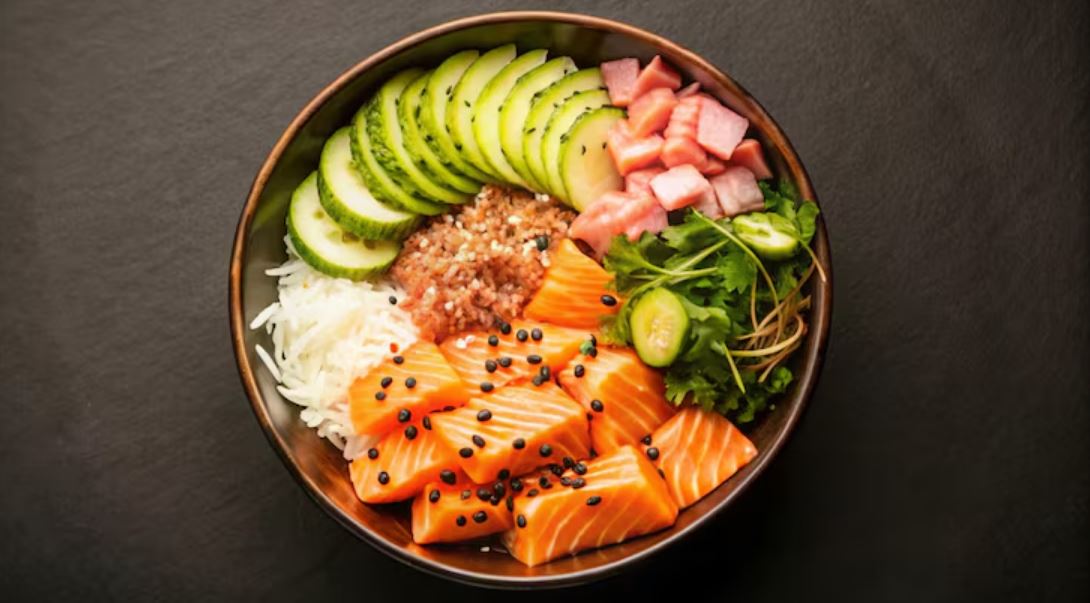
There’s a particular kind of dinner fatigue that sets in around 6 p.m. on a weeknight, when the takeout app feels like the only honest option left. A bowl of cubed raw tuna, warm rice, and a spoonful of spicy mayo—which takes less time to prepare than it does to wait for delivery—has subtly taken the place of that moment for an increasing number of home cooks.
There was little fanfare when the spicy tuna poke bowl first appeared in American kitchens. Through Hawaii’s long-standing custom of tossing raw fish with sesame oil and soy sauce, as well as the poke shops that have been springing up in cities over the past few years, it infiltrated in a roundabout way. Somewhere along the way, home cooks noticed the dish wasn’t actually complicated. Simply put, it appeared to be.
Novelty does not appear to be the driving force behind the change. Math is involved. Once the rice is cooked, a homemade poke bowl takes about fifteen minutes to prepare and is far less expensive than a sushi counter. Cube the tuna. Add a little soy sauce and honey to balance the heat, then whisk together the mayonnaise and sriracha. Cut some cucumbers, smash an avocado, and scatter scallions on the bias because people seem to care about even the smallest details. Other than the rice cooker, there is no stove involved.
The whole appeal seems to be that ease. Unlike a lot of viral recipes that demand a pantry overhaul, this one rewards whatever a person already has. Edamame was added because it was in the freezer, brown or white rice, and salmon rather than tuna. It’s incredibly adaptable, according to recipe writers on food blogs, and this adaptability may be the reason it survives in actual kitchens rather than just in pictures.
Additionally, there is the issue of trust, which is not sufficiently discussed. Purchasing raw fish to use at home used to make people anxious, and it still should. It’s not easy to find a fishmonger who sells sushi-grade fish, to find out how it’s stored, or to trust your nose when something smells bad. However, in recent years, more supermarket chains have embraced sustainable, traceable seafood sourcing, which has made the entire process feel less risky and more like a Tuesday errand.
It’s also difficult to ignore the timing. Around the same time that Americans began to feel at ease with grain bowls in general—the burrito bowl, the Buddha bowl, the build-your-own format that allows dinner to feel personal without requiring exact adherence to a recipe—Poke entered the mainstream consciousness. Poke fit into that pattern almost too perfectly, using raw fish in place of whatever protein a bowl format typically calls for.
It’s still unclear if this will endure like burrito bowls did or fade like some food trends do. Convenience-driven trends typically endure longer than novelty-driven ones, and at the moment, poke has both advantages. Something about a dish this basic that just won’t go away is almost stubborn.
The appeal was never really about reimagining Hawaiian food for a mainland audience, as is evident. It was about providing a quick, salty, creamy, cold, and warm dinner to weary cooks without having to turn on the oven or call for delivery. That can sometimes be sufficient to break a habit. Apparently, for a lot of people, it already has.
