

Every May, a certain sound occurs in some kitchens: a wooden spoon scraping against a stockpot, the hiss of butter hitting a hot pan, or someone’s mother, grandmother, or great-aunt telling everyone to move aside because the roux requires constant care. For many American families, Mother’s Day seafood isn’t just about one dish. It’s about a chain of hands that have been making the same chowder or crab cakes for fifty years, with each cook claiming that their version is the closest to the original, even though none of them are totally accurate.
That’s why recipes that are passed down rather than printed are so appealing. A grandmother gives instructions that vary slightly based on her mood, the season, and whether the crab at the market looked fresh that morning. A cookbook provides exact measurements. In the same way that historians publish primary sources, food writers have spent years pursuing this kind of authenticity by publishing summaries of “grandma’s most-requested” dishes. Preserving a version of a family before it silently vanishes has an almost archival quality.
Admittedly, fifteen recipes is a random number, but that’s about how many an average extended family ends up debating before deciding on a brunch menu. For good reason, crab cakes appear in almost every iteration of this list. Every family claims that their binder-to-filler ratio is the only right one, they are forgiving, and they reheat fairly. A quick pan-fry instead of a deep one, lump crab, and little filler. It sounds easy. In reality, this is rarely the case because all grandmothers seem to have strong, inexplicable opinions about Worcestershire sauce.
Because shrimp tolerates last-minute cooking better than salmon, shrimp recipes also tend to be the most popular. Peel-and-eat shrimp with Old Bay is more of a ritual than a recipe, complete with a bowl of shells, newspaper spread out on the table, and an uncle who insists on eating the most. Younger cooks attempt to elevate this dish even though it doesn’t require it, adding citrus or chili in ways that the original cook may find superfluous or even slightly offensive.
Then there is the fish itself, which can be tilefish, mahi-mahi, snapper, or trout, depending on the coastline a family is from. Landlocked households typically choose whatever freezes well, while coastal households typically choose whatever is local. A pan-seared snapper with lemon butter seems almost too simple to be considered heirloom, but if you ask around, you’ll find that it’s precisely the kind of recipe that no one bothered to record because everyone thought everyone knew how to make it.
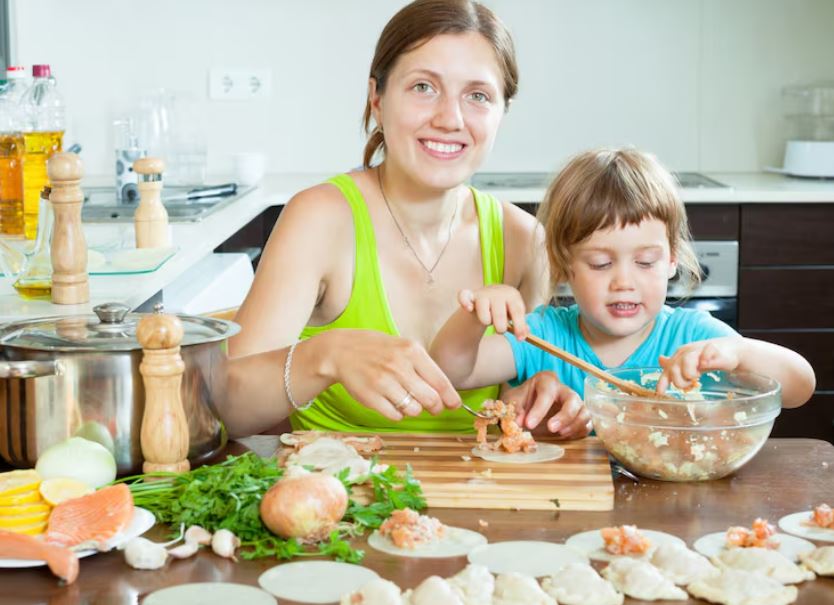
It’s important to note how much of this tradition is passed down through women in particular: grandmothers correcting granddaughters’ technique without fully explaining why their method works better, mothers teaching daughters. As more sons and grandsons take over the stove on Mother’s Day specifically to allow their mothers to sit down for once, that is gradually changing. Nevertheless, the recipes themselves have a distinct matrilineal weight that accumulates decade after decade, correction by correction.
For families who prefer a leisurely pace, the menu also includes stews and chowders. The Tuscan seafood stew known as cacciucco, which is made from whatever the fishmonger had left over, embodies both that instinct and anything else: plenty disguised as modesty. Instead, American versions tend to focus on low-simmered salmon or corn chowder, around which the rest of brunch revolves.
Technically speaking, none of these dishes are very challenging. Patience, the kind that results from creating something enough times that the steps no longer require consideration, is what takes time. More than any recipe card could ever be, that is perhaps the true inheritance here. The readiness to spend a little more time standing at a stove for someone you love, even if she would prefer that you sit down and let her cook.
