

At Spud Point Marina in Bodega Bay, the boats sit low in the dark water before dawn, their engines idling, waiting for captains who already appear worn out. Bait buckets, coiled rope, the smell of diesel and mackerel—a scene that hasn’t changed much in decades—but now there’s an additional layer of anxiety looming over the docks. In an attempt to prevent humpback and gray whales from becoming entangled in fishing lines, California recently tightened its regulations on Dungeness crab fishing, and many of the men and women who depend on it for their livelihood are not happy about this.
When whale sightings surpass a predetermined threshold, the California Department of Fish and Wildlife’s new regulations give regulators more power to close fishing grounds or require gear changes. The state has been implementing some form of this since 2020, so it’s not a novel concept, but many people find this round to be different, primarily because it comes after a year in which entanglement figures refused to decline. 33 whales were reported entangled off the West Coast in 2025, according to federal data, which is hardly better than the previous year’s total, which was already the highest since 2018. In 2026, nine more sightings have already been reported.
That’s not a minor annoyance for an industry that generates about $45 million for California each year. For those who say it aloud on the dock, it’s existential. To put it plainly, a longtime fisherman from Crescent City stated that the thresholds are just too low for the fishery to truly survive. It’s difficult to tell from the outside whether that’s an exaggeration or a reasonable interpretation of the math, but it’s the kind of thing you hear frequently along this stretch of coast, and repetition usually has a purpose.
It’s important to keep in mind the reasons behind all of this. Before federal protections took effect in 1970, humpback whales were hunted to the point of extinction. Their gradual recovery, which has been increasing at a rate of about 8% annually along the West Coast since the 1980s, is actually one of the more subdued achievements of the contemporary conservation movement. However, a warming ocean collided with that recovery. Ten years ago, a marine heat wave drove whales closer to the coast in search of food, directly into waters covered in vertical crab lines, where entanglements increased. Since then, they have remained high despite year after year of intense heat.
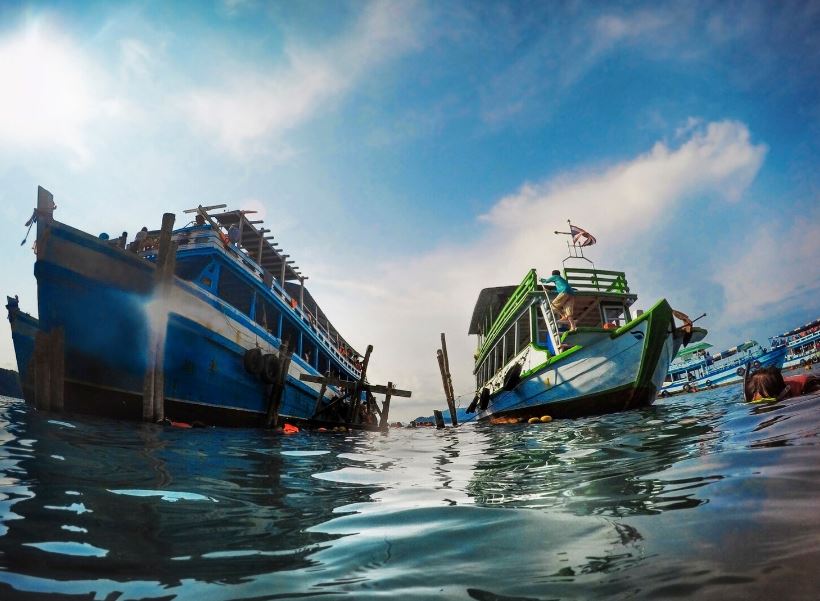
In one version of this story, the economics and science just don’t work together, and everyone is left with a problem that no one really created. The whales were not placed there by fishermen. The ocean was not warmed by regulators. However, the cost of figuring it out must be borne by someone, and at the moment, it falls almost entirely on crabbing families in towns like Bodega Bay, Half Moon Bay, and Crescent City—places where, as several captains have stated, losing Dungeness crab essentially means losing the only fishery that makes ends meet.
Pop-up gear, however, is a more subdued aspect of all this rage. For the past few seasons, a few fishermen—some of whom operate out of Pier 45 in San Francisco—have been testing equipment that completely does away with the vertical line in favor of an acoustic release device that only raises pots when necessary. The state is anticipated to fully authorize the equipment for spring fishing by 2026 due to the encouraging early results. It costs about $1,000 per device and requires more time to rig. However, rather than the closures themselves, it’s possible—possibly even likely—that this becomes the industry’s real route forward.
From a distance, it’s difficult to ignore how recognizable the conflict’s form is. Coastal industries, such as salmon fishermen in the Pacific Northwest and lobstermen in Maine, have previously been caught between a recovering species and a livelihood that cannot readily bear the cost of caution. These stories usually involve a slow-moving negotiation between two things that people care about rather than a clear-cut villain. It remains to be seen if California’s crabbers will emerge from this with a shorter season or a truly novel method of fishing. At the moment, most people are just frustrated and a lot of rope is being loaded onto boats that might not be able to use it as much as they used to.
