

Outside the shack is a hand-painted sign. Four items are listed: clams, fish sandwiches, lobster rolls, and chowder. That’s all. There is no tasting menu. No amuse-bouche. There isn’t a sommelier skimming reclaimed hardwood floors and murmuring something about minerality. Just a screen door that slaps shut behind you and an unexplainable scent of butter, salt, old wood, and the sea.
Daniel Rourke is the man working behind the counter. He had two Michelin stars at Sable, his renowned restaurant in Boston’s South End, which had a six-month wait list and a prix fixe of more than $300 per person, until about three years ago. Wearing a faded Carhartt, the forty-four-year-old chef moves around a twelve-foot kitchen with the same quiet economy of motion that led food writers to repeatedly characterize him as a chef who “makes cooking look like breathing.” He exudes a genuine ease that is difficult to fake.
He opens the shack in May and closes it over the weekend of Columbus Day, when the summer residents have left and the fog has finally set in. That’s the situation. He was aware of it beforehand. He had worked in fine dining for ten years, with its controlled temperatures, tweezers, and unrelenting pressure to earn and hold those stars. At some point around his forty-first birthday, he realized something had changed as he stood in his Boston prep kitchen at six in the morning, plating foie gras he no longer cared about. “The food stopped feeling like mine,” he replied. “It felt like the restaurant’s.”
Maine wasn’t a coincidence. Since his early years, Rourke had traveled to the Midcoast to fish off his uncle’s dock in Tenants Harbor. He had learned how to shuck from a neighbor who had been doing it since she was eight years old. What is served beneath crystal chandeliers is not the same as the ocean here. The lobster that is poached in clarified butter in a downtown dining room at 8 p.m. is not the same as the lobster that was caught at 5 a.m. He was aware of that. In this instance, a local trap fisherman who texts him before dawn when the haul is good is the source he wanted to work closer to.
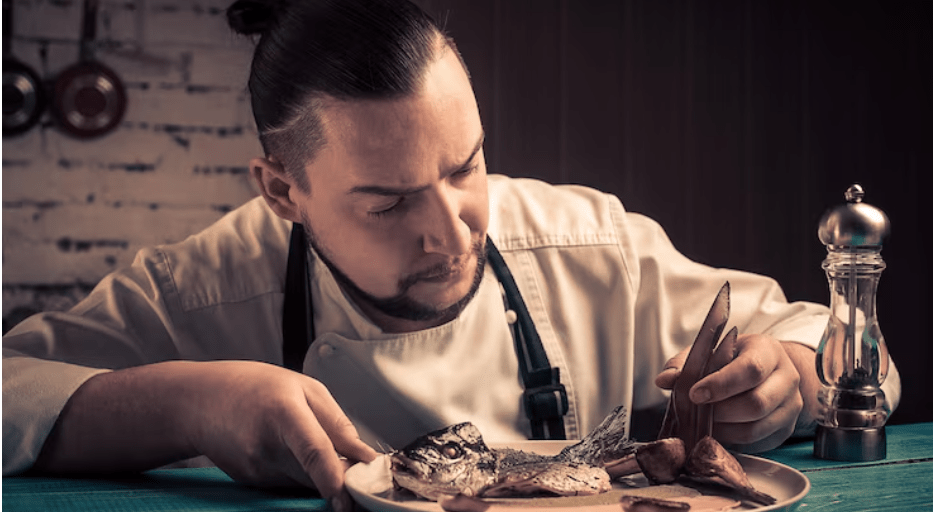
The chowder is outstanding. It’s difficult to ignore; it’s thick without being heavy, sweet with fresh clam and corn, and finished with a smoky flavor that Rourke won’t describe other than “not bacon.” For it, people travel from Portland. Last August, a national magazine’s food writer stopped by and inquired about his methods. He discussed timing and water temperature. The conversation seemed to end when he gave her a plastic spoon and asked her to taste it directly from the pot.
Rourke misses certain things. Without much sentimentality, he has stated this in public. He longs for the brigade and the companionship of a large, fully operational kitchen. He misses plating elaborate dishes and seeing them go to the dining room. However, he doesn’t miss the performance of it all, including the pressure to always wear the mask and the Michelin visits that transformed cooking into theater. The mask has vanished from the shack. Only the food, the window, and the person in line.
What’s intriguing—and perhaps subtly important—is what his action says about the industry in general. For a certain generation of chefs, fine dining has begun to feel like a kind of trap: it’s prestigious and profitable when it works, but it’s becoming more and more detached from what really drew them to cooking. It’s not Rourke who walks first. He probably won’t be the last. It’s still unclear if a single seafood shack in Maine signifies a more significant turning point, but it doesn’t feel like a coincidence either.
He’s working the counter by himself on a Tuesday afternoon in July. After making their payment, a New Hampshire couple leaves with two lobster rolls in cardboard trays. They eat in silence at a picnic table with a view of the cove. After a brief moment of observation, Rourke returns his attention to the stove. From the outside, at least, he appears to be a man who made the right decision.
