

At 3:40 in the morning, the alarm went off, which felt more like being cut off in the middle of something significant than like waking up. By 4:15, I was watching deckhands load bait tanks with live sardines under yellow dock lights on a dock at San Diego Bay while the rest of the city slept. The scent of the boat was a mix of diesel, salt, and a hint of animal. Right away, it seemed like a place where no one was doing anything for anyone.
Before dawn, we cleared the bay. The captain remained silent. Someone had left donuts in a cardboard box that was already softening from the ocean air, and there was coffee in a stained pot close to the stern. The coastline behind us had faded to a faint orange glow within twenty minutes of our departure, and all we could see ahead was the open Pacific and the steady, slow thud of hull against chop.
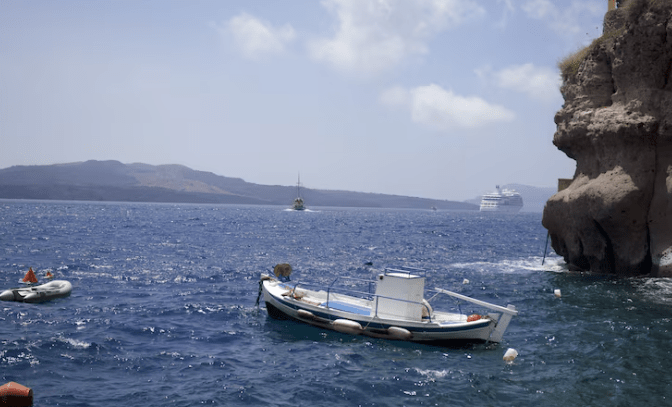
Depending on what the sonar revealed, the plan was to first run toward the Nine Mile Bank before pushing farther south. These boats frequently enter Mexican waters legally and with the necessary permits on days when the fish aren’t cooperating close to shore, pursuing schools that don’t give a damn about national borders. No, the bluefin do not. They track the concentrations of bait, the warm eddies, and the California Current. The boats follow them wherever the weather takes them. Really, it’s a simple agreement between predators.
Something changed on deck as soon as the rod bent on the first significant blow. People who had been quiet became noisy. Suddenly, a man who had been dozing off in a folding chair was holding onto the rail and yelling encouragement in two different languages. When you hear the fish running hard up close, it sounds almost violent, with drag screaming and line stripping off the reel. Bringing that fish to the boat took almost forty minutes. A sixty-pound bluefin with chrome sides that was enraged even at the surface. Observing that makes it difficult to avoid feeling something odd, such as admiration or an uneasy sense of respect.
The physical demands of this type of fishing are not sufficiently discussed. For the crew, not necessarily the anglers. These boats’ deckhands work nonstop, threading bait, removing tangles, calling strikes, and simultaneously managing lines in all directions. They use almost instinctive methods to read the water, pointing to surface disturbances and changing their position in response to overhead bird activity. For eleven years, one deckhand had been doing this. He claimed to be able to determine whether fish were actively feeding or merely passing through by the way a school broke the surface. He might have been correct. It’s also possible that you simply acquire that kind of knowledge after spending enough mornings gazing out at the same ocean.
We were somewhere over sixty miles offshore by early afternoon, and the Mexican coast was more of an assumption than a tangible reality. The mood intensified after the captain discovered a promising mark on the sonar: a dense concentration of fish holding at depth. Over the course of the following two hours, three more bluefin—the largest likely weighing ninety pounds—came to the boat.
What followed was not what I had anticipated. Using a short knife, one of the crew members cut two clean slabs from a recently landed fish, drizzled them with soy, citrus, or a little oil, and placed them on a paper towel. That tuna was amazing, eaten upright on a rocking boat ninety miles offshore. A version of this fish costs $28 and is served with a wine pairing at a restaurant in Venice. This was the alternative version. Somehow, warmer. more truthful about what it was.
The sun was almost gone when we docked back in San Diego. The fish was frozen. The deck was hosed down by the crew. The catch was counted by someone. Accounting is more important out here than most people realize.
