
Close Menu
FishonlineFishonline
  • Homepage
  • Contact
  • Privacy Policy
  • Disclaimer
  • About
  • TOS
  • Seafood
  • News
  • Trending
  • Travel
What's Hot

The U.S. Seafood Industry’s Quiet Lobbying Victory Hidden Inside the Farm Bill Nobody Read Closely

June 10, 2026

The King Crab Legs Recipe That Looks Impossibly Impressive but Takes Fifteen Minutes and One Pot to Make

June 10, 2026

This One-Pan Salmon Recipe Takes 20 Minutes and Tastes Like Something From a Michelin-Starred Kitchen

June 10, 2026
FishonlineFishonline
Subscribe
  • Homepage
  • Contact
  • Privacy Policy
  • Disclaimer
  • About
  • TOS
  • Seafood
  • News
  • Trending
  • Travel
FishonlineFishonline
Home » America’s Fastest-Growing Seafood Trend Has Nothing to Do With Salmon or Shrimp — and Chefs Are Obsessed
Seafood

America’s Fastest-Growing Seafood Trend Has Nothing to Do With Salmon or Shrimp — and Chefs Are Obsessed

Mildred BellBy Mildred BellJune 4, 2026No Comments4 Mins Read
Facebook Twitter LinkedIn Telegram Pinterest Tumblr Reddit WhatsApp Email
America's Fastest-Growing Seafood Trend Has Nothing to Do With Salmon or Shrimp — and Chefs Are Obsessed
Share
Facebook Twitter LinkedIn Pinterest Email

When you enter a seafood expo, you anticipate seeing the usual suspects: shiny salmon fillets, piles of shrimp on ice, and a few scallop vendors trying their hardest to compete. You don’t anticipate receiving something from a Taiwanese business that actually tastes like chicken tender. However, that is precisely what transpired at the Seafood Expo North America in Boston this past March, and it reveals something both unsettling and intriguing about the current state of American food culture.

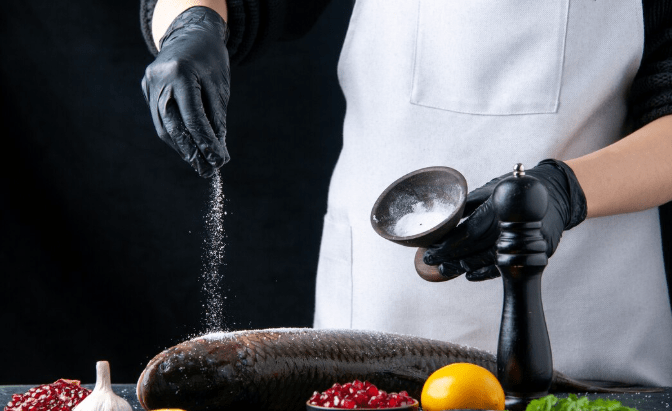
Salmon is not the trend. It’s not shrimp, which for decades has been the go-to seafood for Americans. Making fish completely vanish into forms that don’t even resemble fish in terms of appearance, flavor, or smell is currently the fastest-growing trend in the seafood industry. meatballs made with tuna. burgers with shrimp. Sticks of salmon that taste more like a Slim Jim from a gas station than anything you would get from the ocean. It’s important to consider why chefs and food developers are putting so much effort into this.
America's Fastest-Growing Seafood Trend Has Nothing to Do With Salmon or Shrimp — and Chefs Are Obsessed
America’s Fastest-Growing Seafood Trend Has Nothing to Do With Salmon or Shrimp — and Chefs Are Obsessed

The answer is embarrassingly straightforward in part. Despite claiming to love a good meal and being surrounded by coastline, Americans consume roughly 19 pounds of seafood annually. In a hundred years, that figure has hardly changed. The average weight worldwide is forty-five pounds. Iceland, which may have less to prove in terms of cuisine, weighs about 200 pounds. Indeed, there is a gap, and the seafood industry has been staring at it for years, attempting to understand what it means.

It seems to indicate that Americans are more terrified of the taste of the ocean than they are of the ocean itself. The visual cue that something with scales was involved, the fishy smell, and the texture that doesn’t behave like a burger or nugget. This explains why businesses like Los Angeles-based SK Food Brands began creating shrimp burgers as a calculated entry point rather than as a novelty. One of their sales managers remarked, “It makes it more palatable to people who aren’t big seafood fans,” while standing next to a display of shrimp patties the size of sliders. He didn’t sound sorry for it. He sounded like someone who had discovered something.

Observing all of this, it seems like the seafood industry is essentially doing what the plant-based meat industry tried a few years ago: meeting skeptical customers where they already are. Until they like it, pretend. To be fair, the reasoning isn’t absurd because it worked, at least in part, for oat milk and the Impossible Burger.

The technical challenge hidden within this trend is particularly intriguing to chefs. It takes true culinary engineering—texture manipulation, seasoning control, and moisture management—to get tuna to behave like fried chicken. It’s more about translating seafood into a different language than it is about demeaning it. Not all of the chefs who are drawn to these products do so voluntarily. The canvas is actually new, which is why they are doing it.

Whether this strategy will significantly change that 19-pound annual figure is still up in the air. A national seafood awakening was not exactly sparked by the decades-long existence of frozen fish sticks. However, the products that are currently being developed have a different ambition; they are not only made to conceal fish but also to directly compete with the foods that Americans already adore and eat without hesitation. You’re not being asked to make a compromise when a shrimp burger is positioned next to a beef burger. You are being asked to make a decision.

It remains to be seen if Americans will genuinely do so. However, the industry appears to sincerely think that the answer might be yes for the first time in a long time.

America's Shrimp
Share. Facebook Twitter Pinterest LinkedIn Tumblr Telegram Email
Previous ArticleI Followed a Tuna Fishing Boat From San Diego Into International Waters — Here Is What I Saw and Tasted
Next Article The Crab Cake Recipe That Won a Maryland State Competition Three Years in a Row — and It Is Simpler Than You Think
Mildred Bell

Mildred Bell is a full-time digital professional, seasoned traveler, and ardent outdoor enthusiast who infuses her writing with a sincere love of the natural world. In her role as Senior Editor at fishonline.co.uk, the online home of Seafood Audit International, Mildred is in charge of editorial content covering news about the seafood industry, updates on food safety, politics, finance, and commentary from prominent figures in the fishing and seafood industries. Beyond the desk, Mildred has a deeper connection to the material she edits. She is a passionate angler who has spent years fishing open waters, rivers, and coastlines throughout the UK and beyond. Her genuine knowledge of the fishing industry informs all of her editorial choices. Mildred's passion for travel stems from the same restless curiosity. She has traveled to many different continents with a rod, a notebook, and an eye for the stories that others overlook.

Related Posts

The U.S. Seafood Industry’s Quiet Lobbying Victory Hidden Inside the Farm Bill Nobody Read Closely

June 10, 2026

The King Crab Legs Recipe That Looks Impossibly Impressive but Takes Fifteen Minutes and One Pot to Make

June 10, 2026

The Butter-Poached Lobster Recipe That Home Cooks Are Calling the Most Luxurious Thing They Have Ever Made for Under $30

June 10, 2026
Add A Comment
Leave A Reply Cancel Reply

You must be logged in to post a comment.

The U.S. Seafood Industry’s Quiet Lobbying Victory Hidden Inside the Farm Bill Nobody Read Closely

Seafood June 10, 2026

In a fish processing facility in Gloucester, Massachusetts, discussions about government funds that have been…

The King Crab Legs Recipe That Looks Impossibly Impressive but Takes Fifteen Minutes and One Pot to Make

June 10, 2026

This One-Pan Salmon Recipe Takes 20 Minutes and Tastes Like Something From a Michelin-Starred Kitchen

June 10, 2026

The Butter-Poached Lobster Recipe That Home Cooks Are Calling the Most Luxurious Thing They Have Ever Made for Under $30

June 10, 2026

10 c Recipes That Nutritionists Say Will Keep You Full Until Well Past Noon

June 10, 2026

How the Global Seafood Alliance’s New Feed and Salmon Standards Could Redefine What ‘Responsible’ Aquaculture Means

June 5, 2026

The EPA Mercury Rule Repeal Could Add Measurable Contamination Levels Back Into Fish Americans Eat Every Week

June 5, 2026

Fishonline.co.uk is the official online home of Seafood Audit International, a UK-based food safety and quality management consultancy with more than 25 years of hands-on experience in the global seafood and fishing industries. Based in Wellington, Somerset, we work with fish processors, food businesses, government inspection services, and international organisations to deliver practical, measurable, and cost-effective food safety solutions.We are not a generic food safety company. Seafood and fish products are our entire focus — and that specialisation is what makes us different.Who We AreSeafood Audit International was founded on a straightforward belief: that food safety training and quality management should be practical, accessible, and genuinely useful — not a box-ticking exercise.For over two decades we have worked with clients ranging from high street fish retailers and small-scale processors to large-scale international fishing operations, government bodies, and seafood exporters in the developing world. Our experience stretches from dhows on Lake Victoria to the trawlers of the UK coastline — giving us a depth of real-world knowledge that classroom-only consultancies simply cannot match.Our lead consultant is a fully qualified auditor with extensive experience across British Retail Consortium (BRC) and ISO 9000 quality management standards, HACCP implementation, food hygiene, and the development of national food safety legislation for governments internationally.What We DoSeafood Audit International provides a comprehensive range of training, auditing, and consultancy services tailored specifically to the seafood and fishing industries:Training Courses

Top Insights

The U.S. Seafood Industry’s Quiet Lobbying Victory Hidden Inside the Farm Bill Nobody Read Closely

June 10, 2026

The King Crab Legs Recipe That Looks Impossibly Impressive but Takes Fifteen Minutes and One Pot to Make

June 10, 2026

This One-Pan Salmon Recipe Takes 20 Minutes and Tastes Like Something From a Michelin-Starred Kitchen

June 10, 2026

The Butter-Poached Lobster Recipe That Home Cooks Are Calling the Most Luxurious Thing They Have Ever Made for Under $30

June 10, 2026

10 c Recipes That Nutritionists Say Will Keep You Full Until Well Past Noon

June 10, 2026
Disclaimer

Important Editorial Notice: All content on fishonline.co.uk, including that pertaining to business finance, political developments, financial markets, and regulatory changes, is provided solely for informational and discussion purposes. It is merely the opinion of a third party and does not represent the expert advice of fishonline.co.uk or Seafood Audit International.
We strongly advise against taking any action based on any political, legal, or financial information found on this website without first consulting an impartial expert. Seafood Audit International is not governed by the Financial Conduct Authority (FCA) and is not permitted to offer financial advice. Always seek advice from an independent financial advisor authorized by the FCA before making any financial decisions. Seek legal advice from an experienced attorney.

© 2026 ThemeSphere. Designed by ThemeSphere.
  • Homepage
  • Contact
  • Privacy Policy
  • Disclaimer
  • About
  • TOS
  • Seafood
  • News
  • Trending
  • Travel

Type above and press Enter to search. Press Esc to cancel.