Close Menu
FishonlineFishonline
  • Homepage
  • Contact
  • Privacy Policy
  • Disclaimer
  • About
  • TOS
  • Seafood
  • News
  • Trending
  • Travel
What's Hot

Why the Most Honest Seafood You Will Ever Eat Is Always Found in the Smallest, Least Photographed Town on the Map

June 17, 2026

Why Chincoteague, Virginia Is the Most Underrated Seafood Travel Destination on the Entire East Coast

June 17, 2026

The Chincoteague Seafood Festival Is Back and Gallons of Clams and Oysters Are Already Moving Into Place

June 17, 2026
FishonlineFishonline
Subscribe
  • Homepage
  • Contact
  • Privacy Policy
  • Disclaimer
  • About
  • TOS
  • Seafood
  • News
  • Trending
  • Travel
FishonlineFishonline
Home » The NOAA Fisheries Regulation That Climate Scientists Say Is Already Five Years Behind the Reality of Ocean Warming
Seafood

The NOAA Fisheries Regulation That Climate Scientists Say Is Already Five Years Behind the Reality of Ocean Warming

Mildred BellBy Mildred BellJune 17, 2026No Comments4 Mins Read
Facebook Twitter LinkedIn Telegram Pinterest Tumblr Reddit WhatsApp Email
The NOAA Fisheries Regulation That Climate Scientists Say Is Already Five Years Behind the Reality of Ocean Warming
Share
Facebook Twitter LinkedIn Pinterest Email

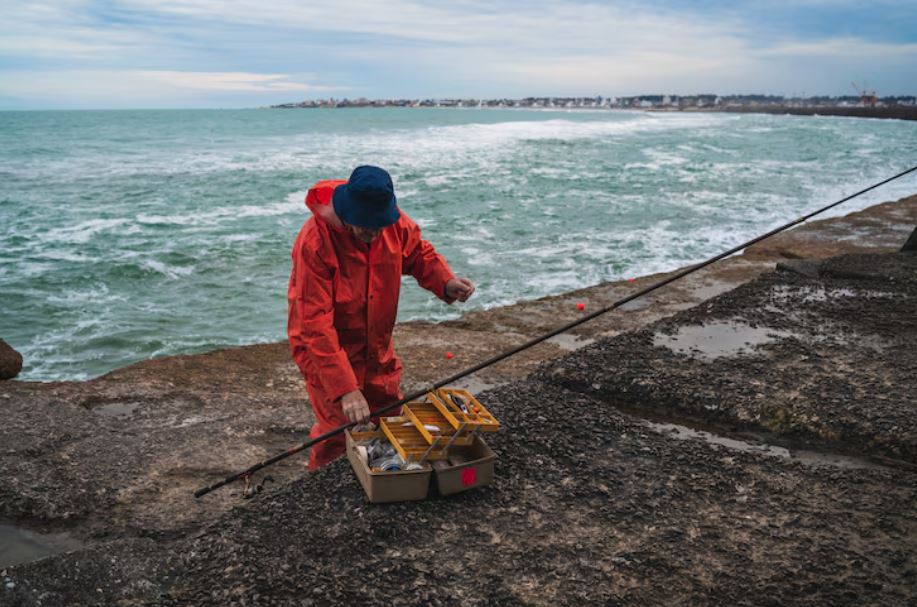
In Rockland, Maine, on a gloomy morning, the lobster boats depart as usual, their buoys piled high on the stern and their diesel engines coughing awake before dawn. If you ask fishermen long enough, they will tell you what has changed in the traps. For years, lobster catches have been drifting offshore and northward in search of cooler, retreating water. However, the regulations dictating where and how those boats can fish have not advanced nearly as quickly.

The story is starting to revolve around that gap. The federal organization in charge of overseeing the country’s marine resources, NOAA Fisheries, developed its current Climate Science Strategy in 2015 and revised it in December 2021 with a five-year progress report. It is a comprehensive document, more than 150 pages long, meticulous, and full of acronyms that only a federal scientist would understand. However, a number of climate scientists who have read it now characterize the underlying presumptions as being outdated and written for an ocean that is no longer fully real.

It’s difficult to dispute the numbers. The waters of the U.S. northeast continental shelf, which stretches from the mid-Atlantic Bight through Georges Bank and the Gulf of Maine, have warmed more quickly over the last thirty years than any other marine region in North America and are among the world’s fastest-warming oceanic regions. The physical and biological changes are unprecedented, and the majority of fish stock assessments still do not include environmental data at all, according to a 2023 review published in PLOS Climate by NOAA scientist Vincent Saba and dozens of colleagues. This implies that the species counts that determine fishing quotas are, in a sense, based on out-of-date calculations.

From a distance, this might sound abstract. On the docks, it doesn’t feel abstract. Formerly dominated by cod and herring, species like longfin squid and black sea bass have been migrating northward into New England waters. Because the whales followed their food, which moved first, right whales frequently appear in shipping lanes for which no protections were built. Regulation, by its very nature, can only describe where things used to be, never quite where they are headed, according to the scientists monitoring all of this.
The NOAA Fisheries Regulation That Climate Scientists Say Is Already Five Years Behind the Reality of Ocean Warming

The timing couldn’t be worse out west. For more than a year, NOAA has been monitoring a marine heatwave along the Pacific coast. More recently, the agency identified a distinct, intensifying El Niño that is predicted to peak in the upcoming winter of 2026–2027. When you combine those two occurrences, you get warm water on top of warm water, endangering fisheries for salmon, rockfish, squid, and tuna at the same time that California sea lions and seabirds are already exhibiting signs of stress. As this develops, it’s difficult to ignore how frequently the term “unprecedented” appears in NOAA’s own reports these days.

The agency isn’t standing still, to be fair. In order to incorporate warming signals into long-term decisions, regional offices have developed climate vulnerability assessments, scenario-planning exercises, and ecosystem status reports. These are considered real victories in the 2021 progress report, and they most likely are. However, there is a distinction between researching change and enacting regulations in response to it in real time, and this is precisely where detractors claim NOAA Fisheries consistently falters: collecting solid data, then waiting several budget cycles to actually alter a protected zone, a boundary line, or a quota.

To be honest, there is disagreement over whether five years is the appropriate amount to put on the lag. Given how slowly fishery management plans proceed through council review, public comment, and the inevitable legal challenge, some scientists would put it closer to ten years. Others believe that the gap is gradually closing thanks to NOAA’s more recent investments in regional ocean modeling. The fundamental nature of the issue is more difficult to dispute: each season that goes by without a solution is subtly layered onto the next, and the ocean is moving more quickly than the documentation intended to describe it.

The institution designed for a slower-moving climate is attempting to keep up with one that no longer behaves itself; there isn’t a clear antagonist in this tale. The fishermen have already modified their routines, equipment, and habits out on the water. It appears that the regulations are still evolving.

NOAA Fisheries Regulation
Share. Facebook Twitter Pinterest LinkedIn Tumblr Telegram Email
Previous ArticleThe Scallop Recipe That Food Writers Say Is the Most Underrated Seafood Dish in the Entire American Culinary Tradition
Next Article The American Travel Trend of Booking Fishing Trips Instead of Beach Resorts Is Growing Faster Than the Industry Can Handle
Mildred Bell

Mildred Bell is a full-time digital professional, seasoned traveler, and ardent outdoor enthusiast who infuses her writing with a sincere love of the natural world. In her role as Senior Editor at fishonline.co.uk, the online home of Seafood Audit International, Mildred is in charge of editorial content covering news about the seafood industry, updates on food safety, politics, finance, and commentary from prominent figures in the fishing and seafood industries. Beyond the desk, Mildred has a deeper connection to the material she edits. She is a passionate angler who has spent years fishing open waters, rivers, and coastlines throughout the UK and beyond. Her genuine knowledge of the fishing industry informs all of her editorial choices. Mildred's passion for travel stems from the same restless curiosity. She has traveled to many different continents with a rod, a notebook, and an eye for the stories that others overlook.

Related Posts

Why the Most Honest Seafood You Will Ever Eat Is Always Found in the Smallest, Least Photographed Town on the Map

June 17, 2026

Why Chincoteague, Virginia Is the Most Underrated Seafood Travel Destination on the Entire East Coast

June 17, 2026

The Chincoteague Seafood Festival Is Back and Gallons of Clams and Oysters Are Already Moving Into Place

June 17, 2026
Add A Comment
Leave A Reply Cancel Reply

You must be logged in to post a comment.

Why the Most Honest Seafood You Will Ever Eat Is Always Found in the Smallest, Least Photographed Town on the Map

Seafood June 17, 2026

Eating fish in a picturesque setting can lead to a certain kind of disappointment. The…

Why Chincoteague, Virginia Is the Most Underrated Seafood Travel Destination on the Entire East Coast

June 17, 2026

The Chincoteague Seafood Festival Is Back and Gallons of Clams and Oysters Are Already Moving Into Place

June 17, 2026

How Louisiana’s New Imported Seafood Laws Are Being Watched by Every Coastal State Legislature in the Country

June 17, 2026

The Lithuanian Midsummer Festival Where the Smoked Fish Is the Main Event — and Why Americans Are Finally Discovering It

June 17, 2026

California’s Dungeness Crab Industry Just Received New Whale Entanglement Rules — and Fishermen Are Furious

June 17, 2026

Inside the Jersey Shore Restaurant That Has Been a Seafood Sensation for 109 Years — and Shows No Signs of Stopping

June 17, 2026

Fishonline.co.uk is the official online home of Seafood Audit International, a UK-based food safety and quality management consultancy with more than 25 years of hands-on experience in the global seafood and fishing industries. Based in Wellington, Somerset, we work with fish processors, food businesses, government inspection services, and international organisations to deliver practical, measurable, and cost-effective food safety solutions.We are not a generic food safety company. Seafood and fish products are our entire focus — and that specialisation is what makes us different.Who We AreSeafood Audit International was founded on a straightforward belief: that food safety training and quality management should be practical, accessible, and genuinely useful — not a box-ticking exercise.For over two decades we have worked with clients ranging from high street fish retailers and small-scale processors to large-scale international fishing operations, government bodies, and seafood exporters in the developing world. Our experience stretches from dhows on Lake Victoria to the trawlers of the UK coastline — giving us a depth of real-world knowledge that classroom-only consultancies simply cannot match.Our lead consultant is a fully qualified auditor with extensive experience across British Retail Consortium (BRC) and ISO 9000 quality management standards, HACCP implementation, food hygiene, and the development of national food safety legislation for governments internationally.What We DoSeafood Audit International provides a comprehensive range of training, auditing, and consultancy services tailored specifically to the seafood and fishing industries:Training Courses

Top Insights

Why the Most Honest Seafood You Will Ever Eat Is Always Found in the Smallest, Least Photographed Town on the Map

June 17, 2026

Why Chincoteague, Virginia Is the Most Underrated Seafood Travel Destination on the Entire East Coast

June 17, 2026

The Chincoteague Seafood Festival Is Back and Gallons of Clams and Oysters Are Already Moving Into Place

June 17, 2026

How Louisiana’s New Imported Seafood Laws Are Being Watched by Every Coastal State Legislature in the Country

June 17, 2026

The Lithuanian Midsummer Festival Where the Smoked Fish Is the Main Event — and Why Americans Are Finally Discovering It

June 17, 2026
Disclaimer

Important Editorial Notice: All content on fishonline.co.uk, including that pertaining to business finance, political developments, financial markets, and regulatory changes, is provided solely for informational and discussion purposes. It is merely the opinion of a third party and does not represent the expert advice of fishonline.co.uk or Seafood Audit International.
We strongly advise against taking any action based on any political, legal, or financial information found on this website without first consulting an impartial expert. Seafood Audit International is not governed by the Financial Conduct Authority (FCA) and is not permitted to offer financial advice. Always seek advice from an independent financial advisor authorized by the FCA before making any financial decisions. Seek legal advice from an experienced attorney.

© 2026 ThemeSphere. Designed by ThemeSphere.
  • Homepage
  • Contact
  • Privacy Policy
  • Disclaimer
  • About
  • TOS
  • Seafood
  • News
  • Trending
  • Travel

Type above and press Enter to search. Press Esc to cancel.