

I never imagined that a nation would alter my perception of fish. Yes, food. Perhaps wine. However, fish felt like fish—something you ordered with care and consumed fast in the hopes that it wouldn’t taste like the interior of a cooler. In about a week, Portugal disproved that notion with three dishes that I still think about more than I’d like to acknowledge.
The first was bacalhau, or salt cod, which may not seem like much until you realize how important it is to the nation. Although the fish itself comes from the icy waters off Norway, not anywhere near Portuguese shores, Portugal consumes about a fifth of the world’s supply of bacalhau. That devotion, a national dish based on an imported fish that has been dried for centuries, is almost ridiculous, but it works. On a cool Lisbon evening, I had it baked with cream, potato, and onion, but it didn’t taste as salty and leathery as I had thought. It had a patient flavor, as if it had been developed over five hundred years of experimentation. since it had been.
I was surprised in a different way by the second dish. The shellfish stew known as “cataplana de marisco,” which is sealed and steamed in a copper pot shaped like a clam, was probably brought to the Algarve during the Moorish era. Shrimp, clams, and occasionally monkfish are simmered with tomato and pepper until the broth is so flavorful that you want to drink it right out of the bowl. This dish isn’t sophisticated. No one plates it carefully. It comes still sealed, and as soon as it opens and steam rolls off the table, you realize that seafood is a communal rather than an individual food—a stew to be shared, not a filet to be admired.
Sardines were the third, and it was this one that genuinely changed the way I thought. Sardines are a canned afterthought that you eat out of duty or nostalgia in the United States. Particularly during Lisbon’s Festa de Santo António in June, when the entire city seems to smell like charcoal and fish fat, grilled sardines are a street ritual in Portugal.
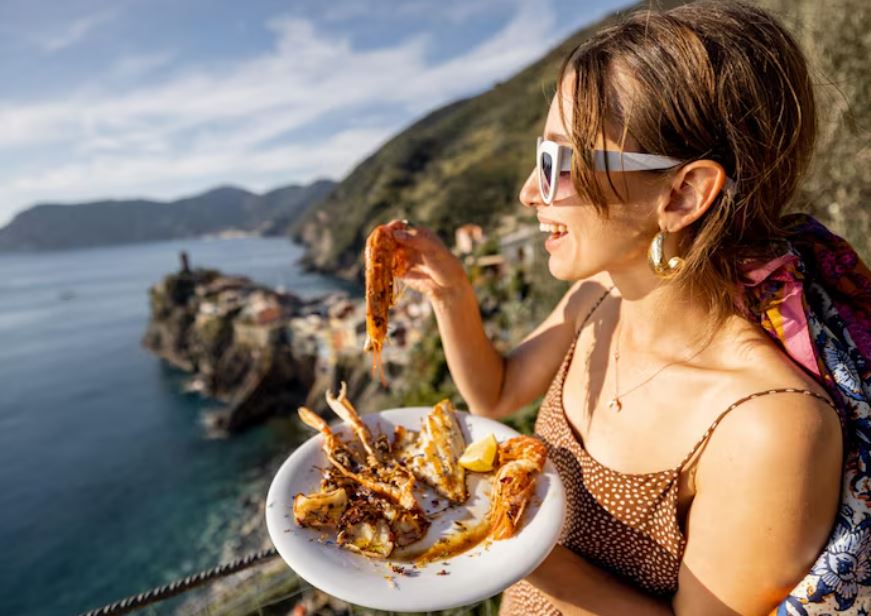
For centuries, fishwives known as varinas carried baskets on their heads through the steep streets of Alfama, calling out to sell the day’s catch. Sardines were once thought of as a working-class food. The smoke still contains that history. Standing on a cobblestone street and eating one off a paper plate felt less like a meal and more like witnessing a custom that had been carried out for many generations.
These three dishes are not connected by sophistication. Actually, it’s the opposite. Portuguese seafood culture appears to be based on necessity and scarcity rather than luxury: grilling sardines because they were inexpensive and plentiful, stewing shellfish in a single pot because that’s what fishing families had, and salting cod because it had to survive long voyages. It’s difficult to ignore how different that sounds from the seafood culture I was raised in, where price tags and freshness are the most important factors.
I doubt I’ll ever place another fish order in the same manner. Nowadays, it seems that delicious seafood only requires patience, history, and someone who is prepared to stand over a charcoal grill on a hot June street. I didn’t learn to love fish in Portugal. I learned to ask various questions about the origins of a dish.
